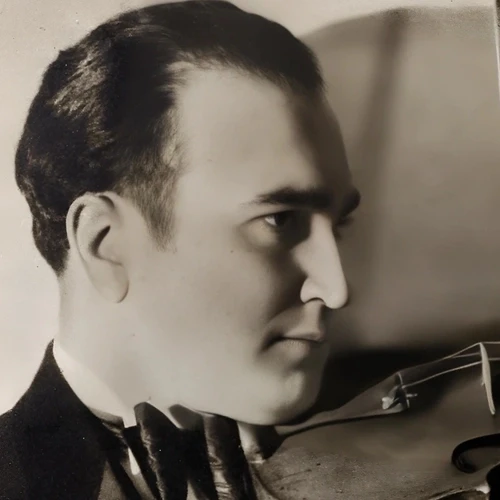
Dave Rubinoff
In the vibrant landscape of 1930s and 1940s radio broadcasting, few personalities shone as brightly as David Rubinoff, a violinist whose extraordinary musical talent and charismatic presence captivated audiences across America. Known affectionately as Rubinoff and his Violin, he was more than just a musician—he was a radio star who brought classical and popular music into living rooms nationwide, transforming the way Americans experienced entertainment.
Early Life and Musical Beginnings
Born on September 3, 1897, David Rubinoff emerged from humble origins to become one of the most recognizable musical personalities of his era. A Russian-born violinist, Rubinoff possessed an extraordinary instrument—a $100,000 Stradivarius violin that became as much a part of his identity as his musical prowess. His journey from immigrant musician to radio celebrity embodied the quintessential American dream of talent, hard work, and opportunity.
Rubinoff's musical talent was evident early on, and he quickly distinguished himself as a violinist of remarkable skill and showmanship. His ability to connect with audiences went far beyond traditional classical performance, blending technical excellence with an engaging, approachable personality that would become his trademark.
Rise to Radio Stardom
The advent of radio provided the perfect platform for Rubinoff's unique talents. Appearing with Rubinoff and his Orchestra, he became a major radio star, quickly rising to prominence in the medium. His popularity was so significant that he secured his own show on NBC in 1935-36, a testament to his widespread appeal and musical brilliance.
Rubinoff was not content to be merely a radio performer. He actively toured, performing in theaters, clubs, and schools across the country. Perhaps most impressively, he was invited to give several concerts at the White House during the 1940s, a rare honor that underscored his national significance.
Performance Style and Public Persona
What set Rubinoff apart was his dynamic and engaging performance style. Contemporary accounts describe him as an "exuberant musician" who carried himself with the "poise of a concert musician and the aggressive air of a top-flight general" . He was known for his ability to connect with audiences of all ages, from sophisticated concert-goers to schoolchildren.
During his school appearances, for instance, Rubinoff would blend classical pieces with popular tunes, creating performances that were both educational and entertaining. In one notable school concert, he played pieces like "Don't Fence Me In" and "Ah, Sweet Mystery of Life", demonstrating his ability to bridge high and popular culture.
Legacy and Cultural Impact
Beyond his musical performances, Rubinoff became a cultural icon. He was known for his larger-than-life personality, his legendary $100,000 violin, and his ability to make classical music accessible to mainstream audiences. His radio popularity helped democratize musical appreciation, bringing sophisticated performances into homes across America.
Interestingly, Rubinoff was also a family man. He would phone his wife every night while on tour, and proudly noted that his young son was already studying the violin—suggesting a deep commitment to musical tradition. He even had a humorous claim to fame, with a famous anecdote about his hamburger recipe that he once prepared for President Roosevelt.
Works and Appearances
Radio
- NBC Show (1935-36)
- Various national radio programs throughout 1930s and 1940s
Film Appearances
- Toonerville Trolley (1933)
- Betty Boop cartoon (1933)
- Hollywood film appearances (1935, 1937)
Live Performances
- White House concerts (1940s)
- Nationwide theater and school tours
- Multiple radio station appearances
Notable Recordings
- "Dance of the Russian Peasant"
- Various classical and popular music interpretations
David Rubinoff represents a unique moment in American entertainment history—a time when radio could transform a talented musician into a national celebrity, bridging cultural divides and bringing joy and music into millions of homes.