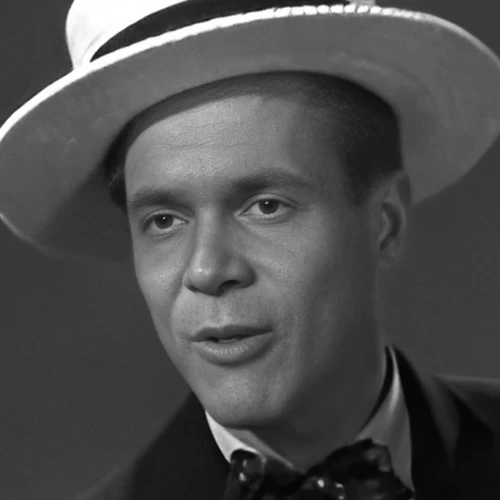
Dan Duryea
An American actor, known for roles in film, stage and television. Known for portraying a vast range of character roles as a villain, he nonetheless had a long career in leading and secondary roles.
Dan Duryea was far more than just a Hollywood character actor; he was a dynamic presence in the golden age of radio, bringing his distinctive vocal talents and dramatic range to the airwaves during a transformative period of broadcasting history. Known for his ability to portray complex, often villainous characters, Duryea became a versatile performer who seamlessly transitioned between film, television, and radio.
Early Life and Dramatic Beginnings
Born on January 23, 1907, in White Plains, New York, Dan Duryea's path to entertainment was anything but straightforward. After graduating from Cornell University in 1928, where he was actively involved in drama, Duryea initially pursued a career in advertising. However, a heart attack in his early professional years prompted a significant career pivot towards his true passion: performing. Duryea's theatrical training and natural dramatic instincts quickly became apparent. Before radio, he established himself on the Broadway stage, appearing in productions like Missouri Legend and Many Mansions in the late 1930s. These stage experiences would prove crucial in developing the vocal skills that would make him a compelling radio performer.
Radio Performance and Signature Style
Duryea's radio career was marked by his remarkable ability to inhabit diverse characters. He appeared in several notable radio programs, demonstrating his versatility and vocal range. Some of his memorable radio performances included appearances in programs like The Man Who Couldn't Lose in 1947, The Man from Homicide in 1951, and Remember Me in 1952. What set Duryea apart was his capacity to bring intense emotional depth to his radio roles. Drawing from his film persona as a master of portraying complex antagonists, he translated this skill seamlessly to radio, creating memorable and nuanced audio performances that captivated listeners.
Transition Between Media
While radio was an important medium for Duryea, he was simultaneously building a significant career in film and television. His radio work complemented his on-screen performances, allowing him to showcase his versatility as a performer. During the 1950s and 1960s, he appeared in numerous television series, including China Smith and The New Adventures of China Smith, further expanding his media presence. Interestingly, Duryea was candid about his approach to character development. In interviews, he discussed how he used personal experiences to motivate his performances, transforming his naturally mild-mannered personality into compelling, often tough characters.
Legacy in Broadcasting
Dan Duryea's contribution to radio and entertainment extended beyond mere performance. He represented a generation of actors who could seamlessly navigate multiple media platforms, bringing depth and authenticity to their roles. His ability to transition between stage, radio, film, and television made him a quintessential mid-20th-century performer. Despite being primarily remembered for his film noir and western roles, Duryea's radio work was an integral part of his artistic journey. He embodied the spirit of versatility that defined the era's entertainment landscape, leaving an indelible mark on broadcasting history.
Conclusion
Dan Duryea's radio career was a testament to his extraordinary talent and adaptability. From Broadway to the airwaves, from film to television, he consistently demonstrated an uncanny ability to bring characters to life with nuance, intensity, and authenticity. His legacy continues to inspire performers who seek to transcend media boundaries.
Works and Appearances
Radio Performances
- The Man Who Couldn't Lose (1947)
- The Man from Homicide (1951)
- Remember Me (1952)
Television Series
- China Smith (1952-1953, 26 episodes)
- The New Adventures of China Smith (1954-1956, 26 episodes)
- Laramie (Multiple episodes, various roles)
- Tales of Wells Fargo (1962)
Film Highlights
- The Little Foxes (1941)
- Winchester '73 (1950)
- The Flight of the Phoenix (1965)
Stage Productions
- Missouri Legend (1938)
- Many Mansions (1937)
Dan Duryea passed away on June 7, 1968, leaving behind a rich and diverse body of work that spanned multiple entertainment mediums.