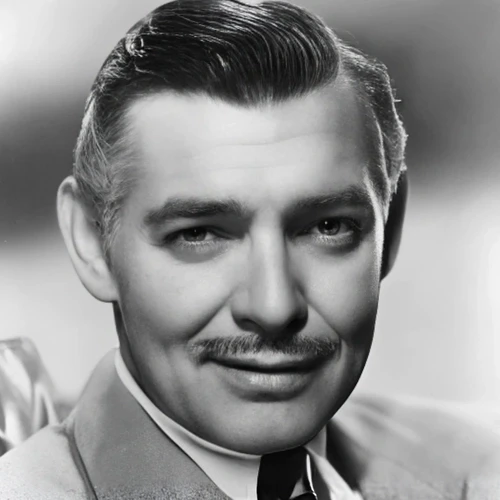
Clark Gable
In the golden age of Hollywood, few stars shone as brightly as Clark Gable, a charismatic actor whose magnetic presence captivated audiences both on the silver screen and the airwaves. Known as "The King of Hollywood," Gable's radio career was as dynamic and engaging as his legendary film performances.
Early Radio Beginnings
Clark Gable's venture into radio broadcasting began in the mid-1930s, marking a new chapter in his already illustrious entertainment career. TIME Magazine noted in a 1936 feature that Gable was "easy-going and informal" in his radio appearances, which were strategically and judiciously spaced. Unlike many of his contemporaries, Gable approached radio with a natural charm that translated seamlessly from his film persona.
Notable Radio Show Appearances
Gable became a frequent and popular guest on several prominent radio programs. His appearances included:
- Lux Radio Theater: A premier radio anthology series where Gable participated in adaptations of films. Notably, he appeared in the show's first Hollywood-based film adaptation, The Legionnaire and the Lady with Marlene Dietrich in 1936.
- The Chase and Sanborn Hour: Gable was a guest on this popular program multiple times, including appearances in 1937 and 1939.
- Good News of 1937 to 1940: He appeared alongside other Hollywood stars like Judy Garland.
- Command Performance: A wartime radio program where Gable was a featured performer, including a special fifth-anniversary show in 1947.
Radio Performance Style
Gable's radio work was characterized by his effortless delivery and star power. TIME Magazine highlighted that radio work was relatively light for stars like him, typically involving just "two or three rehearsals and a performance from a written script" . The monetary compensation was also attractive, providing an additional income stream to his already substantial film earnings.
Wartime Broadcasting and Patriotism
During World War II, Gable's radio appearances took on a patriotic tone. He participated in programs like America Calling and So Proudly We Hail, using his celebrity status to boost morale and support the war effort. This period coincided with his own military service in the Army Air Corps from 1942 to 1944.
Legacy in Radio Broadcasting
While Gable was primarily known for his film career, his radio work was significant. He appeared on prestigious programs like The Cavalcade of America and The Screen Guild Theatre, demonstrating the interconnectedness of media during Hollywood's golden era.
Conclusion
Clark Gable's radio career was more than a side venture; it was an integral part of his entertainment legacy. His smooth, charismatic performances on the airwaves complemented his film work, further cementing his status as a true Hollywood icon.
Works and Appearances
Radio Appearances
- Lux Radio Theater: Multiple appearances, including The Legionnaire and the Lady (1936), A Farewell to Arms (1937)
- The Chase and Sanborn Hour: Guest appearances in 1937 and 1939
- Good News of 1937 to 1940: Performances with Judy Garland
- Command Performance: Multiple wartime broadcasts
- America Calling: Patriotic program appearances
- Cavalcade of America: Guest performances
- Screen Guild Theatre: Multiple radio adaptations
Other Media
- Film Career: Over 60 motion picture appearances
- Military Service: US Army Air Corps (1942-1944)
Heard in