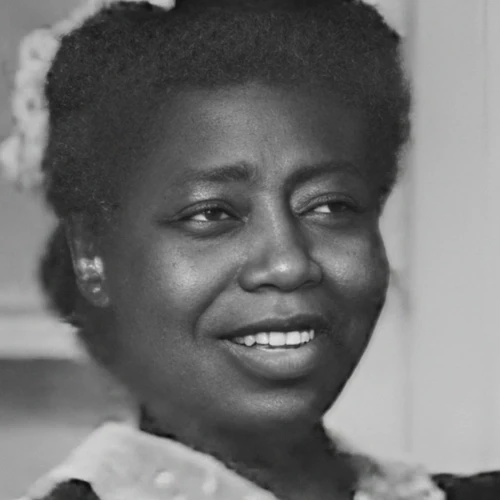
Butterfly McQueen
An American actress. Originally a dancer, McQueen first appeared as Prissy, Scarlett O'Hara's maid in the 1939 film Gone with the Wind. She continued as an actress in film in the 1940s, then moving to television acting in the 1950s.
Butterfly McQueen was a remarkable African American actress whose career spanned radio, film, and television, challenging racial stereotypes while pursuing her intellectual passions. Though often remembered for her iconic role in Gone with the Wind, McQueen was a multifaceted performer who continuously sought to transcend the limiting roles of her era.
Early Life and Artistic Beginnings
Born Thelma McQueen on January 8, 1911, in Tampa, Florida, she grew up in a working-class family with her mother, a maid, and her father, a stevedore. Raised in an environment that valued education and creativity, McQueen was educated by nuns at a convent and initially planned to become a nurse. However, a high-school teacher's suggestion to try acting would change the trajectory of her life. McQueen's artistic journey began with dance. She studied with Janet Collins and performed with the Venezuela Jones Negro Youth Group. It was during this period that she acquired her memorable nickname "Butterfly" - a tribute to her constantly moving hands during a performance of the Butterfly Ballet. Disliking her birth name, she would later legally change it to Butterfly McQueen.
Breaking into Radio and Entertainment
McQueen's entry into professional entertainment came through dance performances before transitioning to acting. During World War II, she frequently appeared as a comedian on radio broadcasts, specifically on USO shows. Many of these historic broadcasts are now preserved in the Internet Archive. Her radio work was complemented by television appearances. From 1950 to 1952, she was featured in the television series where she played Beulah's friend Oriole, a role that, like many of her early performances, was racially stereotyped.
Challenging Stereotypes in Film and Television
McQueen's most famous role came in Gone with the Wind (1939), where she played "Prissy", a simple-minded house maid. Her distinctive, high-pitched voice uttering the famous line, "Oh, Miss Scarlett! I don't know nothin' 'bout birthin' babies!" became instantly recognizable. However, McQueen herself was deeply uncomfortable with the role, feeling it was demeaning to African-Americans. By 1947, she had grown tired of the ethnic stereotypes she was required to play and temporarily ended her film career. Despite this, she continued to work intermittently in entertainment, including an Off-Broadway production in 1964 and occasional television appearances.
Intellectual Pursuits and Later Career
Beyond entertainment, McQueen was a passionate learner. In 1975, at the age of 64, she earned a bachelor's degree in political science from City College of New York. Her final acting roles included appearances in television shows like The Twilight Zone, where she won an award for her performance in the episode "Seven Wishes of a Rich Kid". McQueen's final feature film role was in Club Paradise (1986), and her last appearance was in a TV movie reimagining a classic story with a Black cast.
Legacy and Personal Life
A lifelong bachelor who never married or had children, McQueen lived between New York and Georgia. She was politically active, supporting progressive causes and maintaining a commitment to social justice. Tragically, McQueen died on December 22, 1995, at age 84, from burns sustained when a kerosene heater she attempted to light malfunctioned. True to her spirit of giving, she donated her body to medical science.
Works and Appearances
Radio
- USO Broadcasts (World War II era)
Television
- Beulah (1950-1952) - Role: Oriole
- The Twilight Zone - "Seven Wishes of a Rich Kid" (1979)
Film
- Gone with the Wind (1939) - Role: Prissy
- Club Paradise (1986) - Final feature film role
Theater
- Off-Broadway production (1964)
- Original version of stage musical (1974) - Role: Queen of the Field Mice
Butterfly McQueen's career was a testament to resilience, intellectual curiosity, and the ongoing struggle against racial stereotyping in early 20th-century entertainment.