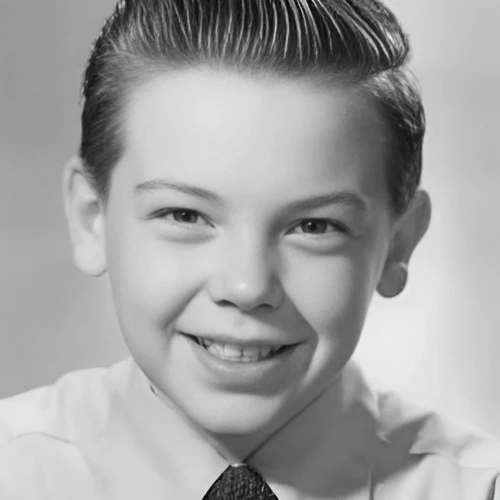
Bobby Driscoll
An American child actor known for a large body of cinema and TV performances from 1943 to 1960.
Bobby Driscoll was a remarkable child performer whose career spanned film, television, and radio during the golden age of entertainment. Though primarily known as a Disney actor, his radio work was an integral part of his early career, showcasing his versatility and talent as a young performer.
Early Life and Radio Beginnings
Robert Cletus Driscoll was born on March 3, 1937, in Cedar Rapids, Iowa, the only child of Cletus and Isabelle Driscoll. From a very young age, Bobby showed a natural talent for performance. His parents were encouraged to help him become a child performer, and by age five, he had already caught the attention of Hollywood studios. Driscoll's radio career began almost simultaneously with his film work. Between 1946 and 1957, he appeared in numerous radio productions, demonstrating his ability to captivate audiences through sound alone. His early radio work often complemented his film roles, allowing him to reach an even broader audience during the golden age of radio broadcasting.
Notable Radio Performances
Some of Driscoll's most memorable radio appearances came through family-oriented programs. He was a frequent performer on the Family Theater radio series, appearing in multiple episodes between 1948 and 1957. These performances showcased his range as a young actor, with roles in productions like "As the Twig is Bent," "Jamie and the Promise," and "A Daddy for Christmas". In 1951, Driscoll starred in a radio adaptation of Treasure Island for the Lux Radio Theatre, reprising his film role as Jim Hawkins. This performance demonstrated his ability to translate his on-screen characters to the audio medium. Another significant radio moment came in December 1953 when he voiced Peter Pan in a Lux Radio Theatre production, again mirroring his animated film performance.
Radio and Career Transitions
As Driscoll's film career began to decline in the mid-1950s, radio became an increasingly important medium for him. He continued to make appearances on various radio shows, including The Dennis Day Show and Hallmark Playhouse. These performances helped him maintain his presence in the entertainment industry during a challenging period of transition. Interestingly, Driscoll's radio work was recognized professionally. In 1954, he was awarded the Milky Way Gold Star Award in a nationwide poll for his contributions to television and radio, highlighting the significance of his audio performances.
Legacy in Broadcasting
Despite his relatively short career, Bobby Driscoll left an indelible mark on radio broadcasting. His ability to convey emotion and character through voice alone made him a standout child performer of his era. From promotional interviews to dramatic adaptations, Driscoll demonstrated a remarkable versatility that went beyond his more famous visual performances. Tragically, Driscoll's promising career was cut short by personal struggles. His final known radio performances came in the late 1950s, marking the end of a brief but memorable run in radio entertainment. His story remains a poignant reminder of the challenges faced by child performers in mid-20th century Hollywood.
Works and Appearances
Radio
- Family Theater (1948-1957)
- Multiple episodes including "As the Twig is Bent," "Jamie and the Promise"
Film
- Song of the South (1946)
- So Dear to My Heart (1949)
- The Window (1949)
- Treasure Island (1950)
- Peter Pan (1953)
Television
- Various anthology series and guest appearances (1953-1960)
Stage
- The Boy With a Cart (1954)
- Ah, Wilderness! (1954)
- Girls of Summer (1957)