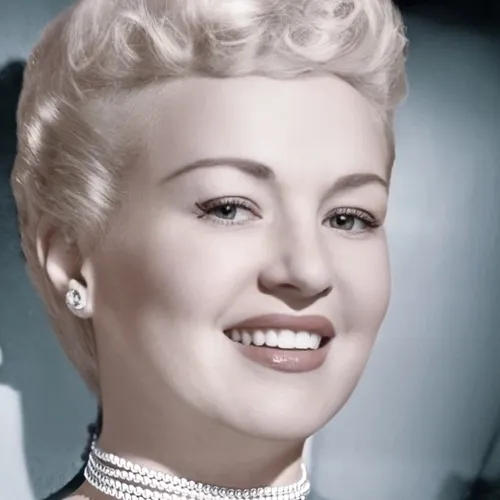
Betty Grable
An American actress, dancer, and singer. Grable was celebrated for having the most beautiful legs in Hollywood and publicity widely dispersed photos featuring them. Her iconic bathing suit poster made her the number-one pin-up girl of the World War II era.
Betty Grable was more than just a Hollywood icon; she was a multifaceted entertainer whose charm and talent extended beyond the silver screen into the vibrant world of radio broadcasting. Her infectious personality and versatile performances made her a beloved figure in entertainment during the 1940s and early 1950s.
Early Life and Hollywood Beginnings
Born Elizabeth Ruth Grable on December 18, 1916, in St. Louis, Missouri, she was destined for stardom from an early age. Pressured by her mother to become a performer, Grable entered numerous beauty contests, winning many and gaining considerable attention. Her journey to entertainment began at just 12 years old when she and her mother traveled to Hollywood in 1929. Grable's early career was marked by persistence and creativity. She studied acting and dance, and her mother even lied about her age to help her secure roles. Her first uncredited film debut came as a chorus girl in an all-star revue, quickly leading to more opportunities. By 1930, she had signed with a producer and became part of a group of young performers making their mark in Hollywood.
Radio Appearances and Performance
While primarily known for her film career, Grable made several notable radio appearances that showcased her versatility as an entertainer. Her radio work spanned various programs and genres, demonstrating her ability to captivate audiences through sound alone. Some of her most memorable radio appearances included The Pepsodent Show Starring Bob Hope in 1939, Command Performance in 1942, and Lux Radio Theatre in 1946 and 1952. These appearances allowed her to reach audiences beyond her film performances, highlighting her comedic timing and vocal talents.
World War II and Pin-Up Stardom
During World War II, Grable became more than just an entertainer; she was a morale booster for troops. Her famous pin-up photograph, taken by Frank Powolny in 1943, became the most requested photo for soldiers stationed overseas. This iconic image, showing her looking over her shoulder in a bathing suit, symbolized the era's glamour and patriotic spirit. Her radio work during this period often intersected with her efforts to support the war effort. Programs like Command Performance, which was specifically designed to entertain servicemen, featured Grable as a key performer.
Later Career and Transition
As her film career began to wane in the early 1950s, Grable continued to explore different entertainment avenues. She found success in Las Vegas stage productions and continued to make occasional radio appearances. Her adaptability and enduring popularity allowed her to remain a relevant entertainer even as the entertainment landscape changed.
Legacy and Impact
Betty Grable's legacy extends far beyond her famous legs and pin-up status. She was a pioneering entertainer who successfully navigated multiple media platforms, including film, radio, and stage. Her contributions to wartime morale and entertainment helped define an entire generation's cultural experience.
Works and Appearances
Radio
- The Pepsodent Show Starring Bob Hope (1939)
- Command Performance (1942)
- Lux Radio Theatre (1946, 1952)
- Suspense (1949)
- Screen Directors Playhouse (1950)
Film
- Down Argentine Way (1940)
- Moon Over Miami (1941)
- Pin Up Girl (1944)
- How to Marry a Millionaire (1953)
Stage
- Hello, Dolly (Broadway, 1967)
- Various Las Vegas productions (1950s-1960s)
Betty Grable passed away on July 2, 1973, leaving behind a remarkable legacy as one of Hollywood's most beloved entertainers, whose influence extended across multiple entertainment mediums.