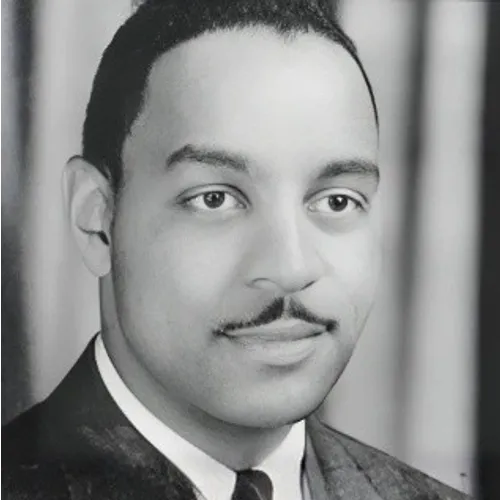
Benny Carter
An American jazz alto saxophonist, clarinetist, trumpeter,composer, arranger, and bandleader.
Benny Carter was far more than just a musician - he was a revolutionary force in jazz who transcended multiple artistic domains, leaving an indelible mark on American music during the 20th century. His extraordinary career spanned eight decades, making him one of the most versatile and influential jazz artists of his time.
Early Life and Musical Beginnings
Born Bennett Lester Carter on August 8, 1907, in the Bronx, New York, Carter discovered his musical passion early. Growing up in a supportive neighborhood, he received piano lessons from his mother and local musicians. Initially experimenting with trumpet and C-melody saxophone, he ultimately found his true voice with the alto saxophone. Carter's early musical journey was characterized by rapid learning and exceptional talent. In the 1920s, he performed with various bands, including Billy Paige's ensemble, and toured with the Wilberforce Collegians. His first recording appearance came in 1927 with the Paradise Ten, marking the beginning of a groundbreaking musical career.
Pioneering Arrangements and Musical Innovation
Carter quickly distinguished himself as a brilliant arranger, developing complex and innovative musical charts. Despite having no formal arranging education, he learned through determination and creativity. His approach was meticulous - writing lead trumpet and saxophone parts by carefully studying existing charts. By the early 1930s, Carter was considered one of the leading alto saxophonists alongside contemporaries. His arrangements for Fletcher Henderson's big band were particularly influential, helping shape the emerging swing style. Compositions like "Keep a Song in Your Soul" and "Symphony in Riffs" demonstrated his exceptional compositional skills.
International Recognition and Artistic Versatility
Carter's musical prowess extended far beyond American borders. In the late 1930s, he moved to London, spending two years as an arranger and performing across Europe. During this period, he showcased remarkable versatility, playing trumpet, clarinet, piano, alto and tenor saxophone, and even providing occasional vocals. Returning to America, Carter continued to evolve. In Los Angeles, he transitioned into studio work, writing music and arrangements for films and vocalists. His adaptability was remarkable - during the 1970s, he experienced a resurgence, touring the Middle East and making annual visits to Europe and Japan.
Legacy and Later Years
Carter's career was distinguished by its extraordinary longevity and continuous innovation. He was one of the few musicians to record in eight different decades, consistently pushing musical boundaries. His compositions ranged from novelty hits to expansive works like Central City Sketches, which he composed at 80 years old. In his later years, Carter embraced teaching, becoming a visiting professor at Princeton and conducting workshops at various universities. His contributions were widely recognized, including receiving the National Endowment for the Arts Jazz Masters Award and a Grammy Lifetime Achievement Award.
Conclusion
Benny Carter's legacy transcends musical categorization. He was a pioneer who helped define jazz saxophone, a masterful arranger, and a tireless innovator who continued creating remarkable music well into his eighties. His influence on jazz and American music remains profound and enduring.
Works and Appearances
Music Recordings
- Alone Together (1952)
- Further Definitions (1961)
- Central City Sketches (1987)
- Harlem Renaissance (1992)
Film Compositions
- Unnamed film compositions (1943)
- Arrangements for various film projects
Teaching
- Visiting Professor at Princeton University (1970s)
- Lecturer at Harvard University (1987)
Awards
- Grammy Lifetime Achievement Award (1987)
- National Endowment for the Arts Jazz Masters Award
- Kennedy Center Honoree (1996)
- National Medal of Arts (2000)
Benny Carter passed away on July 12, 2003, in Los Angeles, leaving behind a musical legacy that continues to inspire generations of musicians.