Audie Murphy
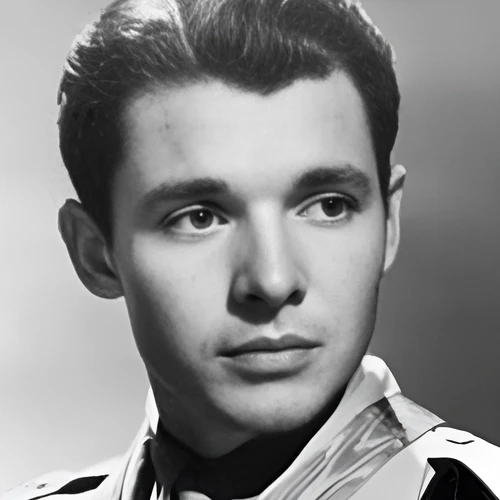
One of the most decorated American combat soldiers of World War II, receiving every military combat award for valor available from the U.S. Army, as well as French and Belgian awards for heroism.
In the annals of American cinema, few stories are as remarkable as that of Audie Murphy, a diminutive Texas farm boy who transformed from the most decorated soldier of World War II into a prolific Hollywood actor. His journey from the battlefields of Europe to the soundstages of Hollywood represents a quintessential American narrative of triumph and reinvention.
From Battlefield to Backlot
Murphy's path to stardom began with extraordinary military service. After being proclaimed America's "most decorated soldier" by Life magazine in 1945, he caught the attention of veteran actor James Cagney, who invited him to Hollywood. Cagney was initially shocked by Murphy's frail appearance, noting his "bluish-gray" complexion and nervous condition. Despite this, he took Murphy into his home, providing crucial support during the soldier's transition to civilian life.
Launching a Film Career
Murphy's entry into acting was not without challenges. Initially signed to the Cagney brothers' production company for $150 a week, he took acting lessons and studied performance techniques. His first significant break came in 1949 with the film Bad Boy, which gave him his first leading role. Universal Studios signed Murphy to a seven-year contract at $2,500 per week, launching his film career in earnest. His early films were predominantly westerns, a genre that would become synonymous with his on-screen persona. Murphy quickly proved himself as more than just a war hero turned actor, demonstrating remarkable range and screen presence.
Defining Moments in Cinema
One of Murphy's most significant cinematic achievements was To Hell and Back (1955), a biographical film in which he portrayed himself, recounting his World War II experiences. The film became the biggest hit in Universal Studios history at the time. Murphy's willingness to revisit his wartime trauma on screen demonstrated both his courage and his commitment to storytelling. Murphy was not content to be typecast. While he made over 40 feature films, primarily in westerns, he occasionally broke from the genre. His role in the 1958 cold-war drama The Quiet American showcased his ability to perform outside his typical western roles.
Beyond the Silver Screen
Murphy's talents extended beyond acting. He was involved in various media, appearing in television shows, radio programs, and even public service announcements. His only television series, Whispering Smith, ran briefly in 1961. In his later years, Murphy became increasingly frustrated with Hollywood. In a candid 1968 interview, he compared himself to "a prostitute who is a little over the hill," critiquing the declining quality of offers he received.
Legacy and Impact
Audie Murphy's career represents more than just a successful transition from war hero to actor. He symbolized a generation of veterans who sought to rebuild their lives after World War II. His films often reflected themes of heroism, resilience, and personal struggle.
Works and Appearances
Radio
- Hollywood Fights Back (1947)
- This Is Your Life (1949)
- Cavalcade of America (1951)
Television
- Whispering Smith (1961) - Lead role
- Various guest appearances on shows like Toast of the Town and What's My Line?
Films (Selected)
- Bad Boy (1949)
- To Hell and Back (1955)
- The Quiet American (1958)
- A Time for Dying (1969) - His final film
Murphy's remarkable journey from a decorated war hero to a Hollywood star remains an inspiring testament to American resilience and adaptability.