Ann Harding
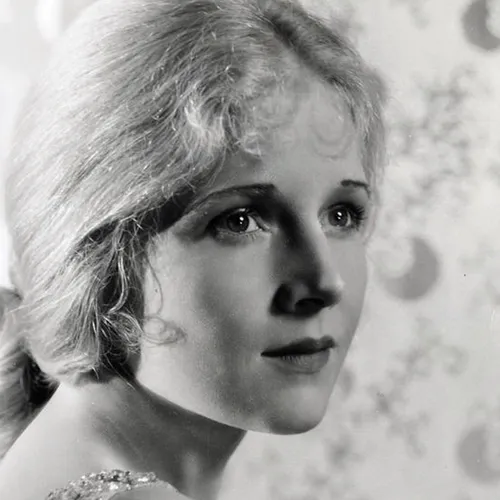
An American theater, motion picture, radio, and television actress.
Ann Harding emerged as a remarkable actress whose career spanned stage, radio, film, and television during the golden age of entertainment. Her distinctive voice and elegant screen presence made her a standout performer who bridged multiple media platforms during the early 20th century.
Early Life and Theatrical Beginnings
Born Dorothy Walton Gatley on August 7, 1902, in San Antonio, Texas, Ann Harding came from a military family that frequently relocated. Her father, a career army officer, initially opposed her acting ambitions, which prompted her to adopt the stage name Ann Harding. Harding's initial professional path was unconventional. She first worked as a secretary, where her exceptional diction and vocal skills became apparent. While working with a Dictaphone, she developed remarkable tone and cadence that would later prove invaluable in her acting career. Her early theatrical training began in dramatic classes, and she made her stage debut in Like a King in 1921.
Rise in Theatre and Transition to Film
The Hedgerow Theatre in Pennsylvania became Harding's artistic home, where she performed under director Jasper Deeter and even purchased the theatre building in 1931 for $5,000, donating it to the company. Her stage experience provided her with exceptional performance skills that would distinguish her in early talking pictures. In 1929, Harding made her film debut, quickly becoming recognized for her extraordinary vocal qualities that worked perfectly with the new sound recording technology. Her performances were critically acclaimed, with reviewers praising the depth she brought to her characters due to her extensive stage background.
Hollywood's Leading Lady
During the 1930s, Harding became a prominent Hollywood actress. She was contracted with RKO Studios and was promoted as the studio's answer to Katharine Hepburn. Her films during this period included notable works like Holiday (1930), for which she received an Academy Award nomination, and The Animal Kingdom (1932). However, Harding eventually became typecast as the "beautiful, innocent, self-sacrificing woman," which made securing roles more challenging. After marrying conductor Werner Janssen in 1937, she worked more sporadically, with occasional significant roles in films like Eyes in the Night (1942) and The Man in the Gray Flannel Suit (1956).
Later Career and Legacy
In her later years, Harding transitioned between media platforms. She appeared occasionally in television between 1955 and 1965, including roles in shows like Alfred Hitchcock Presents and The Defenders. She also returned to the stage in the early 1960s, performing in General Seeger and Abraham Cochrane. Harding's contributions to entertainment were recognized with two stars on the Hollywood Walk of Fame - one for motion pictures and another for television, both awarded on February 8, 1960. She passed away on September 1, 1981, in Los Angeles, leaving behind a remarkable legacy in American entertainment.
Works and Appearances
Film
- Paris Bound (1929)
- Holiday (1930) - Nominated for Academy Award
- East Lynne (1931)
- The Animal Kingdom (1932)
- Eyes in the Night (1942)
- The Man in the Gray Flannel Suit (1956)
Television
- Alfred Hitchcock Presents (1961)
- The Defenders (1963)
- Ben Casey (1965)
Theatre
- Like a King (1921)
- General Seeger (1962)
- Abraham Cochrane (1964)