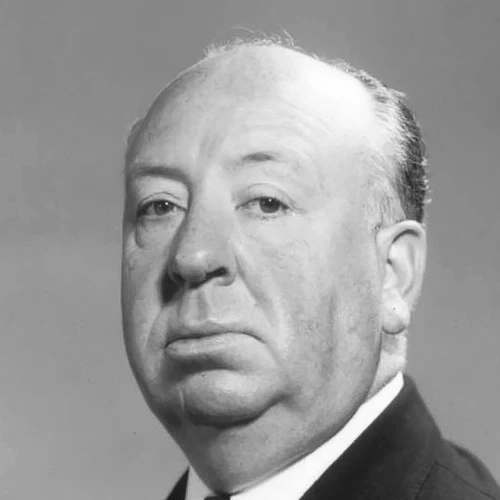
Alfred Hitchcock
In the golden age of radio, few personalities wielded as much narrative power and innovative storytelling technique as Alfred Hitchcock. Though primarily known for his groundbreaking film work, Hitchcock's forays into radio broadcasting revealed a profound understanding of audio storytelling that would influence generations of media creators.
Early Radio Experiments and the Birth of Suspense
Hitchcock's radio journey began with a pivotal moment in July 1940 when he directed the audition episode for CBS's Suspense series. Adapting his own 1926 silent film The Lodger, Hitchcock demonstrated his extraordinary ability to create tension through sound alone. The Variety review of the broadcast praised his "Ravel-like rhythmic pummelling of the nervous system," highlighting how he used music, sound effects, and carefully crafted narrative pacing to build suspense.
Pioneering Radio Pilot Projects
In the mid-1940s, Hitchcock developed two ambitious radio pilot projects that, while never becoming full series, showcased his innovative approach to audio storytelling. Once Upon a Midnight, proposed for ABC Radio, was conceived as a series where Hitchcock would personally choose and narrate adaptations of previously published short stories.
The pilot episode, based on Francis Iles' novel Malice Aforethought, featured an intriguing production approach. Felix Mills was hired as chief musician, with Hitchcock insisting that music be used to emphasize verbal and physical actions rather than merely bridging scenes. The pilot starred Jessica Tandy and Hume Cronyn, and included a remarkable opening narration that positioned the series as a potential "milestone in radio".
Innovative Narrative Techniques
What distinguished Hitchcock's radio work was his profound interest in psychological exploration. As he himself noted, "I'm interested in people, in characters... horrible characters. I like to crawl inside a man's mind if I can possibly do so, and find out what makes him behave like a madman". This approach transformed radio from mere entertainment to a medium of psychological investigation.
Legacy in Radio Broadcasting
Although Hitchcock's radio series never fully materialized, his influence on the medium was significant. The Suspense series, which originated from his The Lodger pilot, became one of radio's most iconic thriller programs. His experiments demonstrated how sound, narrative technique, and psychological depth could create immersive storytelling experiences.
Conclusion
Alfred Hitchcock's radio work, though brief, was revolutionary. He approached radio not as a secondary medium, but as a sophisticated platform for storytelling. By focusing on character psychology, innovative sound design, and narrative tension, he expanded the possibilities of audio storytelling and laid groundwork for future generations of media creators.
Works and Appearances
Radio
- The Lodger (CBS Forecast, July 22, 1940) - Directed and adapted
- Once Upon a Midnight (ABC Radio Pilot, May 11, 1945) - Host and Narrator
- The Alfred Hitchcock Show (ABC Radio Pilot, 1947-1948) - Host and Narrator
Television
- Alfred Hitchcock Presents (1955-1965) - Host and Occasional Director
- The Alfred Hitchcock Hour (1962-1965) - Host and Occasional Director
Film (Select Directing Credits)
- Rebecca (1940)
- Suspicion (1941)
- Notorious (1946)
- Rear Window (1954)
- Vertigo (1958)
- Psycho (1960)