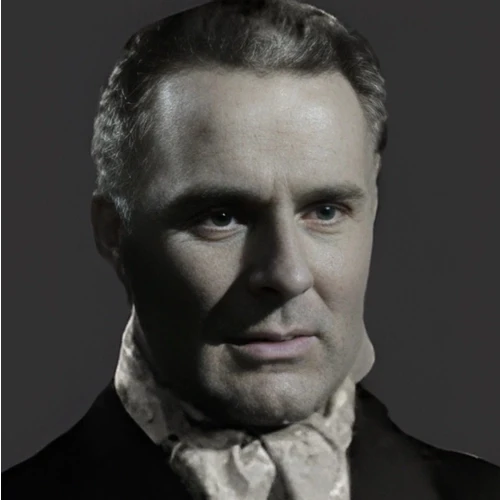
In the golden age of radio, few voices were as distinctive and commanding as that of Alexander Scourby. A master narrator, actor, and voice artist, Scourby's resonant tones became synonymous with quality broadcasting and storytelling across multiple media. His remarkable career spanned radio, television, film, and audio recordings, making him one of the most versatile performers of the mid-20th century.
Early Life and Theatrical Beginnings
Born on November 13, 1913, in Brooklyn, New York, Alexander Scourby emerged from a Greek immigrant family with a passion for performance. His father, Constantine Nicholas Scourby, was a successful restaurateur and baker, while his mother, Betsy Patsakos, supported her son's artistic aspirations. Initially envisioning a career in writing, Scourby quickly discovered his true calling was in performance.
After being dismissed from Polytechnic Prep School, Scourby completed his secondary education at Brooklyn High School. It was here that he first tasted the excitement of performance, becoming a co-editor of the school magazine and making his stage debut in The Meanest Man in the World. Encouraged by his teachers, he began to seriously pursue acting, recognizing that reading aloud came naturally to him in ways that writing never did.
Radio and Narrative Mastery
Scourby's radio career took flight in the 1930s, quickly establishing him as a sought-after narrator and actor. He became a regular voice on numerous dramatic shows, including NBC's Sunday program, where he developed a reputation for his deep, authoritative voice. During World War II, his broadcasts were transmitted abroad in Greek and English for the Office of War Information, showcasing his linguistic versatility.
His narrative skills were particularly celebrated. By the early 1940s, he was narrating serial melodramas and musical shows, often using the pseudonym Alexander Scott. Critics noted his voice had "the kind of resonance closely associated with big time radio," a description that would follow him throughout his career.
Pioneering Audio Recordings
Perhaps Scourby's most significant contribution was his groundbreaking work in audio recordings. He was the first person to record the King James Bible on long-play records, a project that took over four years and resulted in 169 LP records with a total running time of 84.5 hours. More impressively, he recorded 422 books for the Talking Books program of the American Foundation for the Blind, including literary classics like Homer's Iliad, Tolstoy's War and Peace, and Joyce's Ulysses.
Scourby considered these talking books his most important work, demonstrating a commitment to making literature accessible that went far beyond traditional performance. His recordings were renowned for their clarity, emotion, and profound respect for the written word.
Diverse Media Career
While radio and audio recordings defined much of Scourby's career, he was also a accomplished performer in television and film. He appeared in numerous TV shows like Playhouse 90 and General Electric Theater, often taking character roles that showcased his dramatic range. In cinema, he appeared in films such as The Harder They Fall (1956) and The Garment Jungle (1957), though he was typically modest about his film work.
Legacy and Impact
Alexander Scourby passed away on February 22, 1985, leaving behind a legacy that transformed audio storytelling. His voice became synonymous with quality narration, setting a standard that few have matched. He was more than just a voice actor; he was a storyteller who believed in the power of the spoken word to connect, educate, and inspire.
Works and Appearances
Radio:
- Various serial melodramas (1940s)
- NBC Sunday program narrator
- Office of War Information broadcasts
Television:
- Playhouse 90
- General Electric Theater
- The Doctors (1972-1974)
Film:
- The Harder They Fall (1956)
- The Garment Jungle (1957)
- Affair in Trinidad (1952)
Audio Recordings:
- King James Bible (first complete LP recording)
- 422 Talking Books for the American Foundation for the Blind
- A Golden Treasury of Poetry
- First Man on the Moon documentary
Notable Narrations:
- The Once and Future King
- Homer's Iliad
- Tolstoy's War and Peace
- Joyce's Ulysses