Warren William
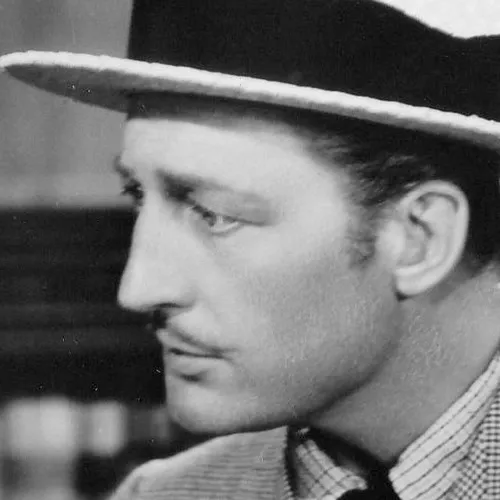
Warren William was a prominent Broadway and Hollywood actor whose career embodied the glitz, moral ambiguity, and dramatic transitions of early 20th‑century American cinema. With a commanding presence, a deep voice, and a versatile screen persona, he rose to prominence in the pre–Production Code “talkies” era, often portraying morally complex businessmen, lawyers, and anti‑heroes — yet also capable of sympathic and heroic roles. His body of work left a lasting mark on Hollywood’s Golden Age, defining several archetypes still familiar today.
Early Life and Theatrical Roots
Warren William was born Warren William Krech on December 2, 1894, in Aitkin, Minnesota, the son of a newspaper publisher. Originally, he planned to become a journalist — a path tied to his family’s background — but changed course to pursue acting. He enrolled at the American Academy of Dramatic Arts (AADA) to study acting. With the outbreak of the First World War, he served in France — and after the Armistice, he remained in Europe with a theatrical company, touring in plays before returning to the United States. Back in America, William launched a stage career in New York. He made his Broadway debut in 1924 in the play The Wonderful Visit, credited as “Warren W. Krech.” Between 1924 and 1930, he appeared in some 17 or more Broadway productions, honing his craft across varied roles. Even as stage work dominated those years, William also appeared in at least three silent films under his birth name.
Rise in Hollywood and Pre‑Code Stardom
When Hollywood shifted dramatically with the advent of sound films, William was well positioned: his rich, deep, mellifluous speaking voice and elegant bearing made him a natural for the new “talkies.” In 1931, he signed with Warner Bros. and starred in his first significant talking film, Honor of the Family — an adaptation of a novel by Honoré de Balzac. Throughout the early 1930s, William became known for playing ambitious, morally ambiguous businessmen, crooked lawyers, and morally conflicted protagonists — often in stories of crime, power, and social ambition. His breakthrough came with The Mouthpiece (1932), in which he played a district attorney who quits the law only to defend mobsters — a role that cemented his reputation as “the quintessential pre‑Code tough guy” on screen. He followed that with a string of prominent films: Skyscraper Souls (1932), The Match King (1932), Employees' Entrance (1933), Three on a Match (1932), and Gold Diggers of 1933 (1933). What set William apart was his exquisite blend of charisma, urbane elegance, and moral duplicity — he could charm as easily as he could intimidate. This complexity resonated with audiences during the pre‑Code era, when Hollywood explored morally grey stories with fewer restrictions.
Notable Roles, Range, and Late Career Transitions
Although often cast as cynical, self‑interested characters, Warren William also demonstrated surprising range. In Imitation of Life (1934), he played the sensitive romantic lead opposite Claudette Colbert — a marked departure from his typical “crooked businessman” persona. In the same year, he was cast as Julius Caesar in Cleopatra (1934), again opposite Colbert — demonstrating that William could inhabit classical, commanding roles as well as underworld cynics. William also became the first film actor to portray fictional defense attorney Perry Mason, debuting in The Case of the Howling Dog (1934) — a role he played in four films. He likewise took on sleuth roles: he portrayed detective Philo Vance in The Dragon Murder Case (1934) and later in The Gracie Allen Murder Case (1939). By the end of the 1930s, as the film industry changed and the Production Code tightened moral standards, William transitioned into character roles and B‑films. Notably, he starred as the reformed jewel thief “The Lone Wolf” (Michael Lanyard) in a series of Columbia Pictures films beginning with The Lone Wolf Spy Hunt (1939). Even as leading-man status faded, William continued to work steadily into the 1940s, often cast for his patrician presence and urbane elegance.
Personal Life, Character, and Untimely Death
Although his on-screen persona was often ruthless or morally ambiguous, off screen William was personally quiet, reserved, and less flamboyant than many of his contemporaries. According to co-star accounts, he was “a shy and retiring type.” He married Helen Barbara Nelson in 1923; the marriage endured until his death. Beyond acting, William was also an amateur inventor. He reportedly held patents, including one for an early lawn vacuum, and is said to have designed one of the first recreational vehicles — allegedly to allow him to sleep while being driven to the studio each morning. On September 24, 1948, at the age of 53, Warren William died in Hollywood, California, from multiple myeloma. Though his career had slackened by then, his contributions during Hollywood’s formative era remained influential.
Legacy and Influence
Warren William came to be known as one of the quintessential “pre‑Code” actors — a period when Hollywood films explored more adult themes of corruption, greed, seduction, and moral ambiguity before censorship tightened. His portrayals of unscrupulous businessmen, corrupt lawyers, hard-edged politicians, and reformed criminals helped define the tone of early sound films. At the same time, his ability to pivot into sympathetic leads, romantic interests, and heroic figures speaks to a versatility that kept him relevant even as audience tastes and industry norms shifted. His legacy is cemented by a star on the Hollywood Walk of Fame, honoring his contributions to motion pictures. Though not as widely remembered today as some contemporaries, film historians regard him as a key figure in the transition from silent to sound cinema — a man whose screen persona reflected the complexities and contradictions of early Hollywood.
Works and Appearances
Theater (Broadway)
- The Wonderful Visit (1924)
- Expressing Willie (1924)
- Nocturne (1925)
- The Blue Peter (1925)
- Rosmersholm (1925)
- Twelve Miles Out (1925‑26)
Film (selected highlights)
- Honor of the Family (1931)
- The Mouthpiece (1932)
- Skyscraper Souls (1932)
- The Match King (1932)
- Employees' Entrance (1933)
- Three on a Match (1932)
Recognition
- Star on the Hollywood Walk of Fame (Vine Street) for contributions to motion pictures