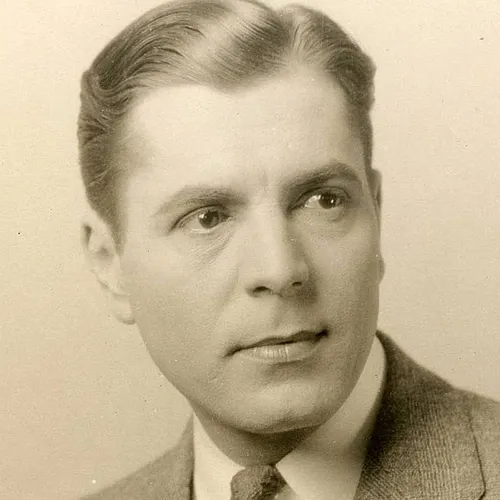
Warner Baxter
Warner Baxter was a celebrated American actor whose magnetic screen presence and versatile performances left an indelible mark on early 20th-century cinema. Best known for his Academy Award-winning role as the Cisco Kid in In Old Arizona (1928), Baxter brought charm, charisma, and subtle nuance to a wide variety of roles spanning silent films, early sound cinema, and recurring series characters. His career reflected both the glamour and challenges of Hollywood’s Golden Age, balancing critical acclaim with personal trials.
Early Life and Background
Warner Leroy Baxter was born on March 29, 1889, in Columbus, Ohio, to Edwin F. Baxter, a cigar stand operator, and Jennie (Jane) B. Barrett. Tragically, Baxter’s father passed away before he turned five, leaving his mother to raise him. This early loss perhaps instilled in Baxter a resilience that would serve him throughout his demanding career. Details about his early education are sparse, but his upbringing in Ohio exposed him to the cultural shifts of a rapidly modernizing America. Baxter’s youth was marked by a blend of ambition and adaptability. He was drawn to the performing arts, initially finding opportunities in theater before transitioning to the burgeoning film industry. The early 20th century offered a fertile environment for aspiring actors, and Baxter’s determination, combined with his natural charm, positioned him to seize the opportunities that would define his legacy.
Film Career and Rise to Stardom
Baxter began his screen career in 1914, entering the silent film era with a series of supporting roles. He quickly distinguished himself through his performances in films such as The Awful Truth (1925) and The Great Gatsby (1926), showcasing a range that encompassed both dramatic intensity and romantic sophistication. His ability to convey complex emotion without dialogue was critical in an era that relied heavily on visual storytelling. Baxter’s breakthrough came with the role of the Cisco Kid in In Old Arizona (1928), a performance that earned him the Academy Award for Best Actor at the 2nd Academy Awards. This role cemented his reputation as a leading man capable of combining physical charisma with emotional depth. He frequently played Latin bandit or womanizing characters in Westerns, which became a recurring motif in his filmography throughout the 1930s. Despite this typecasting, Baxter maintained a diverse portfolio, appearing in ensemble pieces like The Stolen Jools (1931) and the musical drama 42nd Street (1933). In the late 1930s, Baxter expanded into family-oriented films, co-starring in Kidnapped (1938) alongside Freddie Bartholomew, demonstrating his adaptability to different genres and audiences. His career longevity was notable, spanning from the silent era into the sound era while retaining critical and popular appeal.
Signature Roles and Style
Baxter’s performances were marked by a blend of sophistication and charm. His portrayal of the Cisco Kid epitomized the romanticized outlaw archetype of early Western cinema, balancing daring exploits with a warm, approachable demeanor. In his later years, he became known for his recurring role as Dr. Robert Ordway in the Crime Doctor series of ten films during the 1940s, where he demonstrated a quiet, authoritative presence suited to procedural mysteries. Audiences appreciated Baxter’s naturalistic style, which often contrasted with the more theatrical acting common in early sound films. He brought subtle facial expressions, precise gestures, and a careful modulation of voice to his roles, contributing to a more realistic and relatable cinematic experience. This technique helped him transition successfully from silent films to "talkies," a hurdle that many of his contemporaries struggled to overcome.
Personal Life and Challenges
Baxter’s personal life was marked by both love and tragedy. He married Viola Caldwell in 1911, but the union ended in divorce two years later. In 1918, he married Winifred Bryson, who remained his partner until his death. Despite professional success, Baxter faced significant personal challenges, including periods of stress and health concerns later in life. These struggles, coupled with the demands of a prolific film career, underscored the pressures faced by Hollywood stars of the era. Baxter passed away on May 7, 1951, in Beverly Hills, California, at the age of 62. He was interred at Forest Lawn Memorial Park in Glendale, California, leaving behind a legacy of artistic achievement and a model of professional resilience.
Legacy and Recognition
Baxter’s contributions to cinema were formally recognized with a star on the Hollywood Walk of Fame, commemorating his influence on the motion-picture industry. His portrayal of the Cisco Kid not only defined a genre archetype but also inspired subsequent portrayals of charismatic outlaws in film and radio adaptations, demonstrating the enduring cultural resonance of his work. Though primarily remembered as a film actor, Baxter’s versatility and enduring popularity reflected the transitional nature of early 20th-century entertainment, bridging silent and sound films and influencing generations of actors who followed. His career exemplifies the Golden Age of Hollywood’s blend of glamour, innovation, and the pressures of maintaining both personal and professional balance.
Works and Appearances
Cinema
- The Awful Truth (1925)
- The Great Gatsby (1926)
- In Old Arizona (1928)
- The Stolen Jools (1931)
- 42nd Street (1933)
- Slave Ship (1937)
- Kidnapped (1938) –
- Crime Doctor series (1940s)
Recognition
- Academy Award for Best Actor, 1929 (In Old Arizona)
- Star on the Hollywood Walk of Fame