Walter Huston
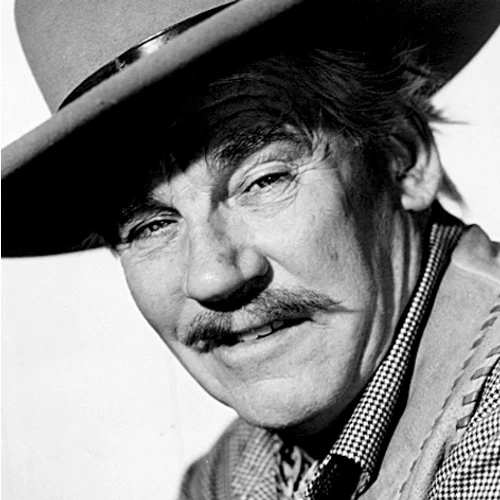
Walter Huston was a man of contradictions—a trained engineer who became an actor, a stage virtuoso who conquered early sound cinema, and a versatile performer who moved seamlessly between Broadway, Hollywood, and the radio microphone. His career spanning nearly five decades demonstrated a rare ability to adapt and excel across multiple entertainment mediums, yet his voice and presence remain most vividly captured in the golden age broadcasts that reached millions of American homes. While Huston is perhaps best remembered for his Academy Award-winning film roles, his contributions to radio broadcasting reveal an artist committed to bringing depth and authenticity to whatever medium claimed his talent.
From Engineering to the Footlights
Walter Thomas Huston was born in 1884 and initially pursued a practical path far removed from the theatrical world. He studied engineering and worked in construction, preparing for a life of blueprints and building sites rather than scripts and spotlights. However, the allure of performance proved irresistible. In his spare time, he attended the Shaw School of Acting, nurturing an artistic passion that would eventually overwhelm his professional obligations. The stage called louder than any building project ever could. Huston's theatrical ambitions manifested dramatically when he was just 16 years old. He was hired for a road show called The White Heather, but his parents refused to allow him to leave school for the opportunity. Undeterred by parental disapproval, Huston eventually pursued his theatrical dreams in earnest. He made his stage debut in Toronto in 1902, taking the first of many steps toward becoming one of entertainment's most respected figures. Three years later, he appeared in New York City, beginning to build connections in the theatrical world. By 1909, Huston had made the decisive break from his engineering career, dedicating himself fully to the theater. What followed was a period of apprenticeship in vaudeville, where he honed his craft alongside other performers. The vaudeville circuit was his training ground, teaching him timing, audience connection, and the art of holding attention in live performance—skills that would prove invaluable when he later addressed the radio audience through a microphone rather than across a theater footlights.
The Broadway Triumph and Radio Emergence
Huston's Broadway career officially launched on January 22, 1924, when he performed in the play Mr. Pitt. This production marked his formal entry into New York's theatrical establishment, though it was quickly overshadowed by his acclaimed performance that same year in Eugene O'Neill's Desire Under the Elms, where he played the character Ephraim Cabot. The critical success of this Shakespearean-scale tragedy established Huston as a serious dramatic actor capable of handling complex, emotionally demanding roles. He followed this triumph with roles in Kongo, The Barker, and Elmer the Great, solidifying his reputation as a dependable leading man in major Broadway productions. In 1924, Huston married actress Nan Sunderland, beginning a personal partnership that would intertwine with his increasingly busy professional life. His Broadway success continued with a New York Drama Critics Award for best actor in the stage version of Dodsworth in 1934, an accomplishment that demonstrated his ability to carry prestigious productions on his shoulders. It was during this golden period of Broadway dominance that Huston also began exploring the emerging medium of radio, where his distinctive voice and dramatic authority could reach audiences far beyond the confines of any theater. The transition from stage to radio came naturally for an actor of Huston's caliber. Radio required the very skills he had perfected in vaudeville and Broadway: vocal control, emotional nuance, and the ability to paint vivid pictures with sound alone. While specific details about his early radio work remain somewhat elusive in the historical record, it is clear that Huston recognized the medium's potential and participated in various radio programs, including guest appearances and dramatic productions that showcased his versatility.
The Hollywood Pivot and Golden Age of Sound
When talking pictures revolutionized Hollywood in the late 1920s, Huston made the geographical and professional leap to California. In 1929, he appeared in Gentlemen of the Press, marking his film debut, followed quickly by his first significant role as the villainous Trampas in the Western The Virginian, which also starred Gary Cooper and Richard Arlen. This performance announced Huston's arrival as a formidable screen actor, capable of commanding attention alongside major Hollywood stars. The early sound era proved especially fertile for Huston's career. He appeared as Abraham Lincoln in the 1930 film of the same name, portraying the American president with the gravitas the role demanded. Rain (1932) and Gabriel Over the White House (1933) followed, each showcasing different facets of his dramatic range. His performance in Dodsworth (1936), reprising his Broadway role as a successful industrialist confronting personal crisis, earned him both a New York Film Critics Circle Award for Best Actor and an Academy Award nomination for Best Actor, cementing his status as one of Hollywood's finest character actors. Huston's film career reached its pinnacle in 1948 when he portrayed the weathered prospector Howard in The Treasure of the Sierra Madre, directed by his own son, John Huston. This collaboration resulted in historic recognition: Walter won the Academy Award for Best Supporting Actor and the Golden Globe Award, while John won the Academy Award for Best Director, making them the first father and son to win at the same ceremony. This achievement remains one of cinema's most celebrated family moments and represents the apex of Walter's film career.
Radio, War, and Cultural Impact
Throughout the 1930s and 1940s, while establishing himself as a major film actor, Huston maintained his connection to radio broadcasting. He performed "September Song" in the original Broadway production of Knickerbocker Holiday in 1938, and his recording of this standard was heard repeatedly in the 1950 film September Affair, demonstrating how his recorded performances continued to circulate through popular culture. His distinctive baritone voice, seasoned by decades of theatrical training, made him a natural choice for radio dramatizations and musical broadcasts. During World War II, Huston contributed to the war effort both on film and through radio. He served as narrator for the Why We Fight series of documentaries directed by Frank Capra, lending his authoritative voice to these important patriotic productions. He also appeared in propaganda films including Mission to Moscow (1943), where he played United States Ambassador Joseph E. Davies, and The North Star (1943). His participation in these wartime projects reflected the commitment many Hollywood figures made to supporting Allied efforts through their craft and celebrity.
A Legacy of Artistic Integrity
Walter Huston's career demonstrates the path of an artist unwilling to be confined by medium or genre. From his humble beginnings as an engineer's son to his status as an Academy Award winner, he embodied the versatile entertainer of the twentieth century. His voice—whether projected across Broadway stages, captured on film, transmitted through radio speakers, or preserved on recordings—became synonymous with authority, emotional depth, and professional excellence. While his film roles have been extensively documented and celebrated, his contributions to radio broadcasting, though less frequently discussed, reflect his commitment to reaching audiences through every available technological avenue. Huston worked steadily until 1950, when The Furies became his final film role, having spent nearly 48 years in theater, vaudeville, radio, television, and cinema. He passed away in 1950, leaving behind a body of work that few performers in any era have matched for quality and breadth.
Works and Appearances
Radio
- Knickerbocker Playhouse for CBS (1939)
- Why We Fight series (1940s)
- Recording of "September Song" (1938 onwards) -
Theater
- The White Heather (1902) - Road show
- Stage debut - Toronto (1902)
- Mr. Pitt (January 22, 1924) - Broadway debut, role of Marshall Pitt
- Desire Under the Elms (1924) - Role of Ephraim Cabot, Eugene O'Neill production
- Kongo (1924)
- The Barker (1924)
Cinema
- Gentlemen of the Press (1929) - First film role, Wickland Snell
- The Lady Lies (1929) - Robert Rossiter
- The Virginian (1929) - Trampas (first major film role), co-starring Gary Cooper and Richard Arlen
- Abraham Lincoln (1930) - Title role
- The Bad Man (1930) - Pancho Lopez
- The Virtuous Sin (1930) - Gen. Gregori Platoff
- The Criminal Code (1931) - Mark Brady
Other Media
- Vaudeville performances (1909-1923)
- Television appearances and broadcasts (1940s-1950s)
Heard in