Veronica Lake
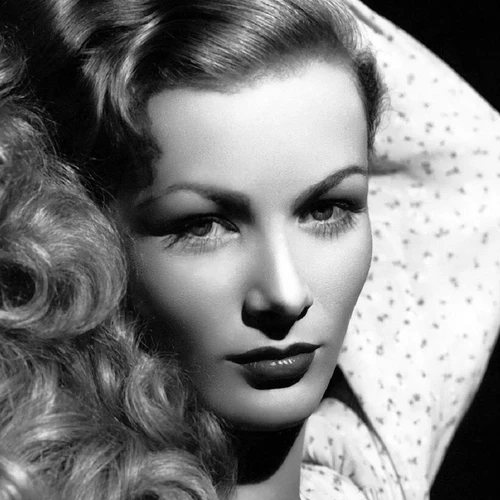
Veronica Lake was far more than the stunning film noir actress with the iconic peek-a-boo hairstyle—she was also a talented radio performer whose sultry voice captivated audiences throughout the 1940s and into the early 1950s. While her film career with Alan Ladd defined her legacy in cinema, Lake's sporadic but memorable radio appearances showcased her versatility as an entertainer and her willingness to engage with audiences across multiple media formats during Hollywood's golden age.
The Golden Age of Radio Performance
Lake's radio career began in earnest during the early 1940s, a period when major film stars routinely made guest appearances on popular radio programs. Her first recorded radio appearance occurred on February 9, 1943, when she guest-starred on the Bob Hope program alongside Paulette Goddard. Just weeks later, on February 16, 1943, Lake appeared as a guest on Burns and Allen, one of radio's most beloved comedy shows. These early appearances established her as a sought-after guest performer, capitalizing on her meteoric rise to stardom following the success of I Wanted Wings and Sullivan's Travels. Lake's radio work coincided perfectly with her peak years in Hollywood. During 1943 and 1944, she was at the height of her popularity, commanding significant salary—earning $4,500 per week at one point—and enjoying widespread recognition as one of Paramount's brightest stars. Her willingness to participate in radio broadcasts during this period reflected the common practice among A-list Hollywood talent to maintain presence across entertainment mediums and connect with fans who could not see their films in theaters.
Signature Radio Programs and Dramatic Roles
Lake became a regular presence on the prestigious Lux Radio Theatre, one of radio's most prestigious dramatic programs, which recreated popular films with their original or equivalent casts. She made her first appearance on March 30, 1943, performing in I Wanted Wings, the very film that had launched her to stardom. Lake returned to Lux Radio Theatre multiple times throughout the 1940s, demonstrating the program's confidence in her abilities as a radio performer. Her appearances included November 1, 1943, for So Proudly We Hail!, a film in which she had received critical acclaim for her role as a suicidal nurse. Later, on November 18, 1946, she reunited with her frequent film partner Alan Ladd on Lux Radio Theatre for O.S.S. Beyond the Lux broadcasts, Lake demonstrated her range across various programs. She appeared on The Screen Guild Theater, another major dramatic series, performing in This Gun for Hire on April 2, 1945, and reprising her role from The Blue Dahlia on April 21, 1949. On April 20, 1947, Lake participated in Exploring the Unknown, a drama anthology series, performing in an episode titled "The Dark Curtain," which dealt with the disturbing subject matter of brain surgery and mental deterioration. These diverse roles showcased Lake's dramatic capabilities and her willingness to tackle challenging material beyond her typical glamorous on-screen persona.
Guest Appearances and Variety Programming
Lake also made strategic guest appearances on comedy and variety programs that broadened her appeal to radio audiences. On January 8, 1944, she appeared on Command Performance, a military-oriented variety show. The Charlie McCarthy program, featuring ventriloquist Edgar Bergen's famous dummy, welcomed Lake as a guest star on February 18, 1945, alongside singer Ginny Simms. One of her more memorable appearances came on December 15, 1950, when she guest-starred on Duffy's Tavern, a long-running comedy program, in an episode titled "Archie Wants Veronica Lake to Help Promote a New Latin Singer." This appearance demonstrated that Lake maintained her radio visibility well into the 1950s, even as her film career began to decline. Lake's final documented radio appearance was on December 12, 1954, when she performed on The Jack Benny Program, the legendary comedian's iconic show, in an episode called "A Trip to Palm Springs." By this time, Lake's Hollywood career had significantly diminished—she made only one film during the entire 1950s—yet her name still carried enough cachet for major radio programs to seek her participation.
The Lost Years and Legacy of Radio Work
In total, Lake made approximately fifteen radio show recordings with a combined playtime of over eight hours, capturing performances that remain commercially available to modern audiences through archival collections and digital media. These recordings represent an important dimension of Lake's career that has often been overshadowed by her film noir legacy. Her radio work during the 1940s and early 1950s provided an alternative outlet for her talents during a period when her film roles became increasingly difficult and her personal life spiraled into turmoil. By the late 1940s, Lake's career began its steep decline due to factors including her complex personality, difficult behavior on set, personal tragedies, and escalating alcoholism. While her film appearances diminished dramatically after 1948, her radio work provided some continuity during these turbulent years. The medium's live or semi-live nature and one-off guest appearance format may have suited her better than the intensive, long-term film productions that exposed her to prolonged conflict with directors and co-stars.
Conclusion
Veronica Lake's radio career, though often overlooked in discussions of her Hollywood legacy, reveals an important aspect of her professional identity. Between 1943 and 1954, she appeared on some of radio's most prestigious programs, demonstrating her versatility as a performer across drama, comedy, and variety formats. Her participation in these broadcasts kept her connected to audiences and the entertainment industry during periods when her film career faced significant challenges. Today, her archived radio performances stand as testament to her work beyond the silver screen and provide a fascinating window into the golden age of radio broadcasting, when Hollywood's biggest stars regularly crossed over to captivate audiences through the miracle of radio technology.
Works and Appearances
Radio
- Bob Hope
- Burns and Allen
- Lux Radio Theatre
- Lux Radio Theatre
- Command Performance
- Charlie McCarthy
- The Screen Guild Theater
- Lux Radio Theatre
- Exploring the Unknown
- The Screen Guild Theater —
- Lux Radio Theatre
- Duffy's Tavern — "Archie Wants Veronica Lake to Help Promote a New Latin Singer"
- The Jack Benny Program