Vanessa Brown
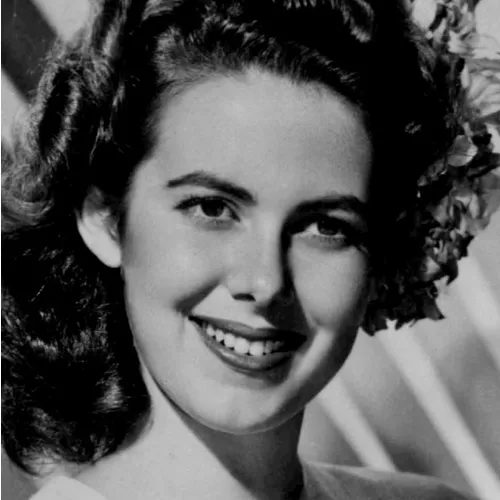
Vanessa Brown stands as a remarkable figure in broadcasting history—a woman whose exceptional intellect and versatile talent made her a fixture across radio, television, film, and stage during entertainment's most formative decades. Born Smylla Brind on March 24, 1928, in Austria, she would become one of the most accomplished performers of her generation, seamlessly transitioning between media while maintaining the intellectual credibility that defined her early career. With an extraordinary IQ of 165, Brown brought a rare combination of brains and charisma to every project she undertook, establishing herself as more than just another ingénue in a studio system full of them.
A Prodigious Beginning
The Brind family's immigration to America set the stage for young Vanessa's extraordinary career. Fluent in several languages from childhood, she possessed an intellectual sophistication that would distinguish her throughout her professional life. Her theatrical inclinations emerged early—during her high school years in New York, she distinguished herself not merely as a performer but as a writer and director of school plays, revealing creative ambitions that extended beyond acting alone. Her formal education at the University of California, Los Angeles reinforced her intellectual credentials. Graduating in 1949 with a major in English, Brown served as a movie critic and feature writer for the Daily Bruin, the campus newspaper, demonstrating expertise in analyzing dramatic works and cinematic storytelling. This academic foundation would prove instrumental in shaping how she approached performance; she brought analytical depth to roles that might have otherwise remained superficial in less capable hands. Her initial theatrical break came through an audition for Lillian Hellman, the legendary playwright. Impressed by Brown's linguistic abilities and natural talent, Hellman signed her as understudy to Ann Blyth in Watch on the Rhine, eventually allowing Brown to originate the role of Babette both on Broadway and in the touring production. This early success demonstrated that Brown possessed not merely technical proficiency but the artistic presence necessary to command significant roles.
The Quiz Kid Phenomenon
Brown's entry into radio, however, came through a path that perfectly suited her exceptional mind. Her IQ of 165 led directly to a two-year engagement as one of the young panelists on the radio series Quiz Kids, where she specialized in literature and language. This wasn't merely a curiosity act—Brown's appearances on the show established her as a genuine intellectual while building her reputation as a radio performer. The platform proved invaluable, introducing her talents to a national audience and creating opportunities that would define the next phase of her career. Throughout her adult years, Brown remained active in radio programming that emphasized her intellectual capabilities. She hosted an interview program on the Voice of America, continuing to leverage her linguistic talents and sophisticated understanding of cultural matters. Her presence on major dramatic anthology programs further expanded her reach and credibility. She appeared on Lux Radio Theatre, Skippy Hollywood Theatre, NBC University Theatre, and Theatre Guild on the Air—prestigious dramatic showcases where serious actors demonstrated their craft. These roles allowed Brown to showcase her dramatic range while maintaining the intellectual respectability that had launched her radio career.
From Hollywood Studio System to Stardom
RKO Radio Pictures brought Brown's family to Los Angeles, and she made her film debut in 1944 as Tessa Brind in Youth Runs Wild. The studio immediately recognized her potential and changed her screen name to Vanessa Brown, assigning her to a series of ingenue roles over the following years. This path, while promising, risked typecast her as merely another pretty face in the studio system—a fate that Brown's intelligence and versatility would ultimately transcend. Her most notable film opportunity came in 1950 when she was selected for the role of Jane in Tarzan and the Slave Girl, opposite Lex Barker. However, Brown made a decisive career choice that revealed her artistic priorities: she appeared in only one entry of the series before moving on to other projects. This decision to avoid being locked into a franchise demonstrated her commitment to varied, challenging work rather than the security of a continuing series. She also served as a junior member of the National Board of Review, the critical panel serving the motion picture industry, further cementing her reputation as someone who understood cinema from both creative and analytical perspectives. This role provided her with insider access to the industry's most serious critical voices and demonstrated the esteem in which she was held by her peers.
Television's Golden Age and Lasting Contributions
When television emerged as a dominant entertainment medium in the 1950s, Brown seamlessly transitioned to this new frontier. She became a regular panelist on I'll Buy That on CBS, bringing her quick wit and intelligence to quiz programming. More significantly, she appeared in live television dramas of the early 1950s, including Robert Montgomery Presents and The Philco Television Playhouse—demanding live productions where mistakes could not be edited out and actors had to deliver polished performances in real time. Beyond drama, Brown demonstrated her versatility as a personality, appearing on Pantomime Quiz and Leave It to the Girls, establishing herself as a natural television performer. Later in her career, she appeared on The Wonder Years and Murder, She Wrote, proving her longevity in an industry where many careers flame out quickly. She guest-starred on Perry Mason as Donna Kress in the episode "The Case of Paul Drake's Dilemma" in 1959, and played the title role in the Wagon Train episode "The Sally Potter Story," which aired on April 9, 1958, opposite a young Martin Milner in a romantic storyline.
Stage, Writing, and Theatrical Legacy
Brown's theatrical ambitions never diminished despite her success in broadcast media. She originated the role of "The Girl" in The Seven Year Itch on Broadway—the very character that Marilyn Monroe would immortalize in the 1955 film version. This achievement positioned Brown within Broadway's pantheon, having created a role that would become iconic through its film adaptation, even though another performer ultimately received greater recognition for the part. Beyond performing, Brown ventured into theatrical writing, authoring Europa and the Bull, based on the classical legend of Europa. This creative expansion demonstrated her commitment to contributing to theater as a medium rather than simply appearing in productions created by others. She also served as one of the narrators for the United World Federalists documentary Eight Steps to Peace in 1957, alongside prestigious figures Vincent Price and Robert Ryan, lending her voice to a project addressing contemporary political concerns.
Legacy and Impact
Vanessa Brown's career represented an unusual achievement in mid-twentieth-century entertainment—a woman who successfully bridged radio, theater, film, and television while maintaining intellectual credibility and artistic respect. She refused to be confined to the roles that studio systems typically offered to actresses of her era, consistently seeking challenging material and varied platforms for her talents. From her early prominence on Quiz Kids to her sophisticated dramatic performances in prestigious theatrical productions and her appearances in classic television, Brown demonstrated that intelligence and talent need not be compartmentalized but could inform and enhance every aspect of a performer's career. Brown passed away on May 21, 1999, leaving behind a legacy as one of radio's most versatile and accomplished personalities.
Works and Appearances
Radio
- Quiz Kids (specializing in literature and language)
- Lux Radio Theatre
- Skippy Hollywood Theatre
- NBC University Theatre
- Theatre Guild on the Air
- Hollywood Star Time (1946, episode: "The Song of Bernadette")
- Suspense (1957, episode 107: "The Vanishing Lady")
- Interview program on Voice of America
Theater
- Watch on the Rhine (understudy to Ann Blyth; originated role of Babette on Broadway and touring production)
- The Seven Year Itch (originated the role of "The Girl," 1950s)
- Europa and the Bull (author, based on classical legend)
Cinema
- Youth Runs Wild (1944, as Tessa Brind)
- Tarzan and the Slave Girl (1950, as Jane)
- The Bad and the Beautiful (1952, as Kay Amiel)
- Rosie! (1967, as Edith Shaw)
- Bless the Beasts and Children (1971, as Mrs. Goodenow)
- The Witch Who Came From the Sea (1976, as Cathy)
Television
- I'll Buy That (CBS, 1950s, regular panelist)
- Leave It to the Girls (1949, panelist)
- Pantomime Quiz (panelist)
- Robert Montgomery Presents (early 1950s, live dramas)
- The Philco Television Playhouse (early 1950s, live dramas)
- My Favorite Husband (sitcom, replaced Joan Caulfield, appeared with Barry Nelson)
- Perry Mason (1959, "The Case of Paul Drake's Dilemma," as Donna Kress)
- Wagon Train (April 9, 1958, "The Sally Potter Story," title role)
- The Wonder Years
- Murder, She Wrote
Documentary and Other Media
- Eight Steps to Peace (1957, narrator, alongside Vincent Price and Robert Ryan)
Heard in