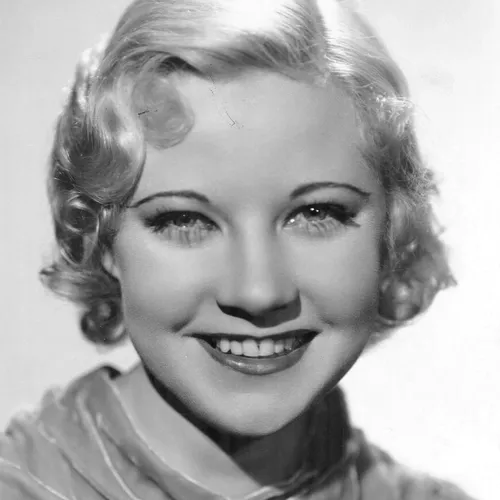
Una Merkel
Una Merkel's career spanned nearly six decades, during which she became one of entertainment's most distinctive and beloved personalities. Born in Kentucky on December 10, 1903, Merkel would go on to establish herself as a powerhouse across stage, radio, film, and television. While many remember her from the silver screen—particularly for her roles in classic Hollywood musicals and comedies—her contributions to radio broadcasting represent a crucial chapter in her multifaceted career. With her unmistakable Southern accent, sharp comedic timing, and ability to deliver wisecracking dialogue with perfect timing, Merkel brought countless characters to life through the radio speaker, captivating millions of listeners who couldn't see her face but could vividly imagine her performances.
From New York Stages to Hollywood's Golden Age
Merkel's path to radio stardom began long before the microphone became her primary medium. She initially made her mark on the Broadway stage during the 1920s, where she performed in important theatrical productions. Her biggest triumph came in Coquette (1927), a production that starred her idol, Helen Hayes. This early success on stage established Merkel as a serious theatrical performer with genuine talent beyond simple charm or novelty. Her transition to Hollywood came in 1930 when D.W. Griffith, the legendary film director, personally invited her to appear in his ambitious film Abraham Lincoln, where she played Ann Rutledge. This single invitation changed the trajectory of her career. The film became a significant success, and Merkel quickly discovered that the burgeoning world of sound film offered her abundant opportunities. Unlike silent film, which often showcased her physical appearance, the advent of sound technology made her strong Southern accent and her gift for comedic line delivery absolutely invaluable assets. Throughout the 1930s, Merkel became a prolific presence in Hollywood productions. Working as a Metro-Goldwyn-Mayer contract player from 1932 to 1938, she appeared in as many as twelve films in a single year, frequently loaned out to other studios to support major stars. She became known for playing the wisecracking best friend of the heroine, supporting legendary actresses including Jean Harlow, Carole Lombard, Loretta Young, and Eleanor Powell. Her distinctive Kewpie-doll looks combined with her brash comedic style created a screen persona audiences recognized and appreciated instantly.
A Voice Made for Radio: The Golden Years
As Merkel's film career flourished during the 1930s, radio broadcasting was simultaneously emerging as America's dominant entertainment medium. The transition proved natural for an actress whose greatest strengths—her vocal delivery, comedic timing, and ability to convey character through voice alone—were ideally suited to the medium. Merkel's involvement in radio during this golden era demonstrated her versatility and her willingness to maintain visibility across multiple entertainment platforms simultaneously. One of Merkel's most notable radio roles came as Adeline Fairchild on The Great Gildersleeve, a popular radio situation comedy that broadcast in the United States from August 31, 1941 to 1958. This character allowed her to showcase the particular talents that had made her a supporting player of choice in Hollywood—the ability to deliver comedic lines with a specific regional flavor and create a memorable character through vocal performance alone. The role kept her name before radio audiences during a period when her film career was beginning to decline in the 1940s. The combination of radio work with her continuing though reduced film appearances during the 1940s allowed Merkel to remain actively employed and creatively engaged. When her film work slowed considerably during this decade, radio provided essential income and kept her before the public ear, maintaining her relevance in the entertainment industry during what might otherwise have been a fallow period.
Film Comeback and Broader Recognition
The 1950s brought Merkel an unexpected renaissance in her career. Having successfully navigated the transition from stage to film to radio, she now discovered yet another chapter awaited her. She made a remarkable comeback as a middle-aged woman, playing mothers and maiden aunts—roles that allowed her mature talents to shine in fresh ways. Her performance on Broadway in The Ponder Heart, adapted from the novella of the same name, earned her a Tony Award in 1956, a significant honor that validated her enduring talent in theatrical performance. This Broadway success led to renewed film opportunities. She appeared in the MGM 1959 film The Mating Game as Paul Douglas's character's wife and Debbie Reynolds' character's mother, demonstrating her ability to anchor ensemble comedies. Her work during this period culminated in a nomination for the Academy Award for Best Supporting Actress in Summer and Smoke (1961). The same year, she was featured as Brian Keith's character's housekeeper, Verbena, in the Walt Disney comedy The Parent Trap—a role that introduced her talents to new generations of young viewers and demonstrated Hollywood's continued recognition of her value.
Legacy and Final Years
Merkel continued working steadily through the 1960s, appearing in television programs and making her final film appearance opposite Elvis Presley in Spinout (1966). Her career, which began in the silent film era with work as a stand-in for Lillian Gish in The Wind (1928) and continued through the early years of sound film, radio's golden age, television's emergence, and into the modern cinema era, spanned nearly seven decades of continuous professional work. When Merkel died on January 2, 1986, she left behind a legacy that encompassed virtually every entertainment medium of her lifetime. She had worked with some of Hollywood's greatest talents, created memorable characters across multiple platforms, and earned major recognition including a Tony Award and an Academy Award nomination. Her particular genius lay in her ability to adapt her distinctive vocal qualities and comedic sensibility to whatever medium she entered. Whether audiences encountered her in theaters, cinema seats, or through the radio speaker, Merkel delivered performances marked by authenticity, humor, and genuine theatrical skill. A lifelong Methodist, Merkel conducted her professional life with professionalism and dedication to her craft.
Works and Appearances
Radio
- The Great Gildersleeve (1941-1958)
Theater
- Coquette (1927)
- The Ponder Heart (1956) — Tony Award winner
Film
- The Wind (1928)
- Way Down East (1920)
- The White Rose (1923)
- Love's Old Sweet Song (1923)
- Abraham Lincoln (1930)
- The Maltese Falcon (1931)
- 42nd Street (1933)
Television
- The Real McCoys (1962)
- The Bill Dana Show (1963)
- Burke's Law (1963-1965)
- I Spy (1968)