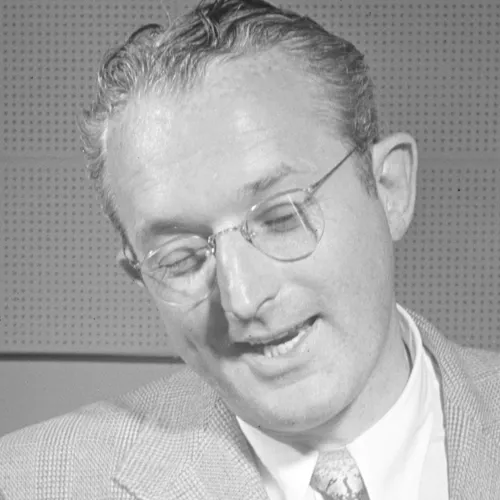
Tommy Dorsey
Tommy Dorsey stands as one of the most commanding figures of the Big Band era, a virtuoso trombonist whose smooth, lyrical playing style defined an entire generation of popular music. Born November 19, 1905, Dorsey transformed himself from a regional territory musician into a bandleader whose influence extended far beyond the recording studio, reaching audiences through radio broadcasts that captivated millions. His orchestral arrangements, sophisticated musicianship, and ability to showcase emerging vocal talent made him a cultural icon whose impact resonated throughout mid-twentieth-century American entertainment. Yet Dorsey's path to stardom was neither straightforward nor solitary—it was built on years of apprenticeship, fraternal collaboration, and an unwavering commitment to musical excellence that earned him the admiration of peers and audiences alike.
Early Years and Musical Foundation
Tommy Dorsey's entry into music came naturally, shaped by a family deeply invested in the art form. He grew up learning his craft from his music-teacher father, absorbing lessons that would inform his approach to bandleading and musicianship for decades to come. At just 15 years old, his younger brother Jimmy recommended him to replace Russ Morgan in the Scranton Sirens, a territory band operating during the 1920s. This early opportunity launched Tommy into the professional music world far earlier than most of his contemporaries. Following this initial break, Tommy and Jimmy worked together in various ensembles led by prestigious musicians including Tal Henry, Rudy Vallee, Vincent Lopez, and Nathaniel Shilkret. These collaborations provided invaluable experience in different musical styles and arrangements. In 1923, Tommy followed Jimmy to Detroit to perform with Jean Goldkette's renowned orchestra, one of the era's most respected dance bands. By 1925, he had relocated back to New York to play with the California Ramblers, and in 1927, achieved a significant milestone when he joined Paul Whiteman's orchestra, one of the most prestigious musical organizations of the day.
The Dorsey Brothers Era and Early Success
The formal partnership between Tommy and Jimmy Dorsey began in earnest when they established their recording career together. In 1928, the Dorsey Brothers commenced recording for OKeh Records, marking the official beginning of their collaborative venture. Their first substantial success arrived in 1929 with the recording "Coquette" for OKeh Records, demonstrating that the brothers possessed commercial appeal beyond the live performance circuit. The orchestra expanded significantly when it signed with RCA Victor in 1935, beginning with the hit "On Treasure Island", the first of four successful recordings that year. However, the brothers' relationship remained contentious, particularly as they navigated differing musical philosophies. A critical rupture occurred in May 1935 when acrimony between Tommy and Jimmy escalated into a definitive falling out during a performance—the brothers quarreled over the tempo of "I'll Never Say Never Again Again", leading Tommy to walk off stage and permanently leave the orchestra. Despite the dramatic split, the brothers produced memorable recordings together, including two number-one hits in 1935: "Lullaby of Broadway" (written by Harry Warren), which topped the charts for two weeks, and "Chasing Shadows", which dominated for three weeks.
Building an Independent Empire
After leaving the Dorsey Brothers Orchestra in 1935, Tommy took over the Joe Haymes orchestra, transforming it into the Tommy Dorsey and his Orchestra, with many musicians from the original Dorsey Brothers ensemble forming its nucleus. This transition proved remarkably successful, and the band grew popular almost immediately following its signing with RCA Victor. Initially, Dorsey's manager encouraged a shift away from the "hot jazz" that had characterized his earlier work, directing him instead toward pop and vocal standards. To maintain his jazz credibility, Dorsey kept his Clambake Seven as a Dixieland group that performed during concert appearances, preserving his connection to the musical roots that defined his artistic identity. By 1939, recognizing criticism that his orchestra lacked sufficient jazz feeling, Dorsey made a pivotal hiring decision that would reshape his band's sound. He recruited arranger Sy Oliver away from the prestigious Jimmie Lunceford orchestra. Oliver's contributions proved transformative, creating arrangements for standards like "On the Sunny Side of the Street" while composing signature instrumental pieces including "Well, Git It" and "Opus One". This infusion of sophisticated jazz sensibility, combined with Dorsey's continued focus on smooth vocal presentation, created an orchestra with broad appeal and genuine artistic substance.
Sinatra, Television, and the Transition to New Media
The hiring of Frank Sinatra in 1940—poaching the young vocalist from bandleader Harry James—proved to be Dorsey's most consequential personnel decision. Sinatra remained with the Dorsey orchestra through an extraordinary run of eighty recordings created between 1940 and 1942, including memorable performances of "In the Blue of Evening" and "This Love of Mine". Sinatra achieved his first great vocal success as part of this ensemble, and he later credited Dorsey with teaching him breath control through observation of the bandleader's masterful trombone technique. The collaboration between Dorsey and Sinatra became legendary, establishing a template for bandleader-vocalist partnerships that influenced the industry for years to come. Beyond Sinatra, Dorsey demonstrated consistent ability to identify and nurture vocal talent. He performed with celebrated vocalist Connee Boswell, and in 1944, he hired the Sentimentalists, a vocal ensemble he had strategically renamed from the already-established group The Clark Sisters, specifically requesting they keep their original identity confidential. The Sentimentalists replaced the Pied Pipers in Dorsey's lineup. Additionally, Dorsey showed his willingness to rehabilitate careers of musicians facing difficult circumstances; he hired drummer Gene Krupa following Krupa's arrest for marijuana possession in 1943, providing the celebrated percussionist with a platform for his continued artistry. Tommy Dorsey temporarily disbanded his orchestra at the end of 1946, though the dissolution might have become permanent like many other big bands facing post-war economic shifts. However, RCA Victor's release of "All Time Hits" placed the album in the top ten records in February 1947, demonstrating continued public interest in Dorsey's work. This success provided momentum for his eventual return to active bandleading. In 1953, when Jimmy Dorsey disbanded his own big band, Tommy invited his brother to join as a featured attraction, marking a significant reconciliation between the estranged siblings. That same year, the Dorseys focused their attention on television, recognizing the shifting entertainment landscape. On December 26, 1953, the brothers appeared with their orchestra on Jackie Gleason's CBS television show, which was preserved on kinescope and later released on home video. The brothers subsequently developed their own television program, Stage Show, which aired from 1954 to 1956. In January 1956, the Stage Show achieved historic significance when it introduced Elvis Presley during his national television debut. Presley, at that time a regional country singer, made six guest appearances on the program while promoting his first RCA Victor releases, appearing on the Dorsey platform several months before his now-famous appearances on programs hosted by Milton Berle, Steve Allen, and Ed Sullivan.
Legacy and Final Years
Tommy Dorsey's influence on American popular music and broadcasting extended beyond his direct performances. Following his death on November 26, 1956—which occurred when he choked in his sleep—his widow Jane Dorsey retained ownership of the rights to his band and name. Under the leadership of trombonist Warren Covington, the ensemble became known as the Tommy Dorsey Orchestra Starring Warren Covington, achieving significant commercial success in the fall of 1958 with the hit single "Tea for Two Cha-Cha", which reached number seven on the Billboard chart and earned a gold record. The band was subsequently fronted by Urbie Green and later by tenor saxophonist Sam Donahue, who led it from 1961 until 1966. The most enduring testament to Dorsey's artistry emerged through the tributes created by those he mentored. Frank Sinatra Jr. made his professional singing debut with the Tommy Dorsey Orchestra at Dallas Memorial Theater in Texas in 1963, performing with the ensemble bearing his father's collaborator's name.Additionally, Sy Oliver and Sinatra created a posthumous tribute album to Dorsey on Sinatra's Reprise records, ensuring that the bandleader's influence remained audible to new generations of listeners. Tommy Dorsey's orchestral arrangements, his discovery and promotion of world-class vocalists, his television innovation during the medium's infancy, and his role in introducing rock and roll's first superstar to a national audience combined to create a legacy that transcended his era. His greatest recording, "I'll Never Smile Again" featuring Frank Sinatra on vocals, dominated the Billboard pop singles chart for twelve weeks in 1940, exemplifying his ability to craft emotionally resonant popular music that achieved both critical respect and commercial success. Dorsey proved that a bandleader could maintain artistic integrity while achieving mass popularity—a balance that comparatively few of his contemporaries successfully achieved.
Works and Appearances
Radio
- The Raleigh-Kool Program
- Various broadcasts featuring the Tommy Dorsey Orchestra (1935-1946, 1953-1956)
Television:
- Jackie Gleason's CBS television show (December 26, 1953)
- Stage Show (1954-1956, co-hosted with brother Jimmy Dorsey; featuring Elvis Presley's national television debut in January 1956)
Recordings and Musical
- "Coquette" (1929, with Dorsey Broters, OKeh Records)
- "On Treasure Island" (1935, RCA Victor)
- "Lullaby of Broadway"
- "Chasing Shadows"
- Eighty recordings with Frank Sinatra (1940-1942), including "In the Blue of Evening" and "This Love of
Notable Collaborators and Vocalists
- Frank Sinatra (1940-1942)
- Connee Boswell
- The Sentimentalists/The Clark Sisters (1944 onwards)
- The Pied Pipers (preceded by The Sentimentalists)
Heard in