Ted Fio Rito
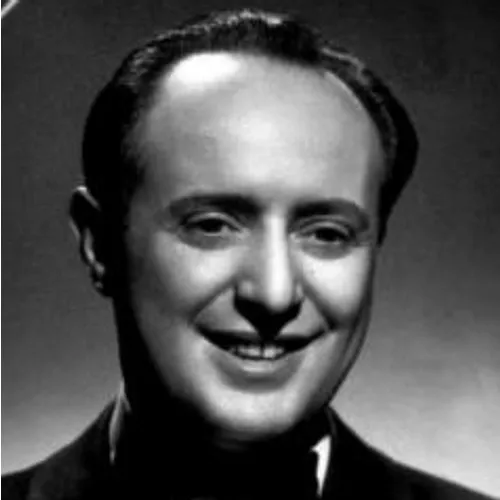
Ted Fio Rito was a pioneering American composer, orchestra leader, and keyboardist who left an indelible mark on the world of radio and popular music during the 1920s and 1930s. Known for his infectious melodies and innovative approach to broadcasting, Fio Rito’s influence extended from live radio performances to national hits that captivated audiences across the United States.
Early Life and Musical Foundations
Born Theodore Salvatore Fiorito on December 20, 1900, in Newark, New Jersey, Fio Rito grew up in a household that valued music and cultural heritage. His parents, Italian immigrants Louis and Eugenia Fiorito, encouraged his early interest in music, and his mother’s background in light opera helped cultivate his musical sensibilities. He attended Barringer High School in Newark, where his talent for piano became increasingly apparent. By his teens, Fio Rito had already embarked on a professional path, securing a position as a pianist in Columbia’s New York City recording studio in 1919. There, he worked with the Harry Yerkes bands—the Yerkes Novelty Five, Yerkes’ Jazarimba Orchestra, and The Happy Six—gaining early exposure to the recording industry and honing his skills as both a performer and composer. His early compositions were recorded by these groups, establishing a foundation for a prolific career in music.
Entry Into Radio and Early Career
In 1921, Fio Rito moved to Chicago, Illinois, to join Dan Russo’s band. By 1922, he was co-leading the Russo and Fio Rito Oriole Orchestra, which performed at the Oriole Terrace in Detroit. The orchestra’s early recordings, including Fio Rito’s own composition Soothing, helped the band gain recognition. Fio Rito’s engagement at the Edgewater Beach Hotel in Chicago marked his first foray into radio, with a remote broadcast on March 29, 1924. These broadcasts became a hallmark of his career, allowing the orchestra to reach audiences far beyond live venues. The orchestra’s presence on radio established Fio Rito as a national figure in music during the 1920s and 1930s.
Notable Radio Shows and Musical Achievements
Fio Rito’s orchestra achieved national prominence through syndicated and network radio programs. They performed on programs such as Brunswick Brevities, Skelly Gasoline Show, The Old Gold Hour, Hollywood Hotel, The Al Jolson Show, Frigidaire Frolics, and Clara, Lu, and Em. The ensemble featured a rotating roster of vocalists, including Jimmy Baxter, Candy Candido, Betty Grable, June Haver, the Mahoney Sisters, and Muzzy Marcellino, creating a versatile and dynamic sound. Fio Rito’s compositions, such as My Little Grass Shack in Kealakekua, Hawaii (1934) and I’ll String Along with You (1934), became number one hits, highlighting his knack for crafting memorable melodies that resonated with a broad audience. His collaborations with lyricists including Ernie Erdman, Gus Kahn, Sam Lewis, Cecil Mack, Albert Von Tilzer, and Joe Young resulted in more than 100 published songs, many of which remain emblematic of the era.
Transition to Film and Continued Influence
Fio Rito extended his talents into motion pictures, contributing to the burgeoning Hollywood musical scene. His work in film and recordings helped solidify the link between radio orchestras and popular entertainment, influencing future generations of bandleaders and composers. Throughout the 1930s and 1940s, his orchestra maintained a presence in nightclubs, hotels, and theaters across the United States, adapting to evolving tastes while remaining true to the rhythmic and melodic style that defined his music. Despite the rise of new musical trends, Fio Rito continued to perform and record, demonstrating a professional longevity that few of his contemporaries achieved. His pioneering use of radio broadcasts helped define the medium’s potential for reaching mass audiences, making him a crucial figure in the history of American music.
Legacy and Personal Life
Ted Fio Rito passed away on July 22, 1971, in Scottsdale, Arizona, leaving behind a legacy defined by creativity, innovation, and dedication to his craft. His contributions to radio and popular music showcased the power of orchestral ensembles in early broadcast media and highlighted his skill in both composition and performance. Fio Rito’s influence persists in the continued appreciation of big band music and the historical significance of radio orchestras in shaping American popular culture.
Works and Appearances
Radio
- Edgewater Beach Hotel Orchestra (1924–1928)
- Brunswick Brevities
- Skelly Gasoline Show
- The Old Gold Hour
- Hollywood Hotel
- The Al Jolson Show
- Clara, Lu, and Em
Recordings
- My Little Grass Shack in Kealakekua, Hawaii (1934)
- I’ll String Along with You (1934)
- Early recordings with Harry Yerkes’ bands (1919–1921)