Sidney Torch
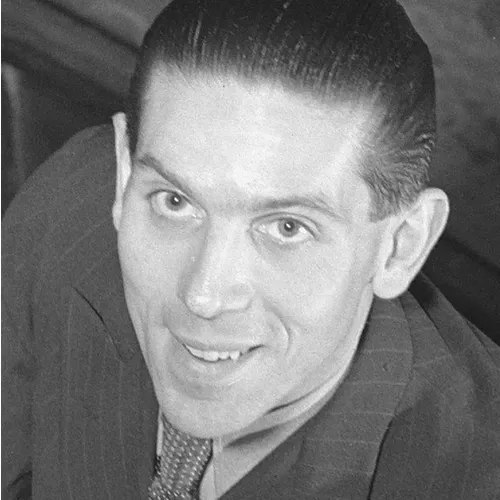
Sidney Torch was one of Britain’s most influential figures in light music broadcasting, known for his remarkable transition from cinema organist to orchestral conductor and for shaping one of radio’s most enduring musical institutions. His career spanned the late silent-film era through the height of postwar broadcasting, leaving a distinctive mark on British musical culture.
Early Life and Musical Foundations
Born Sidney Torchinsky in London in 1908, Torch grew up in a musical household led by his father, a professional trombonist. He studied piano at the Blackheath Conservatoire, a training that laid the groundwork for his later versatility. As a young musician he worked as an accompanist and soon gravitated toward the growing world of cinema performance. In 1928, he was appointed assistant organist at the Regal Cinema, working with a Christie Theatre Organ. His skill and showmanship quickly elevated him, and by 1932 he became Chief Organist at the same theatre. Through the 1930s he performed at several major cinemas, including the Regal in Edmonton and, most notably, the Gaumont State Cinema in Kilburn, where he played a prestigious Wurlitzer organ. Torch’s reputation grew rapidly through live performances, recordings, and early broadcasts. By the eve of World War II, he had become one of Britain’s leading cinema-organ entertainers, admired for his technical precision and flair.
Wartime Career and Shift to Light Orchestral Music
When World War II began, Torch entered the Royal Air Force in 1940. Initially stationed near Blackpool, he continued performing organ concerts while fulfilling his service duties. His talent for musical leadership soon earned him a major post: conductor of the RAF Concert Orchestra, a role that refined his skills in arrangement and orchestral direction. As the war ended, Torch recognized that the era of the cinema organ was passing. He deliberately retrained himself, immersing in orchestration and composition to pursue a new path in light orchestral music. By 1946, he was composing and conducting for the Queen’s Hall Light Orchestra, sometimes under the pseudonym Denis Rycoth, an anagram of his own name. From 1947 to 1949, he conducted the New Century Orchestra, expanding his orchestral presence. Though union restrictions eventually ended this collaboration, Torch had firmly established himself as a rising figure in light music.
Broadcasting Success and Signature Works
Torch’s postwar career flourished through his extensive collaboration with the BBC. When the BBC Concert Orchestra was formed in 1952, he became one of its principal conductors. The following year he created what would become one of radio’s longest-running music programs: Friday Night Is Music Night. Torch conducted nearly all episodes for almost twenty years, setting the musical style and public identity of the programme. During these decades Torch produced a substantial catalog of light-music compositions. Among his most enduring is “On a Spring Note,” still performed today for its lively, melodic charm. In 1957 he wrote the London Transport Suite, a three-movement orchestral piece depicting modes of London travel from hansom cabs to steam trains. His “Trapeze Waltz” (1963) later became associated with a recurring television play theme. Earlier, he had composed the piano-and-orchestra piece Concerto Incognito, showcasing his range beyond shorter light-music numbers. Torch was also known for strict discipline as a conductor. His rehearsals were famously demanding, and some musicians regarded him as intimidating. Yet he was also remembered as generous, occasionally helping orchestra members in financial need and insisting on professionalism in both appearance and performance.
Later Life, Honors, and Legacy
Torch retired from conducting in 1972, closing his career with a dramatic gesture: snapping his baton in two after the final concert. His influence on the BBC Concert Orchestra and on British light music, however, continued long after his retirement. In recognition of his contributions, Torch was awarded the Member of the Order of the British Empire (MBE) in 1985. He lived quietly in later years and died on 16 July 1990 in Eastbourne, aged 82. Today, his music remains central to the legacy of British light orchestral tradition. His compositions are still recorded and broadcast, and Friday Night Is Music Night continues as a testament to the format he created. Torch’s ability to reinvent himself—from cinema organist to one of the BBC’s defining musical figures—marks him as a key contributor to 20th-century broadcasting history.
Works and Appearances
Radio
- Friday Night Is Music Night (1953–1972)
- Various BBC radio concerts and light-music broadcasts (1940s–1970s)
Orchestral Works
- On a Spring Note
- London Transport Suite (1957)
- Concerto Incognito
- Trapeze Waltz (1963)
- Additional light-music works including marches, waltzes, and character pieces written from the late 1940s onward
Recordings
- Numerous cinema-organ recordings from the 1930s and early 1940s
- Extensive light-orchestral recordings with the Queen’s Hall Light Orchestra
- Studio and broadcast recordings with the BBC Concert Orchestra (1950s–1970s)