Shep Fields
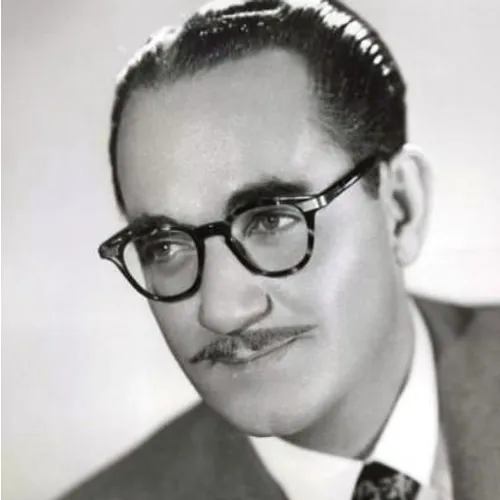
In the pantheon of big band leaders who captivated radio audiences during the 1930s and 1940s, Shep Fields carved out a unique niche with his distinctive "Rippling Rhythm" sound. Born Alexander Sheftall on September 12, 1910, in Brooklyn, New York, Fields became one of America's most recognizable bandleaders through his innovative use of a simple yet mesmerizing effect: blowing bubbles through a straw into a bowl of water. This signature sound, combined with his melodic arrangements and smooth orchestral style, made his broadcasts instantly identifiable and helped establish him as a radio star whose popularity rivaled the era's biggest names.
From Brooklyn to Bandstand
Shep Fields grew up in Brooklyn during an era when the borough served as a cultural melting pot and incubator for American musical talent. His birth name, Alexander Sheftall, reflected his family's Eastern European Jewish heritage, but like many entertainers of his generation, he adopted a stage name that would prove more marketable in the entertainment industry. The young Fields demonstrated musical aptitude early, particularly with reed instruments. His formative years coincided with the Jazz Age's explosive growth, and Brooklyn's vibrant music scene provided ample opportunity for a talented young musician to develop his craft. Fields studied music seriously, focusing on the clarinet and saxophone, instruments that would become central to his orchestral arrangements. The discipline required to master these instruments paralleled the meticulous attention to detail he would later bring to creating his signature sound. By his early twenties, Fields had begun working professionally as a musician, playing in various orchestras and ensembles. These apprenticeship years taught him not only musical technique but also the business of entertainment. He observed how different bandleaders presented themselves, how they interacted with audiences, and crucially, how they could differentiate themselves in an increasingly crowded marketplace. This education would prove invaluable when he launched his own orchestra.
The Birth of Rippling Rhythm
Fields formed his own orchestra in 1934, at a time when big bands were beginning to dominate American popular music. However, standing out among competitors like Benny Goodman, Glenn Miller, and Tommy Dorsey required more than musical competence—it demanded innovation. Fields found his answer in an unlikely source: a simple drinking straw and a bowl of water. The story of how Fields developed his "Rippling Rhythm" sound has become part of radio folklore. By blowing bubbles through a straw into water near a microphone, he created a gentle, effervescent sound that became his orchestra's calling card. This sonic signature, which evoked champagne bubbles or a babbling brook, was overlaid on smooth, melodic arrangements that emphasized romantic ballads and popular standards. The effect was simultaneously novelty and sophistication, gimmick and artistry. This innovative sound concept proved perfectly suited to radio broadcasting. While visual performers relied on stage presence and choreography, Fields understood that radio demanded audio distinction. Listeners could instantly identify his broadcasts from the opening bars, giving him a competitive advantage in an era when radio dial-turning was the equivalent of channel surfing. The rippling effect became so associated with Fields that it essentially functioned as an audio trademark. The commercial success was immediate. Fields' orchestra began securing regular radio broadcasts, and his recordings sold consistently throughout the late 1930s. His approach to arrangement favored accessibility over complexity, creating music that appealed to mainstream audiences rather than jazz purists. This populist strategy served him well in the radio medium, where broad appeal translated directly to sponsorship opportunities and sustained employment.
Radio Stardom and National Recognition
Fields' orchestra became a regular fixture on network radio during the medium's golden age. His broadcasts reached millions of listeners coast-to-coast, making him a household name. The orchestra performed on various programs, sometimes as featured guests and other times in their own sponsored time slots. These radio appearances were crucial to building and maintaining the band's popularity during an era when radio exposure could make or break a musical act. The band's radio work followed the demanding schedule typical of the era. Live broadcasts required precision timing, flawless execution, and the ability to perform under pressure. Fields proved adept at managing these challenges, maintaining professional standards while keeping the music accessible and entertaining. His pleasant demeanor and smooth on-air presence complemented the music's easy-listening quality. Beyond regularly scheduled broadcasts, Fields' orchestra appeared on special programs and remote broadcasts from prestigious venues. These appearances from ballrooms, hotels, and theaters allowed listeners to experience the glamorous world of big band entertainment vicariously. The combination of studio broadcasts and remote pickups kept the orchestra in constant contact with its radio audience. His recordings also received substantial radio airplay, creating a synergistic relationship between his live broadcasts and commercial releases. Songs like "Thanks for the Memory" and "I'm in the Mood for Love" became closely associated with Fields' interpretation, and radio stations programmed these recordings frequently, further cementing his place in popular consciousness.
Beyond the Microphone
As with many radio stars of his era, Fields successfully transitioned into other media. He appeared in several Hollywood films during the late 1930s and 1940s, typically playing himself or a bandleader character. These appearances in movies like The Big Broadcast of 1938 capitalized on his radio fame while exposing him to film audiences. Though not a dramatic actor, Fields' screen presence conveyed the same affable professionalism that characterized his radio work. Television's emergence in the late 1940s and early 1950s presented both opportunity and challenge. Fields adapted to the new medium, making television appearances that allowed audiences to finally see the man behind the rippling rhythm. However, television's visual demands sometimes worked against the purely sonic innovation that had made him famous. The bubble-blowing effect, so magical when heard on radio, could appear somewhat pedestrian when witnessed directly. Throughout the 1940s and into the 1950s, Fields continued leading his orchestra even as musical tastes began shifting. The big band era gradually gave way to smaller combos, vocal groups, and eventually rock and roll. Fields adjusted his approach, occasionally updating arrangements and repertoire, but his core sound remained true to the smooth, rippling style that had made him famous. This consistency served loyal fans well, even as it limited his ability to capture younger audiences.
A Rippling Legacy
Shep Fields passed away on February 23, 1981, in Los Angeles, California, leaving behind a distinctive legacy in American popular music. While he never achieved the jazz credibility of some contemporaries or the enduring cultural impact of others, his contribution to radio's golden age remains significant. He understood intuitively that radio was fundamentally a sonic medium, and he crafted an immediately identifiable audio brand decades before such concepts became standard in marketing. His "Rippling Rhythm" sound represented both innovation and accessibility—using a simple effect to create something memorable without alienating mainstream audiences. In an era of tremendous musical talent and fierce competition, Fields found his niche and maintained it successfully for decades. His career demonstrated that in broadcasting, distinctiveness could matter as much as virtuosity. For students of radio history, Fields exemplifies how performers adapted their artistry to the medium's unique demands. His legacy lives on in recordings and in the memories of those who experienced the golden age of radio, when a man with a straw and a bowl of water could create magic on the airwaves.
Works and Appearances
Radio
- Various network radio broadcasts (1934-1950s)
Cinema
- The Big Broadcast of 1938 (1938)
Recordings
- "Thanks for the Memory"
- "I'm in the Mood for Love"