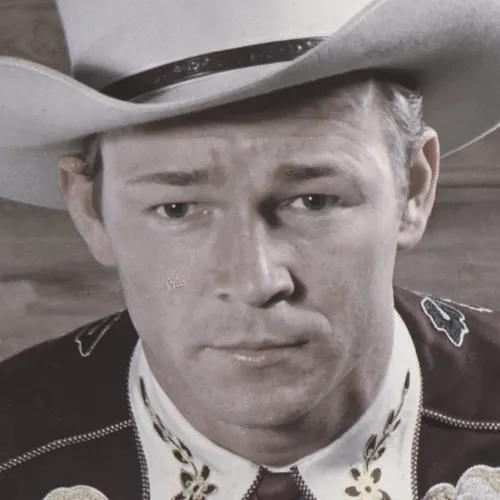
In the golden era of American entertainment, Roy Rogers became synonymous with the Western genre, charming audiences across radio, film, and television. Known as the “King of the Cowboys,” Rogers combined singing, acting, and a wholesome persona to create a lasting legacy that defined mid-20th century popular culture.
Early Life and Musical Beginnings
Leonard Franklin Slye, later known as Roy Rogers, was born on November 5, 1911, in Cincinnati, Ohio. Raised on a small farm, Rogers developed a love for music and the cowboy lifestyle early on. As a teenager, he joined local musical groups and performed in western-themed shows, honing his skills as a singer and guitarist. He eventually became a member of the Sons of the Pioneers, a pioneering Western singing group, where his smooth vocals and charismatic presence drew widespread attention.
Rise in Radio and Film
Rogers’ radio career began in the 1930s, where he performed with the Sons of the Pioneers on popular programs, bringing Western music and storytelling into American homes. His popularity on the airwaves translated into a successful film career, beginning with B-Westerns at Republic Pictures. Rogers quickly became known for his singing cowboy persona, often performing alongside his horse, Trigger, and his wife, Dale Evans. His films, including Under Western Stars (1938) and The Cowboy and the Senorita (1944), blended music, action, and wholesome morality, appealing to audiences of all ages.
Television Stardom
As television emerged in the 1950s, Rogers successfully transitioned to the small screen with The Roy Rogers Show (1951–1957). The program featured Rogers as a heroic cowboy, often accompanied by Dale Evans, Pat Brady, and Trigger. The show was notable for its family-friendly stories, musical interludes, and iconic Western settings, and it solidified Rogers’ status as a cultural icon.
Legacy and Personal Life
Beyond his performances, Rogers was celebrated for his professionalism, kindness, and dedication to wholesome entertainment. He married actress and singer Dale Evans in 1947, and the couple became one of Hollywood’s most beloved partnerships. Roy Rogers passed away on July 6, 1998, leaving behind a legacy as one of the most influential figures in Western entertainment and popular culture.
Works and Appearances
Radio
- Sons of the Pioneers – Musical performances (1930s–1940s)
- Guest appearances on popular Western radio programs
Film
- Under Western Stars (1938) – Lead
- Billy the Kid Returns (1938) – Lead
- The Cowboy and the Senorita (1944)
- Home in Oklahoma (1946) – Lead
- Numerous B-Westerns and musical Westerns (1938–1951)
Television
- The Roy Rogers Show – Roy Rogers (1951–1957)
- Guest appearances on variety and Western-themed programs
Music
- Member of Sons of the Pioneers (1933–1938)
- Recorded numerous hit songs, including “Tumbling Tumbleweeds” and “Don’t Fence Me In”