Rhonda Fleming
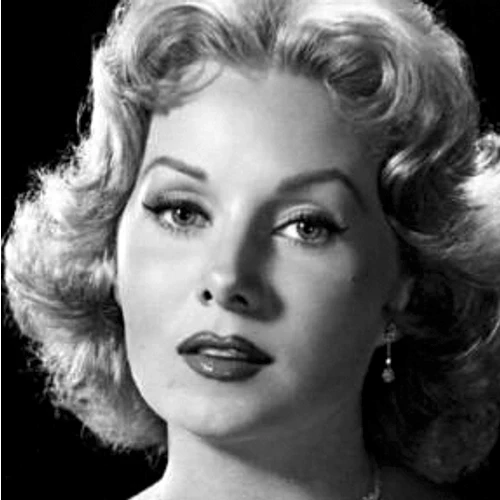
In the golden age of Hollywood, few actresses captured the imagination quite like Rhonda Fleming, a vibrant redhead whose luminous screen presence made her a standout star of the 1940s and 1950s. Beyond her celebrated film career, Fleming also made notable contributions to the world of radio broadcasting, showcasing her versatility as a performer.
Early Beginnings and Radio Emergence
Rhonda Fleming, born Marilyn Louis on August 10, 1923, in Los Angeles, California, was destined for entertainment from an early age. Her mother, Effie Graham, was a stage actress, and her maternal grandfather John C. Graham was an actor and theater owner. These familial connections would prove instrumental in Fleming's eventual entry into the entertainment world.
Radio Appearances and Performance
While Fleming was primarily known for her film work, she did make significant radio appearances that highlighted her versatility as a performer. One notable radio performance was on Screen Directors Playhouse on March 22, 1951, where she participated in an episode titled "The Great Lover" . This appearance demonstrated her ability to translate her on-screen charisma to the audio medium.
Transition Between Media
Fleming's radio work was part of a broader career that seamlessly moved between different entertainment platforms. In addition to her radio appearances, she was active in television, making guest appearances on numerous shows throughout the 1950s and 1960s. Her ability to adapt across various media formats was a testament to her versatility as a performer.
Legacy in Broadcasting
Though her radio appearances were not as extensive as her film career, Fleming's participation in radio programming underscored her status as a multi-talented entertainer. Her work in Screen Directors Playhouse represented the interconnected nature of entertainment media during Hollywood's golden age, where actors frequently moved between film, radio, and television.
Conclusion
Rhonda Fleming's radio legacy, while brief, was part of her broader contribution to mid-20th century entertainment. Her ability to captivate audiences across different media platforms solidified her reputation as a true star of her era.
Works and Appearances
Radio
- Screen Directors Playhouse
- Episode: "The Great Lover"
- Date: March 22, 1951
- Role: Performer
Television Highlights
- Guest appearances on numerous shows including Wagon Train, The Dick Powell Show, and Kung Fu
Film Career
- Appeared in over 40 films, primarily in the 1940s and 1950s
- Nicknamed the "Queen of Technicolor" for her photogenic qualities