Ray Milland
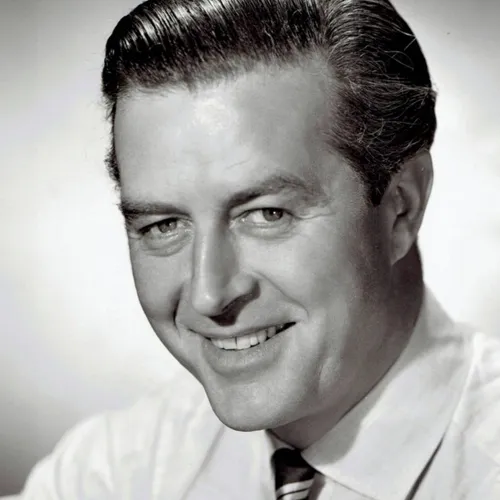
Ray Milland, a Welsh-American actor renowned for his Oscar-winning performance in The Lost Weekend, was also a notable presence in the golden age of radio broadcasting. His rich, distinctive voice and dramatic range made him a sought-after performer across multiple entertainment mediums.
Early Life and Radio Beginnings
Born Alfred Reginald Jones on January 3, 1907, in Neath, Wales, Milland's journey to entertainment began far from the radio studio. After serving in the Household Cavalry and exploring various career paths, he found his calling in acting. His transition into radio came naturally as an extension of his burgeoning film and stage career. Milland's early radio work coincided with his rising Hollywood stardom. His first notable radio appearances came in the mid-1940s, leveraging the popularity he had gained through his critically acclaimed film performances. The medium provided an additional platform for him to showcase his versatile acting talents.
Notable Radio Performances
During the 1940s, Milland made several significant radio appearances that demonstrated his ability to captivate audiences through sound alone. In 1946, he appeared on This Is Hollywood and the Screen Guild Players, often discussing his recent film work. His most memorable radio performance was likely his appearance on The Jack Benny Program on March 10, 1946, where he discussed his Oscar-winning role in The Lost Weekend. The Lux Radio Theatre was another prominent platform for Milland. In 1953, he appeared in a radio adaptation of Close to My Heart, further proving his adaptability across different storytelling formats. These appearances not only entertained audiences but also helped promote his film work.
Bridging Radio and Other Media
Milland's radio work was intrinsically linked to his broader entertainment career. Unlike many radio personalities who specialized exclusively in broadcasting, he used radio as a complementary medium to his film and television work. His appearances were often tied to promoting his latest projects or discussing his recent achievements. His ability to transition smoothly between radio, film, and later television demonstrated the interconnected nature of entertainment media during the mid-20th century. Milland understood how to leverage each platform to enhance his public persona and reach wider audiences.
Legacy in Broadcasting
While Milland was not primarily known as a radio star, his contributions to the medium were significant. He represented a generation of Hollywood actors who used radio as a versatile promotional and artistic tool. His performances showcased the dramatic potential of radio broadcasting, helping to elevate the medium's artistic credibility. Milland's radio work complemented his remarkable career in film and television, reflecting his versatility as a performer. His smooth, authoritative voice and dramatic skills made him a memorable presence in the audio landscape of mid-20th century entertainment.
Works and Appearances
Radio
- This Is Hollywood (1946)
- The Jack Benny Program (March 10, 1946)
- Screen Guild Players (1946)
- Lux Radio Theatre - Close to My Heart (1953)
Film
- The Lost Weekend (1945) - Oscar-winning performance
- The Big Clock (1948)
- Dial M for Murder (1954)
Television
- The Ray Milland Show (1953-1955)
- Various guest appearances throughout the 1960s and 1970s
Theater
- My Fair Lady (1964) - Touring production
- Hostile Witness (1966) - Broadway play
Ray Milland passed away on March 10, 1986, leaving behind a rich legacy in entertainment that spanned radio, film, television, and stage.
Heard in