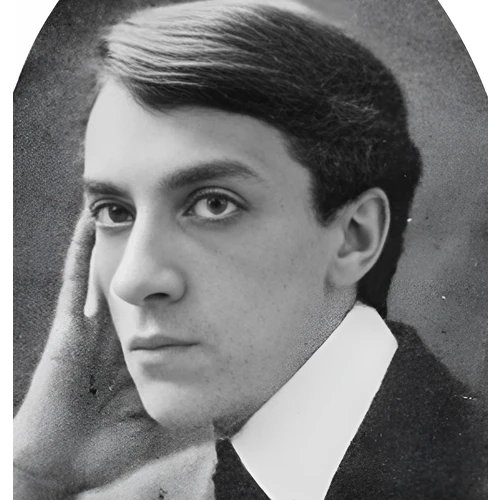
Pedro de Cordoba
An American actor, De Cordoba was born in New York City to parents who were French and Cuban in origin. He was a classically trained theatre actor who confessed he did not enjoy appearing in silent films nearly as much as he liked working on stage, but his career during the silent film era was extensive.
Pedro de Cordoba was a remarkable actor whose career spanned the silent film era, talking pictures, and the golden age of radio, embodying the versatility of early 20th-century entertainment. With a deeply resonant voice and a commanding presence, he became a distinctive figure in multiple media, leaving an indelible mark on American entertainment.
Early Life and Theatrical Roots
Born on September 28, 1881, in New York City, Pedro de Cordoba emerged from a rich cultural background, with parents of French and Spanish origin. From an early age, he was drawn to the performing arts, developing a passion for classical theatre that would define his entire career. As a classically trained theatre actor, de Cordoba confessed that he found more joy on stage than in film, though his cinematic career would prove extensive and notable. His early theatrical training provided a solid foundation for his future work, allowing him to develop a sophisticated performance style that would translate beautifully across different media. In 1913, he was already establishing his professional credentials as a member of the resident summer stock cast at the Historic Elitch Theatre in Colorado.
Transition to Radio and Broadcasting
De Cordoba's transition into radio was a natural progression from his stage and film work. His deeply resonant speaking voice made him perfectly suited to the audio medium, where vocal quality was paramount. While his film career often cast him in roles of authority figures, priests, or characters of Spanish origin, radio allowed him to explore an even broader range of characters. His radio appearances were selective but significant. In 1937, he appeared on the Lux Radio Theatre, performing in an adaptation of Madame Butterfly. Later, in 1946, he was featured on Hollywood Star Time in a production of The Song of Bernadette. These appearances demonstrated his ability to translate his theatrical skills into the intimate medium of radio.
Signature Performance Style
What distinguished Pedro de Cordoba was his remarkable ability to inhabit diverse characters with authenticity and depth. His "royal bearing" and distinctive last name often led to him being cast as authoritative figures, particularly those with Spanish or clerical backgrounds. On rare occasions, he would even take on villainous roles, showcasing his remarkable range. In radio, as in his film work, de Cordoba brought a gravitas and nuanced performance style that set him apart from many of his contemporaries. His voice—described as deeply resonant—was his primary instrument, allowing him to create vivid characters that could captivate listeners without visual accompaniment.
Legacy and Later Career
A devout Catholic, de Cordoba served for a time as president of the Catholic Actors Guild of America. This commitment to his faith often informed the types of roles he chose and the characters he portrayed. His career continued to flourish through the 1940s and early 1950s, with appearances in numerous films and radio productions. De Cordoba passed away on September 16, 1950, in Sunland, California, leaving behind a rich legacy of performance across multiple entertainment platforms. His ability to seamlessly transition between theatre, film, and radio made him a quintessential performer of his era.
Works and Appearances
Radio
- Lux Radio Theatre (1937) - Madame Butterfly
- Hollywood Star Time (1946) - The Song of Bernadette
Film (Selected Highlights)
- The Crusades (1935) - Karakush
- Captain Blood (1935) - Don Diego
- Blood and Sand (1941) - Don Jose Alvarez
- For Whom the Bell Tolls (1943) - Colonel Miranda
- Samson and Delilah (1949) - Bar Simon
Theatre
- Sadie Love (1915)
- Broadway productions throughout the 1920s and 1930s
Pedro de Cordoba exemplified the versatility and adaptability required of performers during the golden age of entertainment, bridging the worlds of stage, screen, and radio with remarkable skill and grace.