Paul Stewart
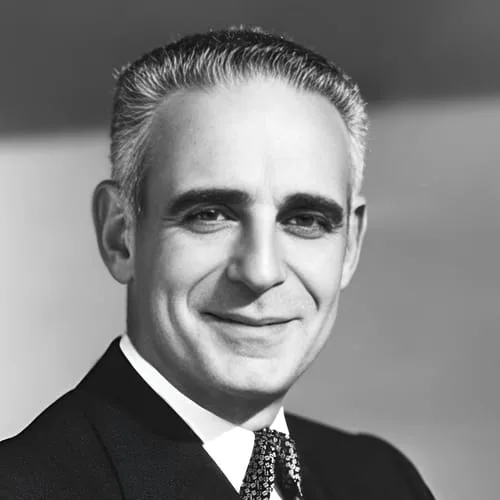
An American character actor known for his tough, guttural voice. He frequently portrayedvillains and mobsters throughout his lengthy career.
In the vibrant world of mid-20th century broadcasting, few personalities embodied the versatility and dynamism of Paul Stewart. A multifaceted talent who seamlessly navigated radio, theater, film, and television, Stewart was a pivotal figure in the entertainment industry, particularly during the golden age of radio.
Early Life and Theatrical Beginnings
Born Paul Sternberg on March 13, 1908, in Manhattan, New York, Stewart's journey into entertainment began with a passion for performance. The son of Maurice D. Sternberg, a textile manufacturer's salesman, and Nathalie C. Sternberg, he showed early promise when he won first place in the Belasco Theatre Tournament in 1925 . This victory would set the stage for his future career. Stewart initially studied law at Columbia University for two years but was ultimately drawn to the allure of acting. His stage career commenced in New York during his teenage years, with his theatrical debut in Subway Express in 1930 . These early experiences would prove instrumental in shaping his future broadcasting career.
The Rise in Radio Broadcasting
In 1932, Stewart's career took a significant turn when he moved to Cincinnati and began working at radio station WLW. Here, he immersed himself in all aspects of radio production – acting, announcing, directing, producing, writing, and creating sound effects. This comprehensive experience made him a versatile and highly sought-after radio professional . Stewart's breakthrough came through his association with Orson Welles. In 1934, he introduced Welles to director Knowles Entrikin, who gave Welles his first radio job. Welles himself would later credit Stewart, saying, "He's a lovely man; for years he was one of the main pillars of our broadcasts" . Their collaboration would become legendary in radio history.
Pioneering Radio Performances and Productions
Stewart was a key member of The March of Time, a prestigious radio program that was considered the "aristocracy of radio acting" . His involvement with Welles's Mercury Theatre was particularly notable. He was a founder of the American Federation of Radio Artists in 1937 and played various roles during Welles's tenure in The Shadow . One of Stewart's most celebrated contributions was his work on the infamous "War of the Worlds" broadcast. As rehearsal director, actor, and co-writer, he played a crucial role in the production. Welles himself stated that Stewart deserved the largest share of credit for the broadcast's quality .
Expanding Horizons: From Radio to Multiple Media
While radio remained his primary medium, Stewart successfully transitioned into film, television, and theater. His screen debut in Orson Welles's Citizen Kane (1941) as Raymond, the cynical butler, became iconic. He appeared in 50 films and performed or directed approximately 5,000 radio and television shows . During World War II, Stewart served with the Office of War Information, narrating documentaries and broadcasting news to European audiences. He also produced patriotic radio series and worked to promote war bond purchases .
Legacy and Impact
Paul Stewart's career epitomized the versatility required in mid-20th century entertainment. His ability to excel as an actor, director, producer, and writer across multiple media platforms made him a true renaissance man of broadcasting. He worked alongside legendary figures like Orson Welles and contributed significantly to the development of radio as an art form. Stewart passed away on February 17, 1986, in Los Angeles, leaving behind a rich legacy of performance and production that helped shape the entertainment industry .
Works and Appearances
Radio
- The March of Time (1934-1938): Repertory cast
- The Shadow (1937-1938): Various roles
- Mercury Theatre on the Air (1938): Multiple roles, including "The War of the Worlds"
- Voice of America (1942-1943): News broadcaster
Television
- Top Secret (1954-1955): Professor Brand, Director
- Deadline (1959-1961): Narrator, Host
- The Twilight Zone (1962): Director of "Little Girl Lost"
Film
- Citizen Kane (1941): Raymond
- The World at War (1942): Narrator
- The Other Side of the Wind (2018, posthumous release): Matt Costello
Theater
- Subway Express (1930): Passenger
- Native Son (1941): Newspaper Man
- Mister Roberts (1950): Doc
Heard in