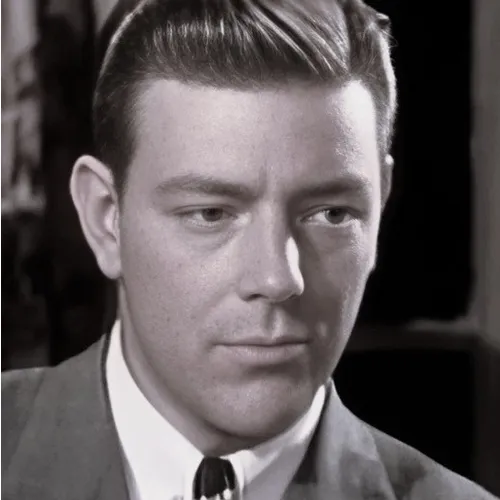
Paul Lavalle
A conductor, composer, arranger and performer on clarinet and saxophone. He was born Joseph Usifer on September 6, 1908 inBeacon, New York and died in Harrisonburg, Virginia on June 24, 1997.
In the vibrant landscape of mid-20th century American broadcasting, few musicians were as ubiquitous and versatile as Paul Lavalle. A conductor, composer, and multi-instrumentalist, Lavalle became a defining musical voice of his era, bridging the worlds of radio, television, and live performance with remarkable skill and charisma.
Early Musical Foundations
Born Joseph Usifer on September 6, 1908, in a family of Italian immigrants, Lavalle's musical journey began with unexpected twists. Initially planning to study law at Columbia University, he instead found his true calling in music. After winning a scholarship, he studied composition and immersed himself in the dynamic musical scene of the 1930s. His early performances included stints in various bands, even performing in Havana, Cuba, which would prove to be a pivotal experience in his musical development. In 1933, Lavalle's career took a significant turn when he became an arranger and clarinetist in the NBC house orchestra. His composition Symphonic Rhumba (1939) showcased his emerging talent, being broadcast by a prominent orchestra on December 6, 1942.
Radio: The Golden Age of Musical Performance
Lavalle quickly became a prominent figure in radio broadcasting. Throughout the late 1930s and 1940s, he worked on numerous popular radio programs, including The Dinah Shore Show, Plays for Americans, and Strictly Business. His versatility and musical prowess earned him the description of "NBC's ubiquitous music maker" by contemporaries. His most significant radio achievement came in 1948 when he was selected to conduct the Band of America. For eight years, they performed on the weekly radio program, with each broadcast beginning with the iconic introduction: "Forty-eight states... 48 stars... 48 men marching down the main street of everybody's hometown!" This program solidified Lavalle's reputation as a leading musical conductor of his time.
Expanding Horizons: Television and Orchestral Conducting
As television emerged, Lavalle was at the forefront. In 1949, he and the Band of America became one of the first musical groups to appear weekly on television. His performances included memorable events like the May 18, 1961 episode "Concert in the Park" with singer Kay Armen. Lavalle's conducting career extended far beyond radio and television. He guest conducted numerous orchestras, including the ABC Symphony, CBS Symphony, and others. In 1966, he became the conductor for a symphony orchestra and served as its director of music and principal conductor until 1975. He was also instrumental in forming the All-American High School Band, demonstrating his commitment to musical education.
Personal Life and Legacy
Despite his professional success, Lavalle's personal life was equally rich. He was married twice, first to Sarah "Sally" Grant, with whom he had a son, Lawrence Usifer. His second marriage was to a fellow radio performer, and they maintained homes in Manhattan and Connecticut. Lavalle's legacy is not just in his performances but in his compositions. He created numerous marches and musical pieces, including the Band of America March, Dwight D. Eisenhower March, and United States Overture. His recordings, mostly with RCA, further cemented his place in American musical history.
Works and Appearances
Radio Shows
- The Dinah Shore Show (1939–40)
- Plays for Americans (1942)
- The Stradivari Orchestra (1943)
- Band of America (1948-1956)
Television
- Music For a Spring Night (1961)
- Guest conductor on multiple symphony programs
Compositions
- Band of America March (1949)
- Dwight D. Eisenhower March (1952)
- United States Overture (1951)
Recordings
- Paul Lavalle's Concert in the Park (1954)
- America's Favorite Marches (1956)
- The Mighty Sousa Marches (1966)
Paul Lavalle passed away on June 24, 1997, in Harrisonburg, Virginia, leaving behind a rich musical legacy that spanned radio, television, and live performance. His life was a testament to the power of musical versatility and the transformative potential of mid-20th century American broadcasting.