Norman Corwin
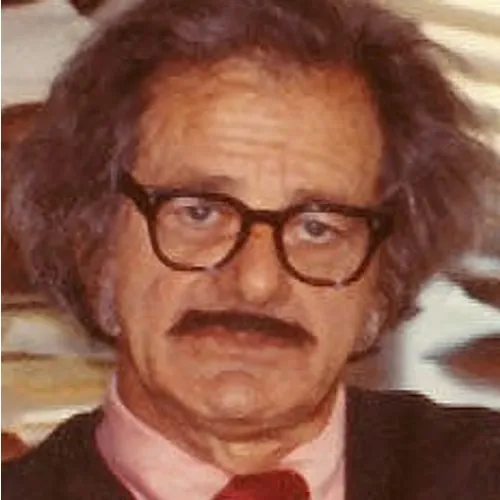
In the golden age of radio, few personalities shaped the medium as profoundly as Norman Corwin. A visionary writer, producer, and director, Corwin transformed radio from mere entertainment into a powerful artistic and social medium. His innovative storytelling and commitment to addressing complex social issues made him a pivotal figure in broadcasting history.
Early Life and Roots in Journalism
Born on May 3, 1910, in Boston, Massachusetts, Norman Lewis Corwin emerged from a working-class family with a passion for storytelling. His father, Samuel, was a printer, and his mother, Rose, a homemaker. Unlike his brothers, Corwin did not pursue higher education, instead channeling his ambitions directly into writing. At the remarkably young age of seventeen, Corwin began his professional journey as a cub reporter for the Greenfield Recorder. His early work included court reporting and film criticism, demonstrating his versatile writing skills. Soon after, he was hired by the Springfield Republican, where he became the radio editor and began to explore the emerging medium of radio broadcasting.
Pioneering Radio Drama and Social Commentary
Corwin's radio career took flight in the mid-1930s, quickly establishing him as a revolutionary force in broadcasting. His first radio program, Rhymes and Cadences, debuted in March 1934, featuring poetry readings with musical interludes. By 1937, he was hired by CBS to produce and direct cultural programs, a role that would define his professional legacy. What set Corwin apart was his commitment to using radio as a platform for serious social discourse. He was among the first producers to regularly tackle complex societal issues through entertainment. His programs like We Hold These Truths (1941) and On a Note of Triumph (1945) were landmark broadcasts that reached millions, demonstrating radio's potential as a medium for national dialogue.
World War II and Broadcast Journalism
During World War II, Corwin became a critical voice in American media. His documentary An American in England (1942) was groundbreaking, focusing on everyday people's experiences rather than official narratives. The program featured weekly reports that humanized the war experience. His most famous wartime work, On a Note of Triumph, broadcast on May 8, 1945, celebrated the Allied victory in Europe. With an astounding audience of 60 million listeners, the program became one of the most significant radio broadcasts in history. For this work, he received a Peabody Award.
Later Career and Diverse Contributions
After leaving CBS in 1949, Corwin's career continued to evolve. He worked briefly with the United Nations, produced television programs, and wrote screenplays for notable films like Lust for Life (1956). In the 1970s and 1990s, he returned to radio, producing new plays for National Public Radio. Corwin's influence extended beyond broadcasting. He was a respected lecturer, teaching journalism at the University of Southern California until he was 97 years old. His work inspired generations of writers and performers, including notable figures like J. Michael Straczynski.
Legacy and Recognition
Norman Corwin's contributions to media were immense. He was dubbed the "Grand Master of American Audio Theatre" and inducted into the Radio Hall of Fame in 1993. On his 100th birthday in 2010, he was celebrated with a gala in Hollywood, highlighting his enduring impact. Corwin passed away on October 18, 2011, at the age of 101, leaving behind a remarkable legacy of creativity, social consciousness, and artistic innovation in broadcasting.
Works and Appearances
Radio
- Rhymes and Cadences (1934)
- Words Without Music (1938-1941)
- We Hold These Truths (1941)
- An American in England (1942)
- On a Note of Triumph (1945)
- More By Corwin (NPR, 2001)
Television
- The Writer with the Lame Left Hand (1990s)
- Academy Award Showcase (1979)
Film
- Screenplay for Lust for Life (1956)
- Screenplay for Deadline U.S.A. (1952)
Theatre
- The Rivalry (Broadway, 1959)
- The World of Carl Sandburg (Broadway, 1960)
Books
- So Say the Wise (1929)
- Holes in a Stained Glass Window (1978)
- Trivializing America (1983)
Heard in