Nelson Eddy
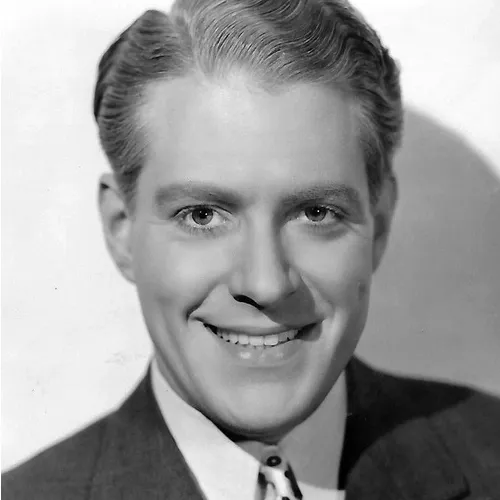
Nelson Eddy was a remarkable entertainer who seamlessly bridged the worlds of opera, film, and radio, becoming one of the most beloved performers of the mid-20th century. With his rich baritone voice and charismatic presence, he captivated audiences across multiple media platforms, leaving an indelible mark on American entertainment history.
Early Life and Musical Beginnings
Born on June 29, 1901, in Providence, Rhode Island, Nelson Eddy came from a musical family. His mother was a church soloist, and his grandmother was a distinguished singer. Growing up in near poverty, Eddy was forced to drop out of school and work various jobs, including positions as a newspaper reporter and a clerk at an iron works. Despite these challenges, Eddy's passion for music never wavered. He developed his talent as a boy soprano in church choirs and spent his teens studying voice, meticulously imitating recordings of famous baritones. His early performances included recitals for women's groups and society theatricals, often for little or no pay.
Radio and Broadcasting Career
Eddy's radio career blossomed in the 1940s, showcasing his versatility as an entertainer. He had his own show on The Swift Program from 1942 to 1943 and starred on The Pepsodent Program from 1944 to 1946. His radio appearances were not limited to his own programs; he was a frequent guest on various variety shows and talk shows. During World War II, Eddy used radio as a powerful platform for patriotic entertainment. He broadcast for the armed forces throughout the conflict, demonstrating his commitment to national morale. His performances were not just entertainment but a form of cultural diplomacy.
Hollywood and Multimedia Success
While radio was an important medium for Eddy, his career truly flourished in Hollywood. He became famous for his operetta films, particularly those co-starring Jeanette MacDonald. Their on-screen and rumored off-screen romance made them one of the most celebrated entertainment couples of their era. Eddy's radio work complemented his film career, allowing him to reach even broader audiences. He was one of the first true multimedia stars, successfully transitioning between opera, concert halls, radio, and cinema. By the early 1940s, he was considered the highest-paid singer in the world.
Later Career and Legacy
In the early 1950s, with television emerging, Eddy adapted by creating a successful nightclub act. Premiering in January 1953, his performance was so compelling that Variety noted he won over audiences within minutes. This ability to reinvent himself was a hallmark of his enduring career. Eddy continued performing until his final moments. On March 5, 1967, while performing at the Sans Souci Hotel, he was stricken on stage with a stroke. He passed away in the early hours of March 6, 1967, leaving behind a remarkable legacy as a pioneering multimedia entertainer.
Works and Appearances
Radio
- The Swift Program (1942-1943)
- The Pepsodent Program (1944-1946)
- Various guest appearances on talk and variety shows
Film
- Rose Marie (1936)
- Maytime (1937)
- New Moon (1940)
- Phantom of the Opera (1943)
Recordings
- Hymns We Love (1946)
- Songs for Christmas (1951)
- Nelson Eddy in Oklahoma! (1956)
Television
- Guest appearances on various variety programs
- Starred in Max Liebman's 90-minute production of The Desert Song (1955)
Nelson Eddy's multifaceted career bridged multiple entertainment mediums, making him a true icon of mid-20th century American popular culture.
Heard in