Myrna Loy
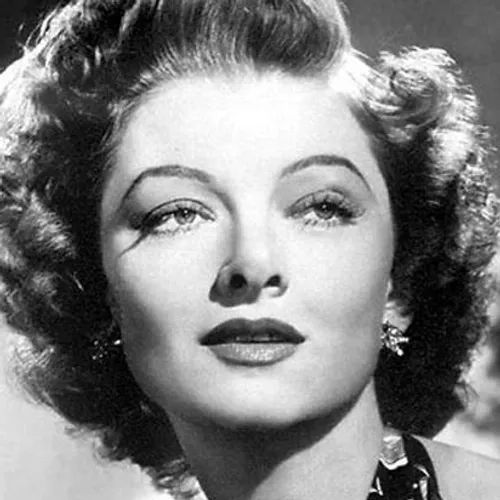
In the golden age of Hollywood, few actresses embodied elegance, wit, and versatility quite like Myrna Loy. Her remarkable career spanned nearly six decades, transforming her from an exotic typecast performer to one of the most beloved and respected actresses of her generation.
Early Life and Roots in Montana
Born Myrna Adele Williams on August 2, 1905, in Helena, Montana, Loy emerged from a family with deep roots in the American West. Her father, David Franklin Williams, was a banker and real estate developer, while her mother, Adelle Mae Johnson, had musical aspirations. Growing up in rural Montana, young Myrna showed an early passion for performance, making her stage debut at just 12 years old with a choreographed dance at Helena's Marlow Theater.
The Path to Hollywood
Loy's journey to stardom began when her family relocated to California during her teenage years. Initially working in prologues at movie theaters, she was discovered by portrait photographer Henry Waxman, whose photographs caught the attention of Hollywood producers. Her early career was marked by typecasting as exotic characters, often portraying women of Asian descent in films like Thirteen Women and The Mask of Fu Manchu.
Breaking Through: The Thin Man and Beyond
A pivotal moment in Loy's career came with The Thin Man in 1934. Director W.S. Van Dyke saw a comedic potential in Loy that previous directors had overlooked. Her portrayal of Nora Charles opposite William Powell was revolutionary, establishing her as a comedic actress of remarkable charm and sophistication. The film was a massive hit, and Loy would go on to appear in 14 films with Powell, becoming one of the most celebrated on-screen couples in Hollywood history.
Activism and World War II
Beyond her acting career, Loy was a passionate activist. During World War II, she significantly reduced her film work to support the war effort. She was so outspoken against fascism that her films were banned in Germany. Loy worked with the Red Cross, ran a Naval Auxiliary canteen, and toured to raise funds for war efforts.
Legacy and Later Years
Loy's career continued to evolve through the 1950s and 1960s, with notable appearances in films like Cheaper by the Dozen and television shows. In 1991, she received an Honorary Academy Award recognizing her extraordinary career and humanitarian work. She passed away on December 14, 1993, in New York City, leaving behind a legacy of extraordinary talent and social commitment.
Works and Appearances
Radio
- Lux Radio Theatre (The Thin Man | 1936)
- Maxwell House Good New (Herself | 1937)
- Lux Radio Theatre (After the Thin Man | 1940)
- Lux Radio Theatre (I Love You Again | 1941)
- Suspense (Library Book | 1945)
Film Highlights
- The Thin Man (1934)
- Manhattan Melodrama (1934)
- Wife vs. Secretary (1936)
- Test Pilot (1938)
- Mr. Blandings Builds His Dream House (1948)
Television
- Family Affair (1967)
- Columbo (1972)
- Summer Solstice (1981)
Myrna Loy was more than just a Hollywood star; she was a trailblazer who used her platform to challenge stereotypes, support social causes, and redefine the image of women in cinema.