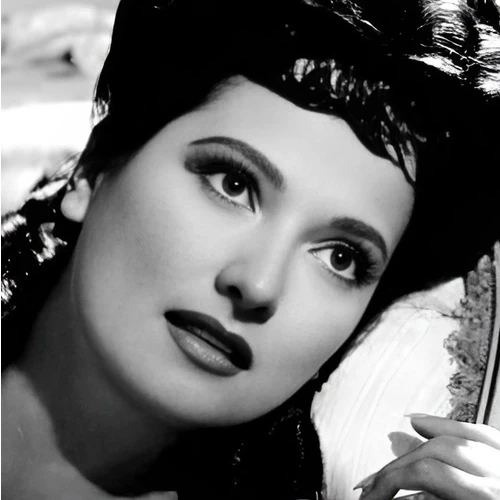
Merle Oberon
In the glittering constellation of Hollywood's early cinema, few stars shone as uniquely and complexly as Merle Oberon - an actress whose remarkable talent was matched only by her extraordinary personal journey of identity and resilience.
Early Life and Hidden Origins
Born Estelle Merle O'Brien Thompson on February 19, 1911, in Bombay, British India, Oberon's early life was marked by complexity and challenge. Her mixed-race heritage - born to a white father and an Indian mother - would become a defining aspect of her personal narrative. After her father's death during World War I, Oberon and her mother lived in impoverished circumstances in Calcutta, where she attended school as a charity student.
The Path to Stardom
Oberon's journey to Hollywood was anything but conventional. Arriving in England in 1928 at just 17 years old, she worked as a club hostess and secured minor, uncredited film roles. Her breakthrough came when director Alexander Korda cast her as Anne Boleyn in The Private Life of Henry VIII (1933), launching her into prominence.
Hollywood Success and Challenges
Despite her extraordinary beauty, Oberon faced significant challenges due to her racial background. Her darker skin tone complicated color film tests, and she underwent cosmetic procedures to alter her appearance. Nevertheless, she became a celebrated actress, earning an Academy Award nomination for The Dark Angel (1935) and starring in classics like Wuthering Heights (1939).
Personal Reinvention
Throughout her career, Oberon meticulously concealed her ethnic origins, creating an elaborate narrative of being born in Tasmania to white British parents. This carefully constructed identity was a survival strategy in the racially restrictive Hollywood of her era. Remarkably, she is considered the first South Asian and first Asian individual to receive an Oscar nomination.
Legacy and Impact
Merle Oberon's career spanned from the 1920s to the 1970s, during which she navigated the complex landscape of early Hollywood with remarkable grace and determination. Her final film, Interval (1973), marked the end of a groundbreaking career. She passed away in 1979 in Malibu, California.
Works and Appearances
Radio
- Screen Guild Players (1946)
- This Love of Ours
- Wuthering Heights
Film Highlights
- The Private Life of Henry VIII (1933)
- The Dark Angel (1935)
- Wuthering Heights (1939)
- A Song to Remember (1945)
- Interval (1973)
Awards
- Academy Award Nomination (1936)
- Best Actress for The Dark Angel
Merle Oberon's life story is a testament to talent, resilience, and the complex negotiations of identity in mid-20th century entertainment.