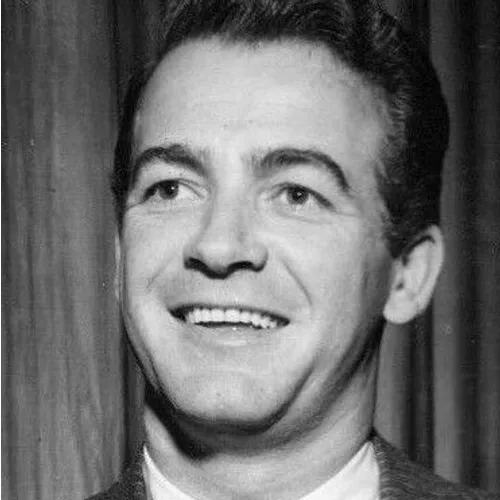
Mark Stevens
Mark Stevens was a multifaceted performer who seamlessly navigated the worlds of radio, film, and television during the mid-20th century. Born Richard William Stevens on December 13, 1916, in Cleveland, Ohio, he would become a notable figure in the entertainment industry, leaving an indelible mark on the golden age of broadcasting.
Early Beginnings and Radio Emergence
Stevens' journey into entertainment began with an artistic passion. Initially studying to become a painter, he soon found himself drawn to the dynamic world of performance. His early career took a pivotal turn when he launched into radio work as an announcer, showcasing his versatile vocal talents. The radio medium would become a crucial platform for Stevens, allowing him to develop his craft and build a reputation as a skilled performer. In the late 1940s, Stevens became a prominent voice in radio drama, appearing in notable programs that defined the era. His work on Suspense, a groundbreaking anthology series, highlighted his ability to bring characters to life through sound alone. In 1947, he appeared in memorable episodes like "Tree of Life" and "From This Day Forward", demonstrating his range as a radio actor. These performances on Lux Radio Theater and Cavalcade of America further cemented his status as a respected radio performer.
Transition to Visual Media
While radio was his initial medium, Stevens quickly expanded his horizons. Moving to Hollywood in 1943, he became a contract actor at Warner Bros., initially billed as Stephen Richards. His early film roles were often small, uncredited parts, typically portraying servicemen in World War II-era films. This period marked a significant transition from radio to visual media. His breakthrough came when he was signed by 20th Century Fox, where he changed his stage name to Mark Stevens. The studio recognized his potential, and he began appearing in increasingly prominent roles. By 1946, exhibitors had voted him the fifth-most promising "star of tomorrow". This recognition reflected not just his acting skills, but his ability to adapt across different entertainment platforms.
Diversifying His Craft
Stevens was more than just an actor; he was a true entertainment professional. In the 1950s and 1960s, he expanded his repertoire by directing and starring in several features. A Time magazine critic even called him the "latest Hollywood triple-threat" for his versatility as a director, film actor, and television star. This multifaceted approach set him apart in an industry that often typecast performers. His television work was equally impressive. He starred in the Big Town series from 1954 to 1956, playing a newspaper managing editor. He also made guest appearances on shows like Wagon Train, Rawhide, and even appeared in later series like Murder, She Wrote in the 1980s.
Later Life and Legacy
By the 1960s, Stevens had transitioned to a semi-retired life in Spain, occasionally taking film roles. His later career was marked by selective appearances, maintaining his connection to the entertainment world while enjoying a more relaxed lifestyle. On September 15, 1994, he passed away in Majorca, Spain, leaving behind a rich legacy in radio, film, and television. For his significant contributions to the television industry, Mark Stevens was honored with a star on the Hollywood Walk of Fame, immortalizing his diverse and dynamic career.
Works and Appearances
Radio
- Suspense (1947)
- Episodes: "Tree of Life", "From This Day Forward"
Television
- Big Town (1954-1956)
- Wagon Train (1957)
- Rawhide (1962)
- Murder, She Wrote (1986)
Film
- Destination Tokyo (1943)
- The Dark Corner (1946)
- The Street with No Name (1948)
- Cry Vengeance (1954, also director)
- Fate Is the Hunter (1964)