Louis Calhern
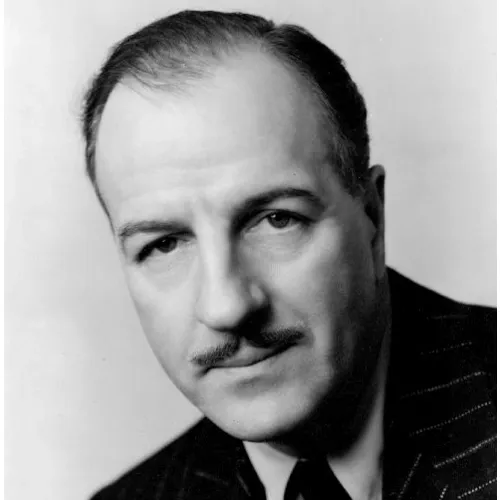
In the vibrant landscape of mid-20th century entertainment, Louis Calhern emerged as a versatile performer who seamlessly bridged the worlds of radio, stage, and cinema. Born Carl Henry Vogt in 1895, Calhern would become a distinguished character actor whose rich, resonant voice and sophisticated demeanor made him a standout talent of his era.
Early Life and Theatrical Beginnings
Louis Calhern's journey to stardom began in Brooklyn, New York, where he was born to German immigrant parents Eugene Adolf and Hubertina Friese Vogt. The family soon relocated to St. Louis, Missouri, where young Carl's path to entertainment would unexpectedly unfold. While playing high school football, he caught the eye of a touring stage manager who recognized his tall, handsome appearance and hired him as a bit player. Just before World War I, Calhern returned to New York to pursue an acting career. He started as a prop boy and bit player with various touring and burlesque companies. His breakthrough came with a play titled Cobra, which transformed him into a matinee idol. Interestingly, due to anti-German sentiment during the war, he changed his German given name and adopted the stage name Louis Calhern - a combination of his adopted hometown St. Louis and his first and middle names.
Radio and Stage Performance
Calhern's radio career was as dynamic as his stage work. He appeared in numerous radio shows, including Lux Radio Theater, The Radio Hall of Fame, and Theater Guild of the Air. His performances spanned various genres, showcasing his remarkable vocal range and dramatic versatility. Notable radio appearances included episodes like Brief Moment in 1938 and Jacobowsky and the Colonel in 1945. On stage, Calhern was a celebrated performer. In 1945, he won the Drama League Distinguished Performance Award for his role in The Magnificent Yankee. His Broadway credits were extensive, ranging from Roger Bloomer in 1923 to King Lear in 1950-1951.
Transition to Film and Notable Roles
While initially leaving movies in 1923, Calhern returned to cinema with the advent of sound pictures. His smooth, velvety voice made the transition effortless. He became known for playing sophisticated and distinguished characters, with memorable roles in films like Duck Soup (1933) as Ambassador Trentino, Notorious (1946), and The Asphalt Jungle (1950). His most acclaimed film performances came in 1950. He portrayed Buffalo Bill in Annie Get Your Gun, played a double-crossing lawyer in The Asphalt Jungle, and delivered an Oscar-nominated performance as Oliver Wendell Holmes Jr. in The Magnificent Yankee.
Personal Struggles and Legacy
Despite his professional success, Calhern battled alcoholism for much of his adult life. This struggle cost him several important roles, though he ultimately overcame his addiction by the late 1940s. Tragically, his promising career was cut short when he died of a sudden heart attack on May 12, 1956, while filming Teahouse of the August Moon in Japan. Louis Calhern left an indelible mark on American entertainment. His ability to transition between radio, stage, and screen, coupled with his distinctive voice and commanding presence, made him a quintessential performer of the mid-20th century.
Works and Appearances
Radio
- Lux Radio Theater
- The Radio Hall of Fame
- Theater Guild of the Air
- Cavalcade of America
- Music America Loves Best
Stage
- Roger Bloomer (1923)
- Cobra (1924)
- The Magnificent Yankee (1946)
- King Lear (1950-1951)
Film
- Duck Soup (1933)
- Notorious (1946)
- Annie Get Your Gun (1950)
- The Asphalt Jungle (1950)
- The Magnificent Yankee (1950)
- Julius Caesar (1953)
Television
- Various appearances in the early 1950s