Lew Ayres
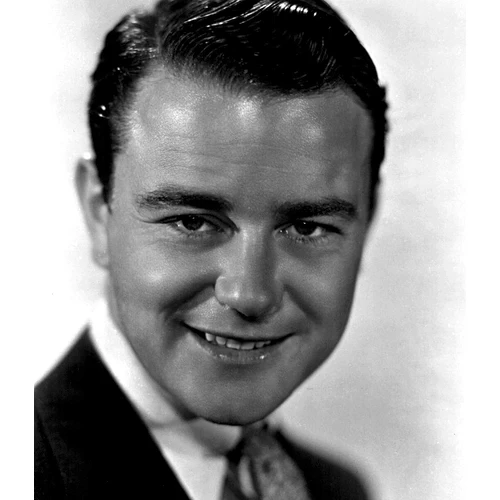
An American actor, best known for starring as Paul in All Quiet on the Western Front and for playing Dr. Kildare in nine movies.
Lew Ayres was a multifaceted performer whose career spanned radio, film, and television, marked by artistic integrity and a profound commitment to personal principles. From his early days as a Hollywood star to his later radio and television work, Ayres demonstrated remarkable versatility and a deep sense of social consciousness that set him apart from his contemporaries.
Early Life and Artistic Beginnings
Born Lewis Frederick Ayres III on December 28, 1908, in Minneapolis, Minnesota, Ayres discovered his artistic talents early. Before becoming an actor, he was a talented musician, playing banjo and guitar in various orchestras. His musical background provided an unexpected pathway into entertainment, with his first movie short, Carnival Night in Paris, recorded in 1927 . Ayres was discovered at a nightclub by talent agent Ivan Kahn, marking the beginning of his acting career. His breakthrough came with the landmark film All Quiet on the Western Front (1930), which catapulted him to stardom and established him as a significant Hollywood presence .
Radio Career and Dr. Kildare
Ayres' radio career was most notably defined by his portrayal of Dr. James Kildare. He played the character in a radio series from 1949 to 1951, continuing the popular medical drama franchise that had begun in films . The The Story of Dr. Kildare radio series allowed Ayres to further develop the compassionate, dedicated physician character he had previously portrayed on screen. Interestingly, when television adaptations of Dr. Kildare were being considered, Ayres was offered the part but declined due to his principled request that the show have no commercial interruptions. This decision ultimately led to the role going to another actor .
Conscientious Objector and Wartime Service
Perhaps the most defining aspect of Ayres' life was his stance as a conscientious objector during World War II. In March 1942, he was initially identified as a 4E conscientious objector, which sparked significant public debate. However, he quickly clarified his desire to serve as a non-combat medic . Ayres enlisted in the U.S. Army Medical Corps on May 18, 1942. He served as a medic in the Pacific, participating in challenging medical evacuations and providing care to soldiers and civilians. His commitment was so profound that he donated all his military earnings to the American Red Cross. For his service, he was awarded three battle stars .
Later Career and Legacy
After the war, Ayres transitioned between film, television, and radio. He appeared in numerous productions, including notable television series and made-for-TV movies. His documentary Altars of the World (1976) earned critical acclaim and reflected his deep philosophical interests . Ayres continued acting well into his later years, with his final role in the 1994 TV film Crimes of the Heart. He passed away on December 30, 1996, two days after his 88th birthday, leaving behind a legacy of artistic integrity and principled living .
Conclusion
Lew Ayres was more than just an actor; he was a humanitarian, a conscientious objector, and an artist who consistently chose principle over popularity. His career demonstrated that one could maintain personal convictions while still making significant contributions to entertainment and society.
Works and Appearances
Radio
- The Story of Dr. Kildare (1949-1951)
Television
- Dr. Kildare (Various episodes, 1958-1960)
- Hawaii Five-O (1973)
- Battlestar Galactica (1978)
Film
- All Quiet on the Western Front (1930)
- Johnny Belinda (1948)
- Altars of the World (1976, Documentary)
Notable TV Movies
- Crimes of the Heart (1994) - Final acting role