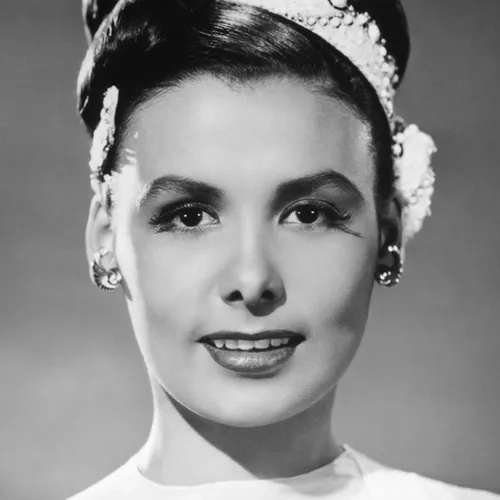
Lena Horne was a groundbreaking African American performer whose career spanned over seven decades, breaking racial barriers in entertainment and becoming a powerful voice for civil rights. Her journey from a young chorus girl to an iconic singer, actress, and activist is a testament to her extraordinary talent and unwavering spirit.
Early Life and Roots in Harlem
Born on June 30, 1917, in New York City, Lena Mary Calhoun Horne emerged from a well-educated Black New York family with a rich, diverse heritage. Her family background was a mixture of European American, Native American, and African American ancestry. Raised primarily by her paternal grandparents, Horne's early life was marked by frequent moves and periods of separation from her parents. Her mother, Edna Louise Scottron, was an actress with a Black theatre troupe, while her father, Edwin Fletcher "Teddy" Horne Jr., was a gambler who left the family when Lena was just three years old.
Entry into Entertainment
Horne's professional journey began in the fall of 1933 when she joined the chorus line of the Cotton Club at just sixteen years old. Her talent quickly became apparent, and she soon secured a featured role in the Cotton Club Parade, where legendary performer Cab Calloway took her under his wing. Her first screen appearance was in the musical short Boogie Woogie Dream (1935), marking the beginning of her film career.
Radio and Broadcasting Career
While Horne was primarily known for her nightclub, film, and stage performances, she also made significant contributions to radio broadcasting. In November 1944, she was featured in a popular radio series, playing a fictional nightclub singer with both a substantial speaking and singing role. One notable radio appearance was in the radio drama series Destination Freedom, which featured her early life story in an episode called "Negro Cinderella" in 1949. She also appeared on radio programs like The Chamber Music Society of Lower Basin Street, showcasing her versatility as a performer.
Breaking Barriers in Hollywood and Activism
Horne's Hollywood career was complicated by the pervasive racism of the time. Despite her talent, she was often relegated to standalone musical sequences that could be easily edited out in segregated theaters. She appeared in films like Cabin in the Sky (1943) and Stormy Weather (1943), but was frustrated by the limitations imposed on Black performers. Her activism was as powerful as her performances. During World War II, she performed for the USO, famously refusing to perform for segregated audiences. In one notable incident, when Black soldiers were seated behind German POWs, she walked to the front row and performed facing the Black troops.
Legacy and Later Career
In the 1980s, Horne created a groundbreaking one-woman Broadway show, Lena Horne: The Lady and Her Music, which ran for 333 performances and earned her a special Tony Award. The show was a powerful retrospective of her life, addressing the racism she had encountered and celebrating her resilience. Horne continued to be recognized for her contributions, receiving numerous awards including the Kennedy Center Honors in 1984 and becoming the first African American woman nominated for a Tony for Best Actress in a Musical in 1958.
Works and Appearances
Radio
- Destination Freedom (1949) - "Negro Cinderella" episode
- The Chamber Music Society of Lower Basin Street
Television
- Numerous variety show appearances including Perry Como Show
- Harry & Lena (1970)
- Tony and Lena (1973)
- America Salutes Richard Rodgers (1976)
Film
- Boogie Woogie Dream (1935)
- Cabin in the Sky (1943)
- Stormy Weather (1943)
- Death of a Gunfighter (1969)
Broadway
- Jamaica (1957)
- Lena Horne: The Lady and Her Music (1981-1982)
Lena Horne passed away on May 9, 2010, leaving behind a legacy of extraordinary artistic achievement and courageous activism that continues to inspire generations.