Josephine Hull
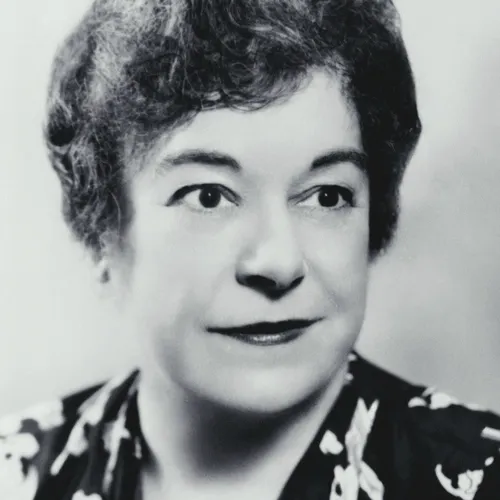
Josephine Hull was a remarkable performer whose career spanned stage, film, and radio, embodying the quintessential character actress of mid-20th century American entertainment. Though primarily known for her film and stage work, Hull's contributions to radio were equally significant, showcasing her remarkable talent for bringing vibrant characters to life through her distinctive voice and impeccable comedic timing.
Early Life and Theatrical Beginnings
Born Mary Josephine Sherwood on January 3, 1877, in Newtonville, Massachusetts, Hull came from a middle-class background that would shape her future artistic pursuits. Initially hesitant about revealing her true age, she often shaved years off her birth date, a common practice among performers of her era. Her early life was marked by a growing passion for performance, which would eventually lead her to the stage. Hull's theatrical journey began in 1905 when she made her stage debut. After spending several years as a chorus girl and touring stock player, she married actor Shelley Hull in 1910. Tragically, her husband passed away at a young age, leading Hull to temporarily retire from acting. In 1923, she returned to the stage, now using her married name and bringing with her a renewed sense of purpose and artistic maturity.
Radio and Performance Breakthrough
While Hull was primarily a stage and film actress, her radio work was an important aspect of her career. She appeared on notable radio programs, including a memorable performance on the Theatre Guild on the Air in 1952, where she performed in The Meanest Man in the World. Her radio performances demonstrated the same comedic brilliance and character depth that made her a beloved figure in other media. Hull's breakthrough came with George S. Kaufman and Moss Hart's play You Can't Take It With You in 1936, where she played Penelope Sycamore. This role showcased her exceptional comedic talents and established her as a premier character actress. Her ability to portray eccentric, lovable characters would become her trademark across stage, film, and radio.
Transition to Film and Critical Acclaim
Hull's transition to film brought her significant recognition. She appeared in only seven films, but each performance was memorable. Her most notable film role came in Harvey (1950), where she played Veta Louise Simmons, a performance that earned her both the Academy Award and Golden Globe Award for Best Supporting Actress. Her radio experience undoubtedly contributed to her ability to create nuanced, memorable characters on screen.
Legacy and Influence
Josephine Hull's career was a testament to her extraordinary talent and versatility. She successfully navigated multiple entertainment mediums, bringing her unique comedic sensibility to stage, film, and radio. Her performances were characterized by a perfect blend of warmth, humor, and subtle complexity that endeared her to audiences and critics alike. Hull passed away on March 12, 1957, in the Bronx, New York, leaving behind a rich legacy of performances that continue to be celebrated. Her ability to transform seemingly ordinary characters into extraordinary, memorable figures remains her most significant contribution to American entertainment.
Works and Appearances
Radio
- Theatre Guild on the Air (1952)
- The Meanest Man in the World
- Role: Not specified
Stage
- You Can't Take It With You (1936)
- Role: Penelope Sycamore
Film
- Harvey (1950)
- Role: Veta Louise Simmons
- Awards: Academy Award, Golden Globe Award for Best Supporting Actress