Joan Davis
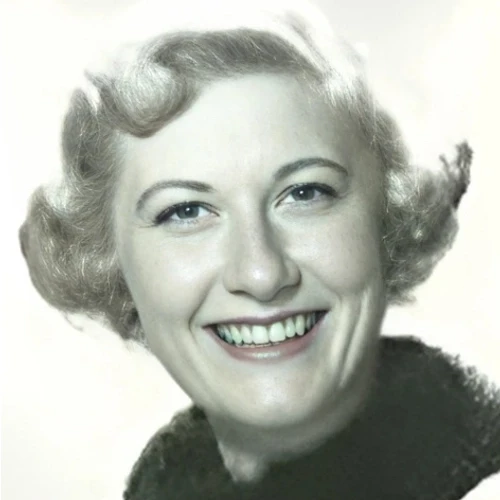
In the golden age of entertainment, few performers could match the comedic prowess and versatility of Joan Davis. A trailblazing comedian who seamlessly transitioned between vaudeville, radio, film, and television, Davis became one of the most distinctive and beloved comic personalities of the mid-20th century. Her unique physical comedy, razor-sharp timing, and infectious energy made her a standout performer in an era of legendary entertainers.
Early Life and Vaudeville Roots
Josephine Madonna Davis was born on June 29, 1912, in Saint Paul, Minnesota, the only child of LeRoy Davis and Nina Mae Sinks. From her earliest years, Davis was destined for performance. She and her husband Si Wills were a vaudeville duo, catching the final vibrant days of that quintessential American entertainment form. Her natural comedic talents were evident early on, setting the stage for a remarkable career that would span multiple entertainment mediums. Davis was not just a typical performer; she was a physical comedian in an era when female clowns were rare. Tall and lanky, with a distinctively flat speaking voice, she developed a reputation for flawless comedic timing that would become her trademark. Her ability to use her body and voice as comedic instruments set her apart from her contemporaries.
Radio: The Golden Era of Comedy
Davis's radio career took off in earnest on August 28, 1941, when she appeared on Rudy Vallee's show, quickly becoming a regular performer. Throughout the 1940s, she became a top star of radio situation comedy, hosting several notable programs. Her shows included Joanie's Tea Room on CBS from September 3, 1945, to June 23, 1947, where she played a tea shop owner in the fictional community of Smallville. Her radio work was characterized by inventive premises and her distinctive comedic style. She continued to evolve her radio persona with shows like Joan Davis Time on CBS and Leave It to Joan, demonstrating her versatility and growing popularity. She was also a frequent performer on Eddie Cantor's radio variety show, further cementing her status as a comedy icon.
Transition to Television and Film
As radio gave way to television, Davis seamlessly adapted. Her most famous television vehicle was I Married Joan, which premiered in 1952. The show cast her as a zany wife to a mild-mannered community judge, with her real-life daughter Beverly Wills playing her younger sister. Though the show didn't achieve the ratings of some contemporaries, it became a syndication success and remains a beloved classic of early television comedy. Davis was not just a performer but also a producer, taking an active role in shaping her television projects. When I Married Joan began to lose ratings and Davis experienced health issues, she negotiated her contract's termination, showing her professional acumen. In 1956, she even developed a pilot for The Joan Davis Show for ABC, though it was not picked up as a series.
Legacy and Impact
Joan Davis was more than just a comedian; she was a pioneering woman in entertainment. She was one of the few female physical comedians of her time, breaking ground in a male-dominated field. Her ability to transition between vaudeville, radio, film, and television demonstrated her remarkable adaptability and talent. Tragically, her brilliant career was cut short. On May 23, 1961, Davis died of a heart attack at just 48 years old in Palm Springs, California. In recognition of her contributions, she was honored with two stars on the Hollywood Walk of Fame - one for motion pictures and another for radio.
Works and Appearances
Radio
- Rudy Vallee Show (1941-1943)
- Joanie's Tea Room (1945-1947)
- Joan Davis Time (1947-1948)
- Leave It to Joan (1949-1950)
- Eddie Cantor's Radio Variety Show (1950-1952)
Television
- I Married Joan (1952-1955) - Star and Executive Producer
- The Joan Davis Show (Unaired Pilot, 1956)
Cinema
- Way Up Thar (1935)
- Hold That Ghost (1941)
- Around the World (1943)
- The Traveling Saleswoman (1950)
- Harem Girl (1952)
Davis's career, though tragically brief, left an indelible mark on American comedy, paving the way for future generations of comedic performers.