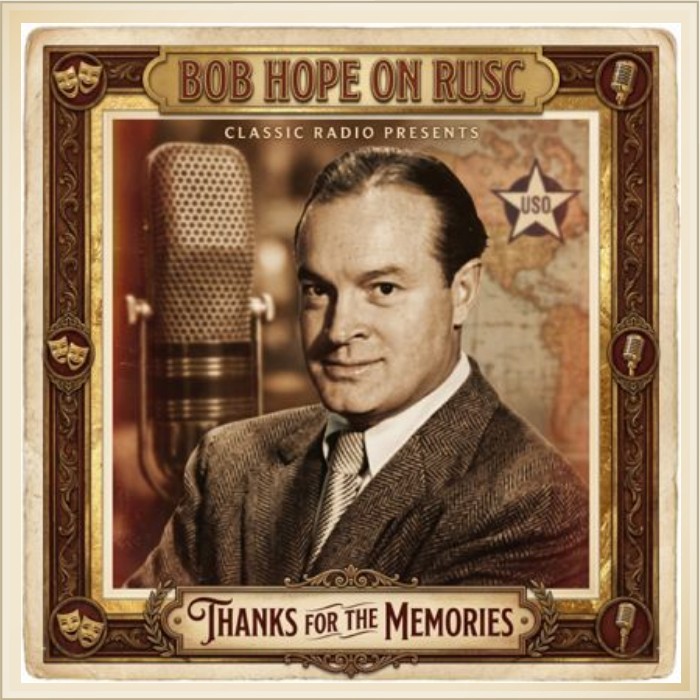
He lived to the remarkable age of 100, and along the way he earned five special Academy Awards, hosted the Oscars a record number of times, and, perhaps most memorably, devoted himself to boosting the morale of American service members. Coming just after Memorial Day, his birthday is a fitting moment to spotlight Hope’s singular legacy on radio and his unwavering support for the U.S. military.
Before he conquered television and cemented his film persona, Bob Hope was, first and foremost, a radio star. He found his national footing with The Pepsodent Show starring Bob Hope, which debuted in 1938 and quickly became a keystone of NBC’s schedule. Hope’s rapid-fire topical monologues set a standard that late-night hosts would follow for generations, deftly blending current events with self-deprecating patter and affectionate joshing of Hollywood friends and public figures. Around him, a tight-knit troupe helped shape the show’s character: the exuberantly absurd Jerry Colonna; the warm, steady vocals of Frances Langford; announcer Bill Goodwin; and swinging bandleaders such as Skinnay Ennis. “Thanks for the Memory,” introduced on film in 1938, became Hope’s radio signature too—a gentle, nostalgic curtain call that sent millions of listeners to bed smiling.
Hope’s radio stardom was more than entertainment; it was service. From 1941 to 1991, he undertook 57 USO tours, carrying the show into training camps, forward bases, and later into war zones from World War II through Vietnam and the Persian Gulf. During the Second World War, his programs frequently broadcast from military installations, often under the auspices of the Armed Forces Radio Service. Hope didn’t just bring jokes—he brought a slice of home, the sound of a stateside variety hour complete with music, skits, and big-name guests. The affection was mutual: the G.I.s made him their favorite emcee, and he made them the unwavering center of his work. In 1997, in recognition of that lifelong commitment, an act of Congress named Bob Hope an Honorary Veteran of the United States Armed Forces—an extraordinary tribute that underscored how fully he had earned the military’s esteem.
On RUSC, you can hear that blend of heart and showmanship come alive. We currently have over 50 episodes of The Bob Hope Show available, with more to be added over the coming week in honor of his birthday. You’ll hear the rhythms that made him the quintessential radio headliner: a crisp opening monologue, playful sketches with his regulars, and the warm musical interludes that balanced the gags. It’s a masterclass in timing and tone—never mean-spirited, always nimble, and perfectly tuned to the week’s headlines.
You’ll also find Hope turning up all over the dial as a guest, which was one of the joys of the Golden Age. He sparred good-naturedly with Jack Benny on The Jack Benny Program, the two of them delighting listeners with mock rivalry and razor-sharp ad-libbing. On Command Performance, the all-star wartime series built from service members’ requests, Hope was a natural fit—nimble, generous with fellow performers, and fearless about taking the show wherever the troops were listening. He traded fast quips on Tallulah Bankhead’s spectacular variety showcase The Big Show, and even earlier in his career made appearances on Rudy Vallee’s program an important stepping stone for many future radio headliners. A quick search on RUSC will surface a treasure trove of these crossovers, each one a snapshot of how collaborative and communal radio really was in its heyday.
Hope’s radio legacy matters not only because the shows are funny, but because they document how the medium itself rose to meet a tumultuous era. In the 1930s and 40s, radio was the beating heart of American popular culture, and Bob Hope understood exactly how to use it—how to lighten the news with a wink, how to showcase musical talent, and how to make a far-flung nation feel like one studio audience. That sensibility carried straight into his USO work. The same instincts that kept Wednesday-night listeners glued to their Philco sets also kept weary soldiers smiling on distant airstrips: a brisk pace, a familiar sign-off, and a promise to come back soon.
As we mark his birthday, I’ll be adding more Bob Hope shows to the RUSC library—additional wartime remotes, postwar variety hours, and guest shots that reveal different facets of his style. And when you hear “Thanks for the Memory” at the end, let it cue your own reflections on a century-spanning career built on professionalism, patriotism, and the belief that a well-timed joke can make any place feel a bit more like home.
Happy birthday, Bob—and thanks for the memories.