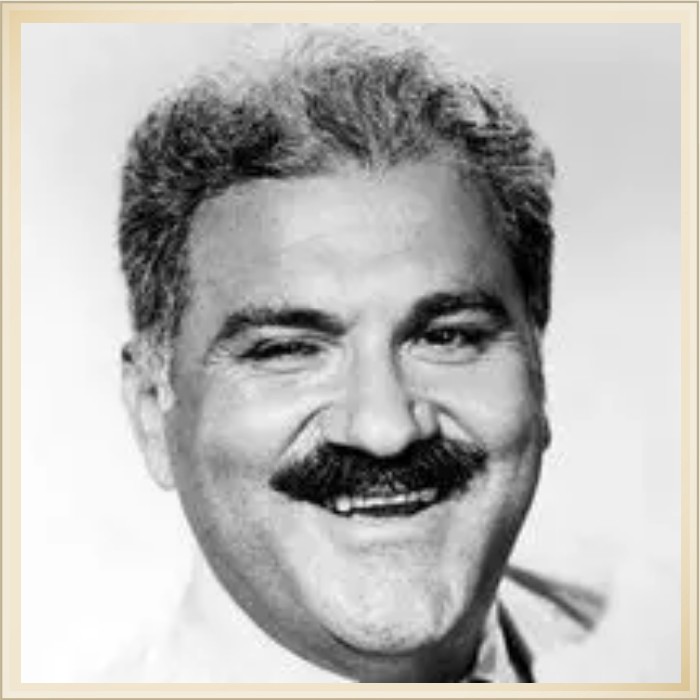
If you listen widely on RUSC, you’ll hear him everywhere: the quick-thinking cop, the worried shopkeeper, the smooth-talking heavy, the warm next-door neighbor. He had that rare gift every director prized—absolute reliability at the microphone and a chameleon’s ear for character and dialect. It’s no surprise a search on RUSC turns up his voice in well over 300 shows.
Although Canadian-born, Kruschen made his career in the United States, coming up through the bustling CBS and NBC studios on the West Coast during the 1940s. Live radio was a relentless business: rehearsals by day, broadcasts by night, with the best actors darting from one soundstage to the next. Kruschen fit right in. He learned to land a line with precision, color it with accent or attitude, and slide into an ensemble without stealing focus—a true craftsman.
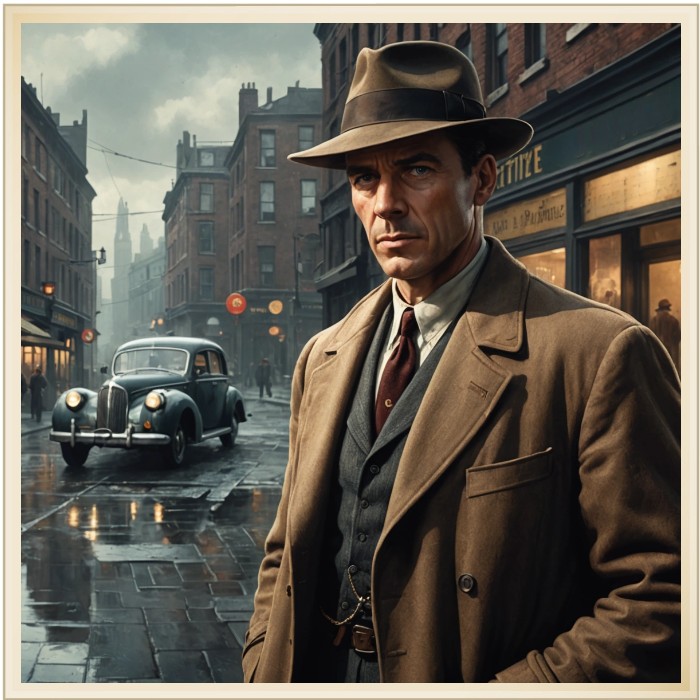
For many listeners, his signature radio role is Sergeant Gino Muggavan on Broadway Is My Beat, the atmospheric CBS crime drama that began in New York in 1949 and soon moved to Hollywood. Opposite Larry Thor’s reflective Detective Danny Clover, Kruschen’s Muggavan provided warmth, loyalty, and a dash of wry humor—just enough light to make the show’s brooding poetry hit even harder. Under producer-directors like Elliott Lewis, with scripts by the brilliant Morton Fine and David Friedkin, the series became one of radio’s most artful procedurals. Muggavan wasn’t a mere sidekick; he was Clover’s steadying hand, the human face on Broadway’s long, shadowy beat. Kruschen gave him heart.
Yet that’s just one corner of his radio footprint. He was a frequent presence on Escape and Suspense—two of CBS’s premier anthology series—where his versatility was put to constant use. On Escape, with its globe-trotting tales of peril, he might be a desperate prisoner one week and a harried bureaucrat the next, switching gears with ease. Suspense demanded something different: icy tension, morally shaded characters, and the ability to wring fear or pity from a whisper. Kruschen delivered, time and again, for producers such as Elliott Lewis and William N. Robson, who knew exactly what he could bring to a soundstage.
You’ll also catch him on a host of other classics that defined mid-century radio drama. He turned up on Gunsmoke, where the layered writing and rugged soundscapes demanded actors who could convey a lifetime in a few lines. He worked on Dragnet, that paragon of procedural realism, where the smallest roles called for authenticity above all. The Whistler used him in its twisty morality plays; Yours Truly, Johnny Dollar and The Adventures of Philip Marlowe relied on him for credible toughs, tipsters, and timeworn souls. If you browse through the cast lists, you’ll often see Kruschen’s name alongside other stalwarts of the era—Ben Wright, Jeanette Nolan, Vic Perrin, Parley Baer—actors who formed the backbone of radio drama’s greatest years.
Kruschen’s ability to handle dialects and regional flavors made him invaluable. In an age when radio painted pictures entirely with sound, he could suggest a backstory in a single line delivery—a clipped consonant, a softened vowel, the weight of experience behind a sigh. That skill translated naturally to television and film as radio waned in the 1950s. He began appearing frequently on screen, and in 1960 he earned an Academy Award nomination for Best Supporting Actor as the compassionate Dr. Dreyfuss in Billy Wilder’s The Apartment. It’s a performance with the same virtues he showed on the air: humanity, timing, and an instinct for the quiet moment that reveals a character’s soul.
Even as his screen career blossomed, Kruschen never lost the habits radio taught him: professionalism, range, and respect for the ensemble. Casting directors knew he could walk into any production—western, crime story, comedy, or thriller—and make the scene work. That’s the hallmark of the great radio players. They didn’t just “do voices”; they built living, breathing people in the mind’s eye.
Jack Kruschen passed away on April 2, 2002, leaving behind a body of work that stretches from the last, glorious years of network radio to some of Hollywood’s most cherished films. For old-time radio fans, though, the best way to remember him is to let those familiar tones roll out of the speaker once more: Muggavan checking in with Clover on a rain-slicked Manhattan night; a jittery man in a far-off port on Escape; a suspect with something to hide on Suspense. Each role different, each one true.
If you’re exploring RUSC, consider queuing up a few Broadway Is My Beat episodes to appreciate how deftly Kruschen shaped Muggavan over time, then dip into anthologies like Escape and Suspense to sample his range. You’ll hear why directors called him back again and again—and why his name appears in so many credits. Jack Kruschen was one of radio’s most reliable storytellers, and his work still casts a spell.
Happy Listening,