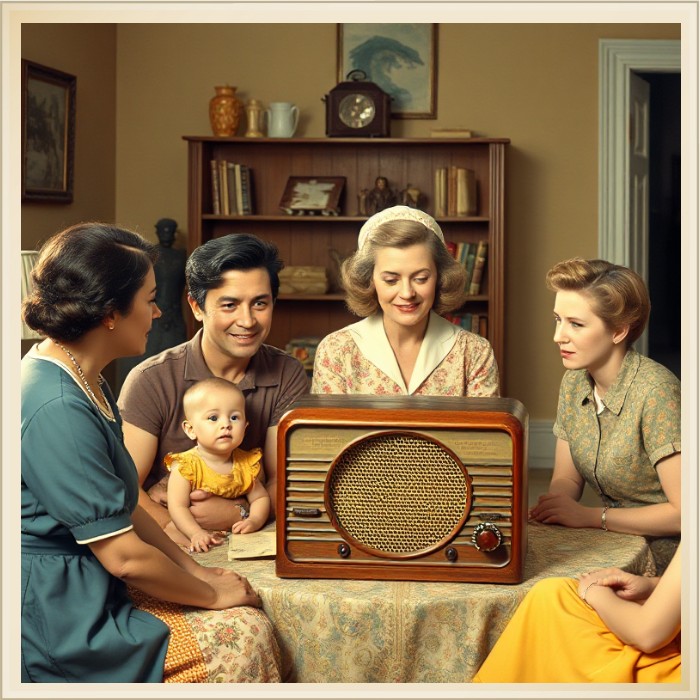
Steele specialized in compact dramas where chance brushes up against character and small choices carry long shadows. It’s no surprise, then, that Columbia Workshop turned to his work in 1938 for a trio of adaptations—stories that fit the series’ taste for intimacy, atmosphere, and craft.
Columbia Workshop, CBS’s celebrated laboratory for radio drama, prized storytelling that trusted sound and suggestion. Steele’s fiction, with its spare construction and strong sense of place, adapts beautifully to that palette. His narratives tend to pivot on a few charged encounters, and his characters reveal themselves not by speeches but by how they bear themselves under strain. That’s radio territory: voices shaded with intention, precise cues, and music that opens emotional space without crowding it.
The run began with A Drink of Water (broadcast November 10, 1938), the first in the trilogy. It’s a quietly hypnotic piece built around Claire Mayo, played with poise and ambiguity by Alice Frost. The production draws us into Claire’s self-chosen isolation and the fragile defenses she builds around identity and desire. Adelaide Klein, as Mamie Ryan, gives the drama a grounded counterweight—a friend’s warmth and plain sense that keeps the story honest. Director Martin Gosch leans into tension by keeping movements economical and beats unhurried, so the drama arrives by accumulation rather than force. Bernard Herrmann’s understated score deepens the mood with a few telling figures; you feel the ache and the undertow without ever being told what to feel.
A week later came Luck (November 17, 1938), the second Steele adaptation, a powerful study of envy, pride, and fatal irony set in a rugged mountain community. In a smoky backroom poker game, a deformed, bitter man named Jennison wins heavily from Will Yaard, a handsome and confident cattleman known for his “luck.” After the game, Yaard angrily denies that luck exists, claiming a man makes his own fortune. When both men meet again on the snowy mountain before dawn, their rivalry deepens as they confess their feelings for the same woman, Judge Proal’s daughter, Hetty. What happens next proves, with cruel irony, how destructive one man’s obsession with luck can become.
The trilogy concluded with The Giants' Stair (broadcast December 1, 1938), which unfortunately, has not surfaced among known recordings. Its absence is felt. Given the first two installments.
What makes these stories noteworthy isn’t only the casting or the high craft—though both are pleasures. It’s how naturally Steele’s sensibility fits radio. His stories are built from pressures you can hear: the pause before a decision, the weight carried in a single line, the way two temperaments spark or stall. Columbia Workshop understood that and had the good sense not to gild it. Margaret Leworth’s adaptation work on Luck shows a respect for the essentials: keep the language purposeful, give scenes room to breathe, and trust the audience’s intelligence.
For listeners today, A Drink of Water and Luck feel remarkably fresh. Their restraint reads as modern, their aims humane and clear. You don’t need elaborate effects to feel the lives pressing outward from these half hours; you need good actors, exact music, and direction that knows when to step back. That’s what you get here.
While The Giants' Stair remains, for now, a gap in the record, the two surviving episodes are a fine invitation into Steele’s world and the Workshop’s way of working. If you’re discovering them this week, take them in as they were made to be heard: somewhere quiet, with attention. They won’t shout for it. Steele didn’t write that way, and Columbia Workshop didn’t produce that way. The reward is in the confidence and care—stories that trust their listeners as much as they trust themselves.