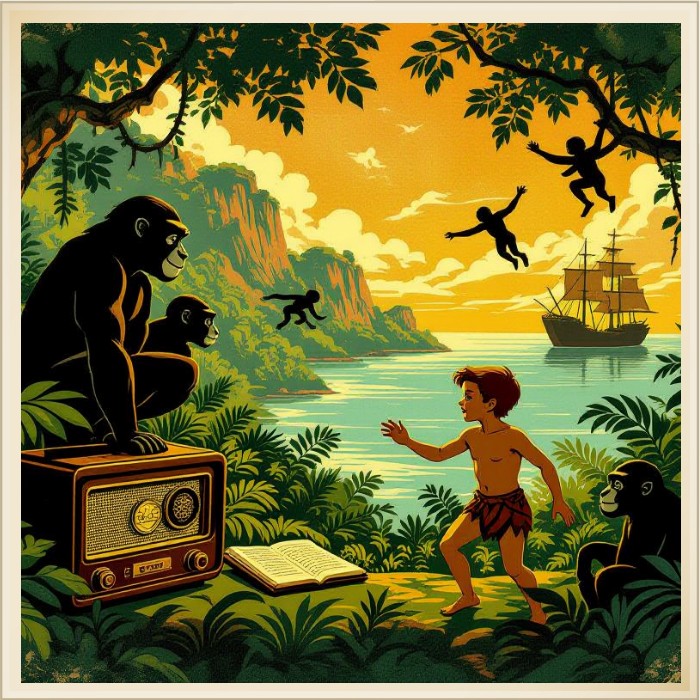
Tarzan, adapted from Edgar Rice Burroughs' beloved novel, became the first major syndicated serial, reaching audiences across the nation via WOR in New York. This groundbreaking series not only introduced listeners to the thrilling adventures of a young boy raised by apes in the African wilderness but also set the stage for radio dramas that would follow.
The premise of Tarzan begins with a compelling narrative of survival and identity. The series unfolds with Lord and Lady Greystoke, who find themselves marooned on the African coast along with their infant son. Tragically, the parents are killed by a tribe of apes, leaving the young boy to be adopted by these creatures. As he grows, he takes on the now-iconic name Tarzan, which means "white skin" in the ape language.
The storyline beautifully explores themes of nature versus nurture, familial bonds, and the instinctual connection between humans and the wilderness. Listeners were drawn into Tarzan's world as he navigated the dangers of the jungle, interacted with various animal species, and ultimately sought to understand his human heritage.
The character of Tarzan was voiced by James Pierce, who not only portrayed the character but also had a fascinating connection to the original creator. Pierce was married to Joan Burroughs, the daughter of Edgar Rice Burroughs himself. This familial tie added an enriching layer to the portrayal of Tarzan, as it was brought to life by someone who had a deep understanding of the character’s essence and the themes woven throughout his adventures.
Joan Burroughs also lent her voice to the character of Jane, further weaving the personal and the professional for this unique radio production. Their involvement not only delighted audiences but brought an authenticity to the series that resonated with fans of the original novels.
The Tarzan radio series stood apart from its contemporaries for its innovative approach to storytelling. Radio, as a medium, relies heavily on the power of sound—taking full advantage of the imagination of its audience. The Tarzan radio serial utilized sound effects, music, and dramatic vocal performances to transport listeners into the heart of the African wilderness.
The soundscapes created helped to amplify the tension inherent in Tarzan’s adventures, while the suspenseful narratives kept audiences on the edge of their seats week after week. Each episode encapsulated an exciting chapter of Tarzan's life, from his close encounters with wild animals to his interactions with the occasional human adventurer.
The success of the Tarzan radio series was a precursor to the character's presence across various media, including films, television shows, comics, and novels. Tarzan became a cultural icon, embodying the fascination with the wild and the spirit of adventure that captivated generations of audiences.
Moreover, the radio format paved the way for future endeavors in storytelling on air. The serial inspired many subsequent radio dramas and paved the way for the dramatic storytelling techniques that would flourish in the Golden Age of Radio. The balance of action, emotion, and intrigue displayed in Tarzan set a high standard for narratives, ensuring that radio continued to be an exciting form of entertainment.
The reverberations of the Tarzan radio series extend far beyond its original run from 1932 through the early 1930s and again in the early 1950s. Subsequent adaptations, such as animated films, live-action titles, and reimagined versions of Burroughs' original tales, have ensured that Tarzan remains a vital part of popular culture. In recent years, with a renewed interest in storytelling through podcasts and audio dramas, the legacy of Tarzan serves as a reminder of the power of sound in narrative storytelling.
There are over three hundred episodes extant and right now we have half of them available on RUSC.
Happy Listening, my friends