RUSC
Old-time radio, beautifully kept · established 1999
← Home
Variety & Music

Sons of The Pioneers

1946–1952 · 22 episodes · 44 listens

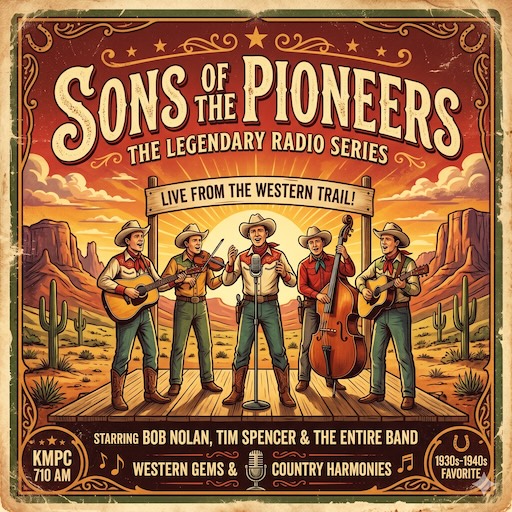
Sons of the Pioneers is one of the most influential Western music groups in American entertainment history. Formed in 1933, the group helped shape the sound of cowboy music with rich vocal harmonies, poetic songwriting, and performances across radio, film, and recordings. Although they later became associated with Western movies, much of their early popularity came from radio broadcasts during the golden age of American radio.

Their music created vivid images of desert landscapes, cattle drives, and wandering cowboys. Songs such as “Tumbling Tumbleweeds” and “Cool Water” became classics of Western music and were frequently heard on radio programs during the 1930s and 1940s. Their polished harmonies set them apart from earlier cowboy singers and helped bring Western music to a national audience.

The group was originally founded by Leonard Slye (later known as Roy Rogers), along with Bob Nolan and Tim Spencer. Blending traditional Western themes with carefully arranged harmonies, the ensemble developed a sound that worked especially well on radio. Over time, the group appeared on many Western-themed broadcasts and variety programs, helping create the romantic image of the American West for radio audiences.

The Stars

The early success of the Sons of the Pioneers was built on several key performers. Bob Nolan served as the group’s main songwriter and one of its most recognizable voices. His lyrics often reflected the loneliness and beauty of the Western frontier.

Tim Spencer also played a major role in shaping the group’s musical style. As a singer and guitarist, he contributed to both the arrangements and the direction of the ensemble, helping maintain stability during the group’s early years.

Another founding member, Leonard Slye, later became famous as Western film star Roy Rogers. Although he left the group in 1937 to focus on his film career, he continued collaborating with the group in movies and radio programs.

Other musicians joined the group over time, including Hugh Farr, Karl Farr, and Lloyd Perryman, all of whom helped maintain the group’s signature harmony sound.

Key Dates

1933: The Sons of the Pioneers are formed in Los Angeles, California. The original lineup includes Leonard Slye, Bob Nolan, and Tim Spencer. 1934–1936: The group gains attention through radio broadcasts and early film appearances. Songs like “Tumbling Tumbleweeds” become widely known. 1937: Leonard Slye leaves the group to pursue a film career as Roy Rogers. 1940s: The group becomes one of the most recognized Western music acts in America, frequently heard on radio programs and in Western films. 1950s–1960s: The group continues recording and performing as Western music evolves. 1980: The Sons of the Pioneers are inducted into the Country Music Hall of Fame.

Other Information

The Sons of the Pioneers helped develop the modern Western music style. Their vocal harmonies were more complex than earlier cowboy songs, blending Western themes with polished musical arrangements.

Many of their best-known songs were written by Bob Nolan. “Cool Water” tells the story of a desperate search for water in the desert, while “Tumbling Tumbleweeds” reflects the wandering spirit of the cowboy.

The group also influenced the sound of Western films, especially those starring Roy Rogers. Their music helped define the atmosphere audiences came to expect from cinematic portrayals of the frontier.

Even after the original members left, the Sons of the Pioneers continued performing with new musicians. Their music remains admired by Western music historians and old-time radio fans, and their songs continue to represent the romantic spirit of the American West.

Ratings & reviews

Loading reviews…

Episodes

Jan 1, 1946
A bright stage-door shuffle opens the show as Bob Nolan and the Sons of the Pioneers ease into a lively ‘Texas Polka,’…
Jan 1, 1946
A friendly campfire mood sets the tone as Bob Nolan welcomes you into a compact set filled with easy charm and steady…
Jan 1, 1946
A warm, easygoing show built on trail songs and porch-light harmony. It opens with a gently pulsing spiritual from Tim…
Jan 1, 1946
A gentle, well-shaped program that opens with a Scottish favorite and settles into friendly porch-side chatter. Bob…
Jan 1, 1946
A warm, low-key showcase of western harmony and campfire humor, this outing ambles from Canada to Mexico with easy…
Jan 1, 1947
A friendly, unhurried half hour that leans into harmony and homespun faith, this session threads Western trail songs…
Jan 1, 1947
A warm yodel sets the tone as the troupe coaxes worries to drift off, then settles into easy chatter and listener mail.…
Jan 1, 1947
A breezy nautical detour sets this episode in motion, launching with a cheeky shanty and shipboard tall tales before…
Jan 1, 1947
A gentle, good-humored showcase that blends campfire banter with smooth Western harmonies. Bob Nolan steers the hour…
Jun 9, 1952
A friendly crowd gathers at the air base as the ranch crew brings songs, stories, and lighthearted patter to a crisp,…
May 27, 1952
A gentle morning on the ranch turns into a sociable round-up of music, jokes and porch-front chat. Between playful…
May 3, 1951
A warm first visit to the Lucky U Ranch, where the boys welcome listeners with easy humor, close harmony, and a…
Nov 13, 1951
A breezy noon at the ranch brings easy banter, nimble picking, and plenty of warm harmony. The opening welcomes drift…
Nov 14, 1951
A brisk breeze and the hint of rain set the scene as Lloyd Perryman greets us, trading easy banter with Shug while Hugh…
Nov 15, 1951
A gentle, good-humored visit to the ranch finds the gang easing into chores, swapping easy banter, and slipping into…
Nov 16, 1951
A relaxed half-hour at the ranch that blends easygoing chatter, rich harmony singing, and a few unhurried surprises.…
Nov 19, 1951
A gentle bustle opens into an easygoing day at the ranch as a new sponsor is welcomed, the boys trade dry wisecracks,…
Nov 20, 1951
A warm, easygoing visit to the ranch finds the gang settling in with George Putnam, swapping gentle ribbing over new…
Nov 6, 1951
A friendly breeze blows through this visit to the ranch, where easy chatter gives way to songs, jokes, and neighborly…
Nov 7, 1951
This easygoing visit to the ranch opens with a warm greeting and drifts into unhurried western harmonies, dusted with…
Nov 8, 1951
A warm, unhurried visit to the corral, this outing gathers songs, easy banter and listener letters into a tidy half…
Nov 9, 1951
A gentle, good-humored visit to the Lucky U Ranch unfolds with easy chatter, plans for a town dance, and tunes that…
Ned, your old-time-radio guide
Ned · your guide to the archive

Now then. Enjoyed Sons of The Pioneers, did you? An old wireless hand reckons these are right up your street.
Gene Autry's Melody Ranch
The Sons of the Pioneers were Roy Rogers's group before his solo career and are central to the same singing cowboy tradition as Autry.
10-2-4 Ranch
Both offer authentic Western harmony vocals and country music in the cowboy tradition.
Grand Ole Opry
Both celebrate the authentic musical traditions of the American frontier in radio performance.
Roy Rogers Show, The
Roy Rogers was a founding member of the Sons of the Pioneers, making these shows directly linked by shared personnel.