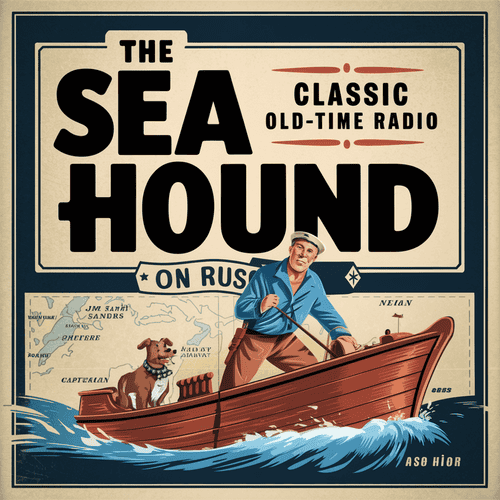
The Sea Hound is an American radio adventure series that captivated listeners from June 29, 1942, to August 7, 1951. This thrilling saga of sea voyages and spy hunting took audiences on captivating journeys through the Americas, blending entertainment with education and promoting unity during a time of global conflict.
The series began on the Blue Network on June 29, 1942, as a 15-minute serial aimed at young audiences. Featuring the charismatic Captain Silver, voiced by Ken Daigneau, and his trusted sidekick Jerry, the show quickly gained a loyal following. In 1946-47, the series found a new home on the Mutual Broadcasting System, and from June 21 to September 2, 1948, it expanded to 30 minutes on ABC radio, alternating with the popular show Sky King. The Sea Hound made its final broadcast on ABC from June 26 to August 7, 1951, leaving behind a legacy that still resonates with old-time radio enthusiasts.
The Stars
Captain Silver, the master of the Sea Hound, was brought to life by the talented Ken Daigneau. His dynamic partnership with Jerry, played by a variety of actors, including Barry Thompson, added depth and complexity to the narrative, creating a duo that captured the imagination of listeners.
Pamela Blake also played a significant role as Captain Silver’s love interest, Ann Whitney, further enhancing the emotional depth of the series.
Key Dates
- The Sea Hound first set sail on the Blue Network on June 29, 1942.
- It continued its voyage until its final broadcast on ABC on August 7, 1951.
- During its run, the series found a new home on the Mutual Broadcasting System in 1946-47.
- It expanded to a 30-minute format on ABC radio from June 21 to September 2, 1948.
- It returned to its original 15-minute format for its final stretch on ABC from June 26 to August 7, 1951.
Other Information
The Sea Hound was more than just a radio show; it was a reflection of the real-world conflict happening during World War II. Between 1942 and 1944, the series was produced in collaboration with Nelson A. Rockefeller’s Office of the Coordinator of Inter-American Affairs, serving as part of a national program to strengthen inter-American relations.
Captain Silver and Jerry weren’t just adventurers; they were also Nazi spy hunters. Their missions led them throughout the hemisphere, fighting against the Axis Powers’ influence. This narrative added a layer of relevance and urgency to their adventures, engaging listeners with thrilling stories while subtly educating them about the geopolitical landscape of the time.
The Sea Hound didn’t just limit its interaction with audiences to the radio. Listeners were encouraged to write to NBC to request Captain Silver’s Sea Chart, a colorful map of the Americas that informed about the most important products of each region and carried pictures of outstanding heroes and flags of all the Latin American republics on its border. Maps were sent out, further immersing the audience in the world of The Sea Hound and making the experience more tangible and exciting.
The Sea Hound is more than just a radio show; it’s a testament to the power of storytelling. It captivated listeners with thrilling narratives while subtly educating them about inter-American relations and the geopolitical landscape of the time. Even today, the series serves as an inspiration for contemporary storytellers, with its ability to blend entertainment with education, its immersive engagement strategies, and its dedication to promoting unity during a time of global conflict.