
RUSC
Old-time radio, beautifully kept · established 1999
← Home
Sci-Fi

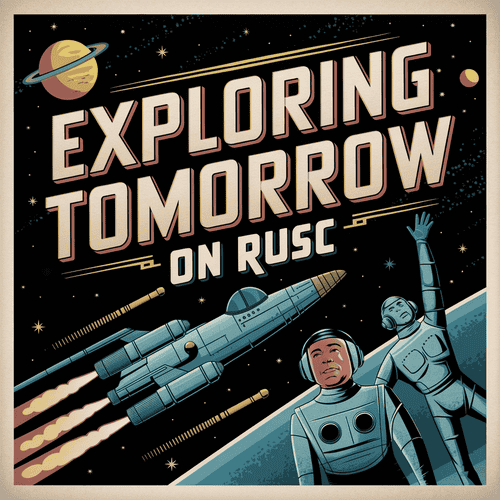
Exploring Tomorrow

1901–1970 · 23 episodes · 123 listens

Exploring Tomorrow was a groundbreaking American old-time radio series that captivated audiences with its unique blend of science fiction and cutting-edge scientific concepts. Airing on the Mutual Broadcasting System from December 4, 1957, to June 13, 1958, this short-lived but impactful show left an indelible mark on the landscape of radio drama and science fiction storytelling.

The series was billed as “the first science-fiction show of science-fictioneers, by science-fictioneers and for science-fictioneers - real science fiction for a change!” This bold claim set the stage for a program that would push the boundaries of imagination and scientific speculation.

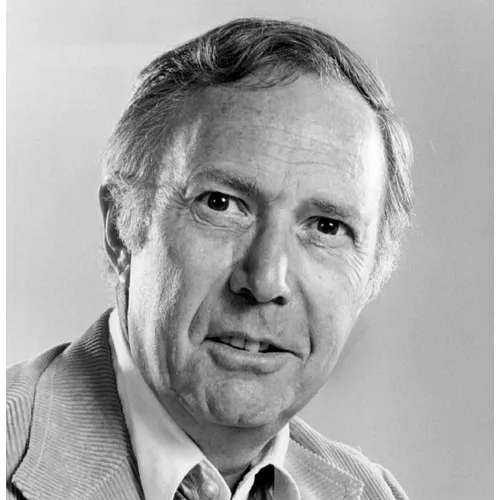
At the helm of Exploring Tomorrow was the legendary John W. Campbell, editor of Astounding Magazine (later known as Analog Science Fiction and Fact). Campbell’s involvement as the show’s narrator lent an air of authenticity and gravitas to the proceedings. His deep understanding of science fiction and his role in shaping the careers of many great science fiction writers of the era made him the perfect guide for listeners as they ventured into the unknown realms of future possibilities.

The show’s format typically featured standalone episodes, each presenting a unique story that explored various aspects of potential future technologies, societal changes, and the human condition in the face of scientific advancement. This anthology-style approach allowed for a diverse range of narratives, keeping listeners engaged and eager to tune in week after week.

The Stars

While Exploring Tomorrow did not rely on a regular cast of stars in the traditional sense, it did feature a rotating ensemble of talented voice actors who brought the various characters and stories to life. Some of the notable performers who lent their voices to the show included:

Mandel Kramer: A versatile actor known for his work in radio dramas, Kramer’s ability to inhabit a wide range of characters made him a valuable asset to the series.

Bryna Raeburn: Her expressive voice and emotional range allowed her to portray everything from determined scientists to bewildered civilians facing strange new worlds.

Lawson Zerbe: A radio veteran, Zerbe’s commanding presence added gravitas to many of the show’s more serious storylines.

Lon Clark: Best known for his portrayal of Nick Carter, Master Detective, Clark brought his considerable talents to various roles in Exploring Tomorrow.

Mason Adams: His distinctive voice and ability to convey complex emotions made him ideal for portraying characters grappling with the moral and ethical dilemmas often presented in the show.

These actors, along with others like Connie Lembcke, Larry Haines, Don Douglas, Bret Morrison, and Charlotte Sheffield, formed the backbone of the series’ cast, their performances helping to bring the futuristic scenarios to life in the minds of listeners.

Key Dates

  • December 4, 1957: Exploring Tomorrow makes its debut on the Mutual Broadcasting System, marking the beginning of its journey into the realms of science fiction radio drama.
  • June 13, 1958: The final episode of Exploring Tomorrow is broadcast, bringing the series to a close after a relatively short but impactful run of just over six months.
  • While the show’s run was brief, it managed to produce a significant number of episodes during this period, each one offering listeners a glimpse into potential futures and the ethical, social, and technological challenges they might bring.

Other Information

Notable Writers: One of the most remarkable aspects of Exploring Tomorrow was the caliber of science fiction authors who contributed stories to the series. The show featured works by some of the most prominent names in the genre, including:

Randall Garrett: Known for his alternate history and fantasy works, Garrett’s contributions added a layer of imaginative depth to the series.

Gordon R. Dickson: A prolific author whose works often explored the impact of technology on society, Dickson’s stories were a perfect fit for the show’s themes.

Robert Silverberg: One of the most celebrated science fiction authors of the 20th century, Silverberg’s involvement lent considerable prestige to the series.

Isaac Asimov: The legendary author of the Foundation series and creator of the Three Laws of Robotics, Asimov’s contributions were undoubtedly a highlight for many listeners.

Philip K. Dick: Known for his mind-bending explorations of reality and identity, Dick’s stories likely pushed the boundaries of what radio drama could achieve.

Poul Anderson: His works, often featuring detailed world-building and scientific accuracy, aligned perfectly with the show’s mission to present “real science fiction.”

Production Team: Behind the scenes, Exploring Tomorrow benefited from the talents of producer-director Sanford Marshall, who helped shape the overall vision and sound of the series. The show’s announcers, Bill Mahr and Guy Wallace, provided the familiar voices that introduced each episode and likely read the commercials that supported the program.

Musical Theme: The series used the classic song “As Time Goes By” as its theme music. This choice of a familiar tune, perhaps best known from the film Casablanca, provided an interesting contrast to the futuristic content of the show, possibly serving as a reminder that even as humanity explores tomorrow, certain timeless elements of the human experience remain constant.

Legacy: Although Exploring Tomorrow had a relatively short run, its impact on the science fiction radio drama genre was significant. By bringing together some of the most talented writers in the field and presenting their visions of the future to a wide radio audience, the show helped to popularize science fiction concepts and speculative thinking.

The series also served as a platform for John W. Campbell to share his influential ideas about science fiction with a broader audience. Campbell’s narration and guidance throughout the series likely influenced how many listeners thought about the future and the potential of scientific advancement.

Today, Exploring Tomorrow is remembered as an important part of the golden age of radio drama and a unique experiment in bringing high-quality science fiction to the airwaves. Its legacy lives on through preserved recordings and the enduring impact it had on both the science fiction genre and the medium of radio drama.

Cast & Crew

MMason AdamsActorMMandel KramerActorJJohn Campbell JrLLawson ZerbeActorSSanford MarshallDirector · ProducerCCharlie HolmesActorBBryna RaeburnActorLLon ClarkActor

Ratings & reviews

Loading reviews…

Episodes

19:26
One of the laboratory laws, sometimes called Murphy's Law, is that 'In any laboratory experiment, if something can go…
17:40
The two o'clock jet from Montana has just landed in New York, bringing some two hundred passengers, including some who…
23:23
We all believe pretty solidly that sooner or later, almost any problem you can name, is going to be solved. All you…
17:18
Sometimes it's fun to try and pitch yourself against a puzzle. Try considering tonight's story as a puzzle. It's a…
18:41
In the biblical story, The Writing on the Wall, everyone could see the writing. King Belshazzar could see it clearly…
18:41
Let's consider the proposition that interplanetary space flight has become a commercial proposition, and there are…
20:09
Today's story is about a liar. A liar is someone who doesn't tell the truth, somebody who injures people by not giving…
16:48
When a man has learned how to do something, he wants that something to be important and needed and wanted in the world.…
19:43
For many years, a lot of us have been interested in considering the possibilities of meeting other life forms, other…
16:27
Many of the colonies of this planet have been founded and built by misfits, rebels, rejects from their own societies,…
19:41
There's an old saying 'you'll do it and like it!' and of course a man can, by physical force make you do it. How would…
19:49
If someone handed you a photograph of a man's face, and asked if you knew who it was. Suppose that was a photograph of…
Apr 9, 1958 · 18:41
It was a busy day in the year 2180. The ambassador from a now independent colony on Venus was due to see the Secretary…
Jan 1, 1901 · 19:25
The term genius is fairly common in our language today. I wonder how many of you realise that the term originated with…
Jan 1, 1901 · 18:40
Lecher McLaughlin is secretary general of the United Nations. It is a busy day in the year 2180 the ambassador from the…
Jan 1, 1901 · 20:14
Have you stopped to figure out just what you mean by a liar? A liar is somebody who doesn’t tell the truth, somebody…
Jan 1, 1901 · 17:14
“Last night as I was going up the stair I met a little man who wasn’t there, he wasn’t there again today, my gosh I…
Jan 1, 1901 · 19:41
There’s the old saying “you’ll do it and like it” and of course a man can by physical force make you do it but how…
Jan 1, 1970 · 17:43
The essential character of any frontier you explore, is that if you get into it and stick your neck out, you get it…
Jan 1, 1970 · 20:08
Tonight’s story is about a liar, somebody who doesn’t tell the truth, somebody who injures people by not giving them…
Jan 1, 1970 · 19:25
The problem with dealing with robots is a peculiar thing. Unlike when you deal with another human being and you can…
Jan 1, 1970 · 17:17
Sometimes it’s fun to try to pitch yourself against a puzzle. Try considering tonight’s story a puzzle, a story about a…
Jan 1, 1970 · 16:48
When a man has learned how to do something, he wants that something to be important, wanted and needed in the world.…
Ned, your old-time-radio guide
Ned · your guide to the archive

Ah, Exploring Tomorrow — a fine choice. Let me set a few more down beside it that I think you'll take to.
X-Minus One
Both present original and adapted science fiction stories exploring the future and speculative ideas in an anthology format.
2000 Plus
Both focus specifically on forward-looking science fiction scenarios, exploring what tomorrow's world might bring.
Dimension X
Both are in the tradition of NBC's commitment to science fiction anthology radio drama.
Tales Of Tomorrow
Both explore futuristic scenarios and speculative ideas in engaging anthology radio drama format.