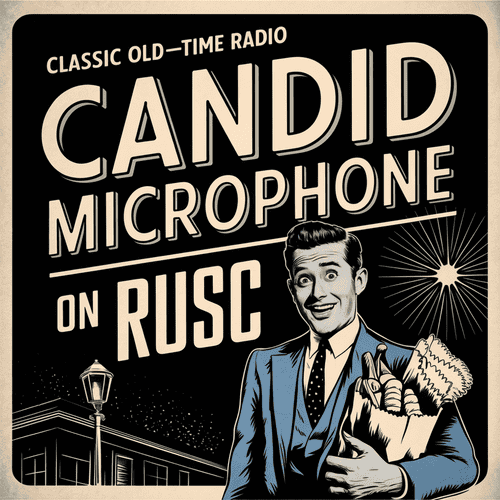
The Candid Microphone was an American radio program that was broadcast on ABC from June 28, 1947, until September 23, 1948, and on CBS from June 6, 1950, until August 29, 1950. It was adapted for television as Candid Camera. The program used “secretly recorded conversations of all kinds of people as they react in real life to all kinds of situations.” The New York Times described the show as “what amounts to a huge practical joke”.
The Stars
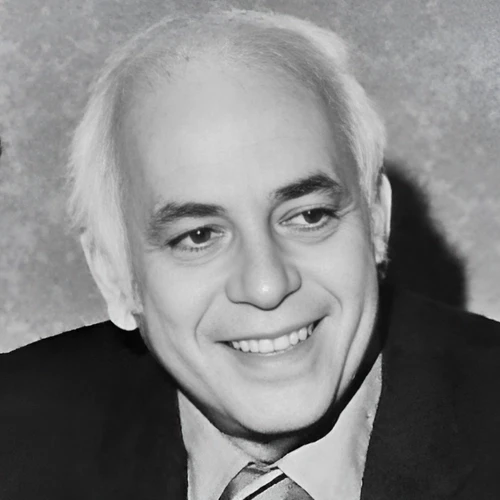
The show was created by Allen Funt, who was the producer. Joe Graham was the director, and Lamont Johnson, Don Hollenbeck, John Larkin, Dorian St. George, Les Griffith, and Ken Roberts were involved in the program as narrators and announcers. Ralph Norman and Bernie Green provided the music.
Key Dates
- The Candid Microphone debuted on ABC radio on June 28, 1947, and ran until September 23, 1948.
- It then returned to the air on CBS radio from June 6, 1950, until August 29, 1950.
- The television version, Candid Camera, premiered on ABC on August 10, 1948, as part of the first day of broadcasting for WJZ-TV in New York City.
Other Information
Funt’s inspiration for the program came while he was in the Army, reading a complaint column in the magazine Yank, the Army Weekly. He thought it would be interesting to record something like that and created a “gripe booth” at Camp Gruber in Oklahoma where soldiers could record their complaints. Funt knew, however, that people often became nervous in the presence of a microphone, so he considered the possibility of recording comments secretly with a hidden microphone and telling them about the recording afterward.
The production process for each episode of The Candid Microphone was extensive. Funt and his team would set up stunts and record people’s reactions, then go through a lengthy editing process, with as many as 100 splices made in a piece of wire that yielded a three-minute segment. Funt worked 14 to 16 hours daily with five assistants to produce the show.
The program received recognition in 1948 when the Radio-Television Critics Circle of New York included it in its “first list of programs and individuals in broadcasting deemed worthy of the circle’s commendation.” It was one of two shows recognized for “outstanding program developments.” Funt also donated recordings of The Candid Microphone and non-commercial educational rights to Candid Camera episodes to Cornell University, his alma mater, along with funding to enable students to use the material for education and research.
In addition to the radio and television versions, Columbia Pictures produced a series of short films based on the program from 1948 to 1951. The first film in the series included reenactments of some stunts that were favorites of the program’s fans. In 1955, Jubilee Records also issued “The Best of Allen Funt’s Candid Mike,” a long-playing album of excerpts from the program.
Critics had mixed reactions to The Candid Microphone. A review in Billboard said the premiere episode failed to meet expectations because the aired sequences consisted of “forced” situations rather than “incidents during which the mike accidentally acted as an eavesdropper.” However, media critic John Crosby wrote that listening to the program was “a wonderful sport, like looking through keyholes but capable of infinitely greater variety.” He commented that the possibilities for locations of the hidden microphone seemed limitless because Funt “has scarcely any inhibitions.” Another review in Variety called the program’s premise an “amusing idea” but said that after the novelty wore off, “thin substance began to show through and turned the session into a long half-hour”.
Despite the mixed reviews, The Candid Microphone and its television counterpart, Candid Camera, became enduring classics of American popular culture, known for their unique blend of hidden-camera pranks, unexpected reactions, and the exploration of the boundaries between privacy and entertainment.