Isaac Asimov
Isaac Asimov, a prolific writer and visionary of science fiction, made significant contributions to the world of radio broadcasting that often go overlooked. While primarily known for his groundbreaking literary works, Asimov's radio adaptations brought his imaginative stories to life through the intimate medium of audio drama.
Early Radio Adaptations
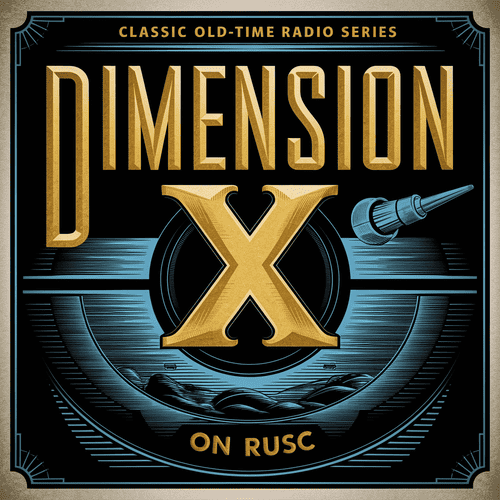
Asimov's radio journey began in the early 1950s, a golden age for science fiction radio dramas. His works were particularly well-suited to the audio format, which relied on dialogue and imagination rather than visual spectacle. Dimension X and X Minus One, two pioneering science fiction radio series, were instrumental in bringing Asimov's stories to listeners.
Notable Radio Productions
The Foundation Trilogy (1973)
The most significant radio adaptation of Asimov's work was the BBC Radio 4 eight-episode series of the Foundation Trilogy in 1973. This adaptation was particularly noteworthy, capturing the epic scope of Asimov's original novels. The series was so well-received that it was repeated in 1977 and 2002.
Classic Short Story Adaptations
Several of Asimov's short stories found their way to radio, including:
- "Nightfall" (1951): A BBC Sci-Fi Radio Drama based on his famous short story about a planet with perpetual daylight
- "Hostess" (1951): A radio drama released as a single
- "Pebble in the Sky" (1951): Another radio adaptation of his work
- "The C' Chute" and "The Liar": Produced by X Minus One and Exploring Tomorrow respectively
Unique Radio Approach
What made Asimov's radio works special was their intellectual depth. As Orson Scott Card famously noted, Asimov's works were "all talk, no action — but Asimov's talk is action." The radio dramas captured the essence of his storytelling: complex ideas communicated through compelling dialogue.
Legacy and Influence
Asimov's radio adaptations were more than mere entertainment. They showcased "American culture at its mid-20th-century finest: forward-looking, temperamentally bold, technologically adept, and saturated with earnestness" . These productions helped introduce his groundbreaking concepts to a broader audience.
Conclusion
While Asimov is primarily remembered for his written works, his radio adaptations represent a fascinating chapter in his creative journey. They demonstrate his ability to translate complex scientific and philosophical ideas into engaging narratives that could captivate listeners.
Works and Appearances: Radio
Radio Adaptations
- Foundation Trilogy (BBC Radio 4, 1973)
- 8 episodes
- Repeated in 1977 and 2002
Short Story Radio Dramas
- "Nightfall" (1951)
- "Hostess" (1951)
- "Pebble in the Sky" (1951)
- "The C' Chute" (X Minus One)
- "The Liar" (Exploring Tomorrow)
These radio works showcase Asimov's versatility and his profound impact on science fiction storytelling across multiple media platforms.