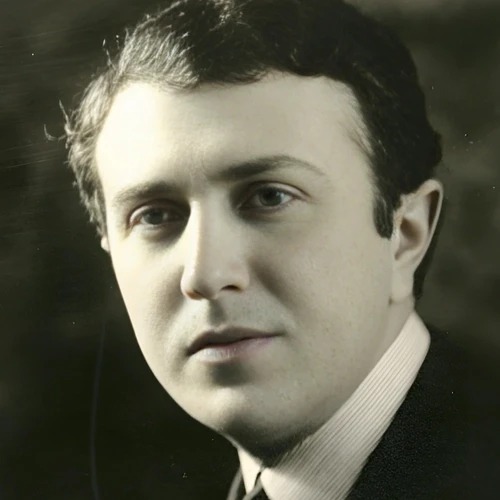
Irving Cummings
Irving Cummings was a multifaceted figure in early 20th-century entertainment, whose career spanned acting, directing, and broadcasting. From his early days on stage to his later work in radio and film, Cummings embodied the dynamic spirit of Hollywood's golden era.
Early Life and Stage Beginnings
Born Irving Caminsky on October 9, 1888, in New York City, Cummings began his performance career on the stage. By 1905, he was performing with the Broadhurst and Currie stock company in Texas, where he shared the stage with notable actors like Mary Fuller. His theatrical career was robust, spanning 12 years and featuring roles in productions such as Way Down East and The Man of the Hour. He worked alongside legendary performers like Henry Miller, William H. Crane, and Lillian Russell, establishing himself as a promising young talent.
Transition to Silent Film and Early Hollywood
Cummings' journey into cinema began around 1909, with his film acting debut marking the start of a prolific career. He worked with multiple studios including Reliance, Pathé, and Thanhouser, often changing studios and gaining significant publicity. His early film roles included movies like The Open Road, The Faith Healers, and The Last Volunteer. By 1926, he began a significant 20-year association with Fox Pictures (later 20th Century Fox), transitioning from acting to directing.
Directorial Success and Notable Films
As a director, Cummings achieved considerable acclaim. He was nominated for a Directing Academy Award for In Old Arizona in 1929 and directed numerous successful films. His directorial portfolio included westerns like The Cisco Kid, musicals such as Down Argentine Way, and biopics like Lillian Russell. Notably, he directed several Shirley Temple films during his tenure at 20th Century Fox, becoming a respected figure in Hollywood's filmmaking community.
Radio and Later Career
In 1952, Cummings entered the world of radio broadcasting by producing and hosting Lux Radio Theatre for CBS. This was a significant late-career move that connected him to the evolving media landscape. The radio show was a prestigious platform that adapted popular films for audio audiences, featuring Hollywood's biggest stars. Cummings hosted the show until its conclusion in 1955, bridging his film career with the golden age of radio.
Legacy and Personal Life
Irving Cummings passed away on April 18, 1959, in Los Angeles, leaving behind a remarkable legacy. He was survived by his wife of 42 years, Ruth Sinclair Cummings, and their children. Throughout his career, he directed approximately 180 pictures and was recognized with the Thomas Edison Foundation Gold Award in 1943 for outstanding achievement in arts and sciences.
Works and Appearances
Film Acting
- Everywoman (1919)
- The Round-Up (1920)
- The Man From Hell's River (1922)
- Rupert of Hentzau (1923)
Film Directing
- In Old Arizona (1929)
- The Cisco Kid (1931)
- Lillian Russell (1940)
- Down Argentine Way (1940)
- Louisiana Purchase (1941)
Radio
- Lux Radio Theatre (Host, 1952-1955)
Irving Cummings exemplified the versatility and adaptability required to thrive in the rapidly changing entertainment industry of the early to mid-20th century, successfully navigating stages, silent films, talkies, and radio.
