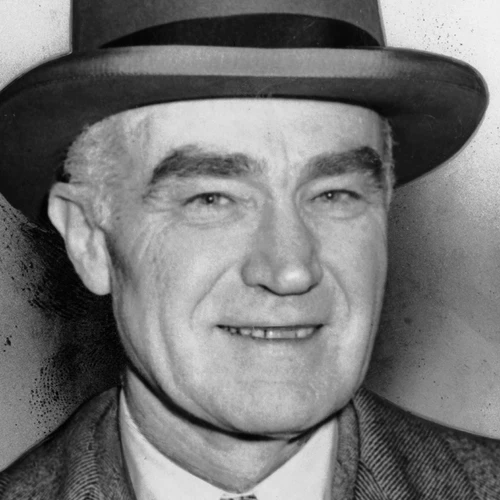
Henry Luce
Henry Luce, a visionary media entrepreneur, revolutionized journalism through his groundbreaking radio program The March of Time, which became a landmark in news broadcasting during the 1930s and 1940s. His innovative approach to storytelling transformed how Americans consumed and understood current events.
Early Media Ventures and Radio Beginnings
Born in 1898 in China, Henry Luce co-founded Time magazine in 1923 with his Yale classmate Briton Hadden. Always seeking innovative ways to communicate news, Luce saw radio as a powerful medium for storytelling and information dissemination. In 1928, he began exploring radio's potential through promotional broadcasts, which would eventually evolve into The March of Time.
The March of Time: Revolutionizing Radio News
The March of Time debuted on March 6, 1931, on CBS Radio, representing a radical departure from traditional news reporting. The program dramatized current events using actors who meticulously recreated news stories with dramatic sound effects. Unlike conventional news broadcasts, this innovative format allowed listeners to experience news as a compelling narrative. The program's distinctive style included a booming narrator who would conclude broadcasts with the iconic phrase, "Time... marches on!" Initially voiced by Harry von Zell and Ted Husing, the role was later definitively claimed by Westbrook Van Voorhis.
Innovative Broadcasting Techniques
Luce and his team developed groundbreaking techniques for radio journalism. The program's scripts were written to match Time magazine's concise style, incorporating actual transcripts whenever possible. When direct quotes were unavailable, writers would "re-create" appropriate dialogue. Actors underwent extensive research and rehearsal to accurately mimic the voice patterns and characteristics of the people they portrayed. The program was so authentic that it occasionally drew complaints, most notably from President Franklin D. Roosevelt, who was concerned about statements attributed to him.
Legacy and Impact
The March of Time was more than just a radio show; it was a multimedia phenomenon. By 1935, Luce had expanded the concept to movie theater newsreels, creating a comprehensive news experience that bridged different media. At its peak, the program was heard by millions and was ranked among the top radio programs of its era. The show ran until 1945, having transformed how Americans understood and experienced news. Its innovative approach influenced future news programming and set new standards for dramatic storytelling in journalism.
Works and Appearances
Radio
- The March of Time (1931-1945)
- Network: CBS (1931-1937)
- Network: Blue Network (1937-1942)
- Network: NBC (1942-1944)
- Network: ABC (1944-1945)
- Roles: Creator, Executive Producer
- Notable Narrators: Westbrook Van Voorhis, Harry von Zell
Publications
- Time Magazine (Founder, 1923)
- Fortune Magazine (Founder, 1930)
- Life Magazine (Founder, 1936)
Henry Luce's The March of Time remains a testament to his innovative spirit and his ability to transform media storytelling, bridging print journalism with the emerging technologies of radio and film.