Harry Harvey
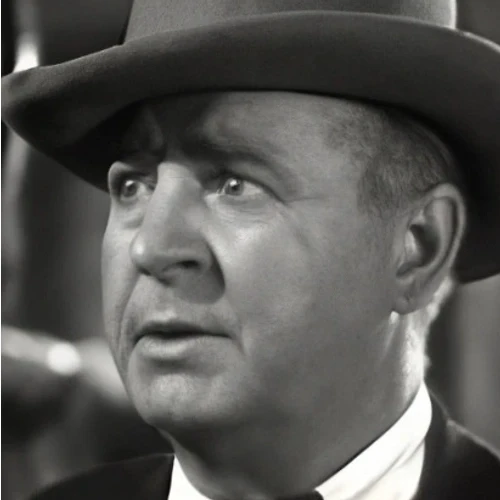
In the golden age of entertainment, few performers embodied the spirit of versatility quite like Harry William Harvey Sr. A prolific character actor whose career spanned radio, film, and television, Harvey became a familiar face and voice to audiences across multiple decades of American entertainment.
Early Life and Theatrical Beginnings
Born on January 10, 1901, in Indian Territory (now Oklahoma), Harry Harvey discovered his passion for performance at an early age. His entertainment journey began in 1918 with Gus Hill's Honey Boy Minstrels, where he first honed his craft in minstrel and burlesque shows. These early experiences laid the foundation for a remarkable career that would see him become a quintessential character actor.
Radio Performance and Early Career
Harvey's radio career emerged in the early 1930s, marking an important phase of his professional development. He appeared in several notable radio programs, including Lux Radio Theatre and The Ford Sunday Evening Hour. In 1930, he was featured in a radio version of the play The Gay Divorcee, demonstrating his ability to translate stage performances to the audio medium. His radio work was characterized by versatility, with performances in numerous radio plays that showcased his range and adaptability. These early radio experiences served as a crucial stepping stone, helping Harvey develop the skills that would later make him a sought-after character actor in film and television.
Transition to Film and Television
In 1934, Harvey made the pivotal decision to move to Hollywood, where he would establish himself as a prolific character actor. Over his nearly fifty-year career, he appeared in more than 300 movies and television episodes. His roles were typically supporting characters - reporters, clerks, waiters, and other everyday figures that brought authenticity to the productions. Harvey became particularly known for his work with RKO Studios, where he often played the affable second lead in comedies, particularly in Leon Errol's two-reel comedy shorts. His ability to play the reliable, problem-solving friend became a trademark of his performances.
Legacy in Television
In the 1950s and 1960s, Harvey became a familiar face on television. He had recurring roles in several popular series, most notably as Sheriff Tom Blodgett in fifty-three episodes of The Roy Rogers Show from 1951 to 1957. He also appeared in numerous western series like Gunsmoke, The Virginian, and Bonanza, typically playing character roles that added depth and authenticity to these productions.
Conclusion
Harry Harvey Sr. exemplified the quintessential character actor - versatile, reliable, and capable of bringing life to supporting roles across radio, film, and television. His career spanned from the early days of radio in the 1930s to television appearances in the 1970s, making him a true veteran of American entertainment.
Works and Appearances
Radio
- Lux Radio Theatre (1930)
- The Ford Sunday Evening Hour (1933)
- Various radio plays (early 1930s)
Television
- The Roy Rogers Show (1951-1957) - Sheriff Tom Blodgett
- Gunsmoke (1965-1971) - Various roles
- The Virginian (1965-1970) - Various roles
- Bonanza (Multiple episodes)
Film
- Appeared in over 300 films, primarily in character roles
- Regular performer in RKO comedy shorts with Leon Errol
His last television appearance was in 1974, concluding a remarkable career that spanned over four decades of American entertainment.