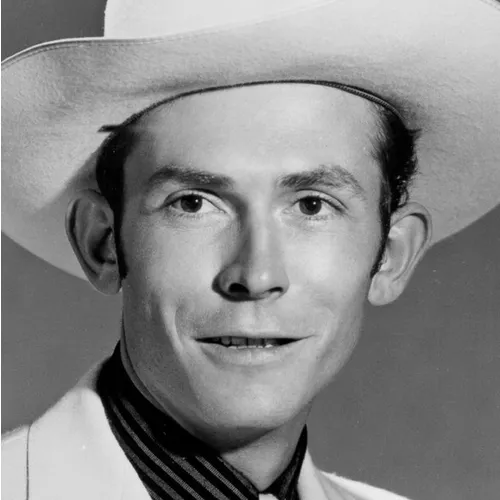
Hank Williams
An American singer-songwriter and musician regarded as one of the most important country music artists of all time. Williams recorded 35 singles (five released posthumously) that would place in the Top 10 of the Billboard Country & Western Best Sellers chart, including 11 that ranked number one.
Hank Williams was more than just a musician; he was a transformative force in American popular music, whose brief but brilliant career reshaped the landscape of country music forever. Despite living only 29 years, Williams became a legendary figure whose influence would echo through generations of musicians and songwriters.
The Early Years: A Musical Prodigy Takes Root
Born Hiram Williams on September 17, 1923, in rural Alabama, Hank's musical journey began early. At just three years old, he sat beside his mother at the Mount Olive Baptist Church organ, absorbing the hymns that would later influence his compositions. His first musical instrument, a harmonica, arrived when he was six, and he quickly developed a passion for music. Williams learned guitar from African-American musicians, an unusual and significant influence that would shape his unique musical style. By 1937, he was already making waves, winning a talent show at the Empire Theater with his first original song, "WPA Blues". Interestingly, Williams never learned to read music, instead basing his compositions on storytelling and personal experiences.
Breaking into Radio: The Rise of a Country Music Icon
Williams's professional career began in Montgomery, Alabama, performing on local radio stations and at various venues. His street performances outside the WSFA radio studio caught the attention of producers, who occasionally invited him to perform on air. In 1944, he married Audrey Sheppard, who became his manager and occasionally performed with him. His breakthrough came in 1947 when he signed with MGM Records and released hit singles. In 1948, he joined the Louisiana Hayride radio program, which broadcast him across the Southeastern United States. His version of "Lovesick Blues" became a massive hit, staying at number one on the Billboard charts for four consecutive months.
The Grand Ole Opry and National Stardom
On June 11, 1949, Williams made his debut at the Grand Ole Opry, receiving six encores. That year, he had five songs ranking in the top five Billboard Hot Country Singles, including "Lovesick Blues," which reached No. 1. His career peaked in the early 1950s, including a notable tour and even a potential motion picture deal.
Personal Struggles and Tragic End
Despite his musical success, Williams battled severe personal challenges. Born with spina bifida, he suffered chronic back pain that led to alcohol and painkiller addiction. His marriage to Audrey was turbulent, and they divorced in 1952. On January 1, 1953, Williams died at the young age of 29, his heart failing in the back seat of a car.
Enduring Legacy and Influence
Williams's impact on music was profound. He is considered "country music's first superstar" and set the standard for country songcraft. Many artists from the 1950s and 1960s, including Johnny Cash and Elvis Presley, were directly influenced by his work. In 2010, he received a posthumous special citation from the Pulitzer Board for transforming country music into a major cultural force.
Works and Appearances
Radio
- WSM Radio Shows (1940s-1952)
- Mother's Best Flour Radio Show (1951)
- Louisiana Hayride (1948-1952)
Music Recordings
- 55 singles reaching top 10
- 12 number-one hits including "Lovesick Blues", "Hey, Good Lookin'", and "I'll Never Get Out of This World Alive"
Posthumous
- 2016 Biopic I Saw the Light
- Multiple tribute albums and documentaries
Hank Williams's brief life burned incredibly bright, leaving an indelible mark on American music that continues to resonate decades after his passing.